Role of MEAN in Creating Faster MVPs: A Practical Approach for Busy Teams
Introduction
Early products stall when teams juggle multiple languages, build systems, and a tech stack that nobody agrees on.
The MEAN stack, which includes MongoDB, Express, Angular, and Node.js, reduces those seams. JavaScript/TypeScript runs end-to-end, JSON flows cleanly, and real-time features come without heavy plumbing.
For teams that need a first release with real users, Brainvire’s MEAN stack consulting services provide a complete development service that helps brands change the way they operate.
But why MEAN is the perfect choice for practical software development? Let’s find out as we learn more about it in the following sections.
What is an MVP?
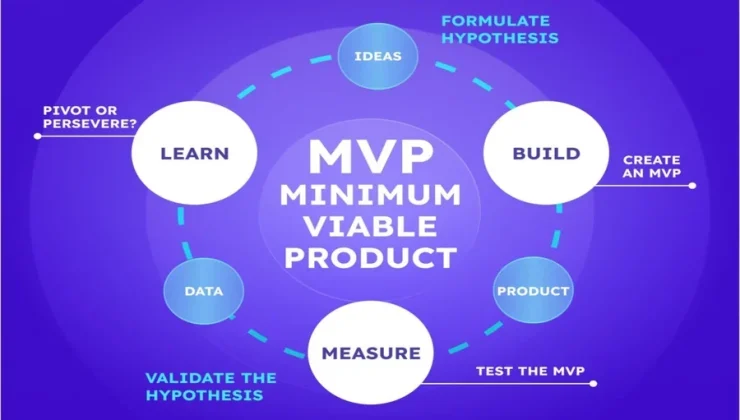
A Minimum Viable Product (MVP) is the simplest form of a product that solves a specific problem for its intended audience. It provides the necessary elements to deliver value to early customers, enabling you to gather feedback and validate your idea before fully developing the product.
The MVP technique benefits startups by allowing you to test your assumptions, discover your audience’s genuine needs, and make data-driven enhancements without investing significant time or money up front. This strategy reduces risk while assuring that the product you’re developing is in line with market demand.
Why MEAN fits MVPs
- One language, fewer interfaces: Models, validators, and DTOs live in TypeScript across client and server; changes land once.
- API simplicity: Express delivers lean REST endpoints; policies, auth, and validation sit in well-understood middleware.
- Interactive UIs by design: Angular’s component model, routing, and reactive forms speed up complex screens and multi-step flows.
- Document data where it helps: MongoDB shines when product data evolves quickly; schema migration friction stays low during discovery.
The simplicity, backed by the extensive use case, is what makes MEAN the go-to option for different software development companies.
What A Practical MVP Includes
Core Journeys First
Sign-in, onboarding, primary task completion, and a minimal settings area. The goal is to provide valid learning signals, not perfect coverage.
Clear Tech Stack
Front end sends key events (view, click, error); back end tracks p95 latency and error envelopes. Decisions rely on live numbers.
Secure Basics
OAuth/OIDC for identity, role checks in middleware, secrets in a vault, and audit logs for admin actions, even in v1.
Release Safety
Feature flags and “dark launch” for risky parts. Rollback in minutes if performance or errors move the wrong way.
Why MEAN? Architecture that Scales with Confidence
Start with a modular monolith (Express + Angular). Add Redis for caching and queues. Introduce a message broker only when background work grows (mail, push, indexing). Deploy as containers with autoscaling; treat processes as stateless.
When the team splits or releases a stall, peel a hot module into its own service with the contract unchanged. You keep velocity and avoid premature microservices.
Moves that Speed Delivery Without Debt
- Design the contract first: Put the API and event schemas in a repo, not a slide. Version them. Generate types for both sides. Parallel work becomes safe and fast.
- Keep modules simple: /auth, /catalog, /orders, /notifications. Clear boundaries beat clever abstractions; refactors later are cheap.
- Cache the obvious: Short-TTL caches for lists, settings, and lookups reduce load while you tune queries.
- Test where it pays: Unit tests for pure logic, request/response tests for endpoints, and a small E2E smoke suite. Coverage that matters, not vanity numbers.
- Observe cost: Track cost per 1,000 requests and storage growth. MVPs that ignore spending become expensive to validate.
Challenges in Developing an MVP
Challenge 1: Determining the appropriate scope
One of the most difficult challenges in MVP development is determining which features to add. Striking the appropriate balance is crucial. An MVP with too many features might overwhelm users and exhaust resources, whereas one that is too simple may fail to provide adequate value.
Challenge 2: Budget and resource limits
Startups often face limited finances and human resources, which makes it challenging to deliver an MVP that balances quality, functionality, and cost-effectiveness.
Challenge 3: Balancing speed and quality
Startups are frequently under pressure to launch rapidly, but speeding development can result in tradeoffs in quality, usability, and usefulness.
Challenge 4: Getting accurate user feedback
Feedback from early adopters is critical for improving the MVP, but businesses frequently struggle to obtain relevant and valuable data.
Challenge 5: Overcoming Technical Limitations
Technical issues, such as selecting the incorrect tools or designing for scalability, might cause development delays or affect MVP performance.
What “Consulting Services” Change in Practice
Advisory decks do not ship code. A seasoned team brings working scaffolds: Angular shell with routing, auth guards, and state; Express starter with auth, rate limits, and health checks, Terraform or templates for CI/CD; linting and security scans pre-wired.
That foundation trims weeks and makes choices predictable. Brainvire’s MEAN stack consulting services add production guardrails without slowing delivery: consistent schemas, caching recipes, and simple rules for when to split modules.
Practical Case Study
A B2B marketplace required an MVP to manage RFP posting, supplier responses, and award workflows. The team implemented Angular views for the three paths:
- Express endpoints with Zod-validated payloads
- MongoDB collections shaped to queries
- Redis cached public listings
Workers sent notifications. In four sprints, the app handled its first 500 users, kept p95 API latency under 250 ms, and shipped three UX revisions without schema pain.
Conclusion
MEAN reduces the moving parts that slow the first releases. With shared types, lean APIs, and a UI framework that supports complex flows, teams focus on user value.
By wrapping it with contracts-first delivery, observability, and rollback discipline, you get fast MVPs that are safe to scale. That is the promise of a real https://www.brainvire.com/custom-software-development-services/, supported by experts in MEAN stack development.