From 10W to 300W: Matching LED Flood Lights to Your Application
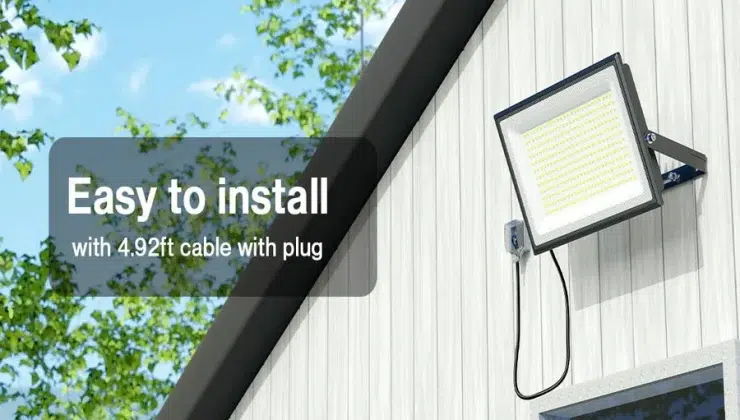
Choosing the right LED flood light begins with understanding what wattage truly represents. Unlike halogen or metal halide lamps, wattage in LEDs does not equate directly to brightness but rather indicates power consumption. A 100W LED flood light can produce the same or greater light output as a 400W metal halide fixture while consuming far less energy. This efficiency translates into lower electricity costs and reduced maintenance over time, making LEDs an increasingly attractive option for both residential and commercial users.
The relationship between wattage and lumens is central to making an informed choice. A 10W or 20W LED can produce 1,000 to 2,000 lumens, ideal for garden pathways or accent lighting. Higher wattages such as 200W to 300W yield more than 30,000 lumens, sufficient for illuminating large parking areas or sports complexes. Understanding how lumens relate to application ensures the chosen light neither overpowers a space nor leaves it underlit.
Wattage selection should be guided by purpose, environment, and desired light coverage. Residential users often prioritize ambiance, while commercial operators value uniform illumination for safety and visibility. With advancements in LED technology, the range from 10W to 300W provides remarkable flexibility, allowing lighting designers to tailor brightness and efficiency precisely to each setting.
10W to 50W: Residential and Decorative Uses
Lower wattage LED flood lights are essential in residential and decorative lighting designs, offering a blend of functionality and style. These fixtures provide targeted brightness that enhances architectural details, garden landscapes, and outdoor living spaces. A 10W model is perfect for gently illuminating entryways or patios, while a 30W or 50W version can brighten larger areas like driveways or exterior walls. This balance between soft diffusion and focused intensity makes them ideal for creating both security and aesthetic appeal around the home.
The versatility of LED flood lights also encourages creative applications. Many models come with adjustable heads, allowing homeowners to direct light precisely where it is needed. Additionally, varying color temperatures offer flexibility in setting the right ambiance. Warm white tones complement outdoor seating areas, while cooler hues add clarity and definition to modern exteriors. Beyond simply illuminating spaces, these lights become key design elements that transform outdoor areas into welcoming extensions of the home.
As the demand for energy-efficient lighting continues to grow, many homeowners turn to trusted suppliers to meet their needs. Among these, Buy Rite Electric established in 1986, stands out as a reputable provider. Known for its durable, professional-grade lighting solutions for both residential and commercial applications, Buy Rite Electric offers a wide range of LED flood lights that are designed to enhance outdoor spaces and deliver long-lasting, effective lighting results.
60W to 100W: Small Commercial and Security Lighting
When the lighting requirement moves into small commercial or security applications, wattages from 60W to 100W are typically best suited. These fixtures provide substantial brightness that covers broader areas such as small parking lots, loading zones, and building perimeters. Businesses benefit from enhanced visibility that deters theft and improves employee safety. With their high lumen output, LEDs in this category effectively replace older 250W to 400W metal halide lamps while dramatically lowering energy costs.
Another key advantage lies in their adaptability. Many 60W to 100W LED flood lights support smart controls like motion sensors and daylight photocells, which further optimize power usage. The ability to adjust brightness or automate activation allows property owners to maintain illumination only when necessary, improving efficiency without sacrificing safety.
The light’s beam angle and color temperature must also align with each site’s function. A narrower beam focuses attention on signs or entrances, while a wider beam ensures uniform coverage across parking areas. Proper mounting height and fixture spacing are essential to eliminate shadows and glare, resulting in both aesthetic and functional balance.
120W to 200W: Industrial and Large Facility Applications
As operations scale up, lighting needs expand accordingly. The 120W to 200W LED flood light range is often ideal for industrial facilities, sports arenas, and large retail exteriors. These settings demand consistent, high-intensity illumination to maintain productivity and safety. The uniformity and brightness of these fixtures ensure that every corner of a warehouse or yard remains visible, reducing risks and improving overall operational efficiency.
Industrial-grade LED flood lights are engineered to withstand demanding environments. They often feature rugged housings, advanced heat dissipation systems, and ingress protection ratings such as IP65 or IP67. These specifications allow them to perform reliably under exposure to dust, moisture, and extreme temperatures. With lifespans frequently exceeding 50,000 hours, such fixtures offer long-term value and minimal maintenance interruption.
Selecting the right unit involves more than matching wattage to space. Factors such as mounting height, optical distribution, and maintenance accessibility all influence performance outcomes. A 150W LED can match or exceed the brightness of traditional 400W metal halide fixtures, delivering powerful illumination while conserving energy. For many businesses, upgrading to this wattage range signifies a commitment to modern efficiency standards.
250W to 300W: Stadiums, Parking Lots, and Infrastructure
At the higher end of the spectrum, 250W to 300W LED flood lights cater to infrastructure and public installations requiring maximum light output. These models can generate over 35,000 lumens, creating near-daylight conditions suitable for stadiums, ports, and large parking complexes. Such intensity enhances both visibility and security, ensuring that wide spaces remain fully illuminated even in challenging weather.
Manufacturers design these fixtures with precision optics to achieve targeted illumination while reducing light spill and glare. For example, sports facilities benefit from even beam distribution that enhances player visibility and spectator comfort. The robust materials used in these fixtures, including corrosion-resistant aluminum housings, ensure stability and longevity under continuous operation.
From an economic standpoint, these high-wattage LEDs offer significant savings compared with traditional high-intensity discharge lighting. Their reduced energy draw and longer operational life minimize maintenance cycles and operating expenses. For municipalities and large organizations, this translates to both financial and environmental benefits, reinforcing the case for large-scale LED adoption.
Energy Efficiency and Smart Control Integration
Modern LED flood lights have evolved beyond simple illumination to become integral components of energy management systems. Smart controls, including motion sensors, dimming modules, and wireless connectivity, enable users to fine-tune performance according to specific needs. Such adaptability allows for energy optimization without compromising security or visibility, making it an essential feature for forward-thinking facility design.
These control systems also provide valuable monitoring capabilities. Building managers can track energy use, identify maintenance requirements, and adjust lighting remotely through connected platforms. The result is a streamlined approach to facility management that reduces waste and promotes sustainable operation.
The convergence of LED efficiency and intelligent technology is reshaping lighting across industries. From residential landscapes to major infrastructure, adaptive lighting solutions are enabling users to meet both regulatory and environmental goals. The future lies in lighting that is not only bright but also responsive, efficient, and sustainable.
Factors to Consider Before Purchase
Selecting the right LED flood light requires a thoughtful balance of technical and environmental considerations. Color rendering index (CRI), beam angle, and color temperature all affect how light interacts with a space. A higher CRI ensures accurate color visibility, while the right color temperature sets the appropriate tone for the environment. Warm light suits residential or hospitality areas, whereas cooler tones are more suitable for commercial and security settings.
Durability and certification are equally critical. Prospective buyers should prioritize lights that meet UL, DLC, or ETL standards to ensure safety and efficiency compliance. IP ratings indicate resilience against dust and moisture, a crucial factor for outdoor installations. Evaluating these details ensures that the fixture performs consistently under real-world conditions.
While price remains a consideration, the long-term cost of ownership provides a clearer measure of value. LEDs often pay for themselves through reduced power consumption and fewer replacements. By assessing installation environment, runtime, and maintenance access, decision-makers can select the best fixture for performance, longevity, and overall cost-effectiveness.
Innovation Driving the Next Era of Flood Lighting
The next chapter in LED flood lighting focuses on efficiency, adaptability, and environmental stewardship. Technological advances are producing fixtures with tunable color temperatures, integrated sensors, and even self-adjusting brightness. These features are reshaping how both residential and commercial users approach illumination, merging convenience with sustainability.
Innovations in material science are also enhancing performance. Lightweight alloys, corrosion-resistant coatings, and modular components make new-generation LEDs more durable and easier to maintain. The ability to replace individual modules instead of entire fixtures reduces waste and simplifies service over time.
Looking ahead, integration with renewable energy will further define the future of lighting. Solar-powered flood lights and smart grid compatibility are already gaining traction. As efficiency improves, the line between energy savings and visual quality continues to blur, pointing toward a future where light serves both purpose and planet with equal precision.