Get BLS Certified Before Clinical Rotations: Here’s Why It Matters
On March 17, Mark Schumacher’s life nearly ended on a sidewalk in Boise. He had just told his brother he needed to rest, then collapsed backward, no warning, no time. His brother, frozen, struggled to dial 911. That’s when Jenni Sasser, a neonatal nurse from St. Luke’s, happened to drive by.
She stopped her car, ran over, and checked for a pulse. There wasn’t one. Without gear, without backup, she started cardiopulmonary resuscitation (CPR). She continued for seven minutes until the EMS arrived. Doctors later said that if she hadn’t acted when she did, Mark would have died within five minutes.
It wasn’t her job title that saved him; it was her training. That’s why it’s so important to get BLS certified before clinical rotations. Keep reading to learn why Basic Life Support (BLS) certification is a must-have before stepping into patient care.
What Are Clinical Rotations?
Clinical rotations are a part of your medical training where you stop practicing on paper and start working with real patients. During this period, you’ll rotate through hospital departments, like internal medicine, pediatrics, or surgery, observing, assisting, and sometimes responding when things go wrong.
Even though you’re still a student, you’ll be part of real care teams in real emergencies. You might be the first person in the room when a patient crashes. At that moment, no one is checking if you’ve finished your BLS course yet; they’ll expect you to know how to act.
Why You Need Your BLS Before Clinical Rotations
Clinical rotations mark a pivotal stage in your medical training. Getting BLS certified before clinical rotations gives you the confidence to step in until help arrives. Here’s why it matters:
1. Direct Patient Safety
During rotations, you’ll be in hospital settings where real emergencies, like cardiac arrest or sudden collapse, can happen without warning. Getting BLS certified means you’re trained to recognize those moments, start CPR right away, and use an automated external defibrillator (AED), if needed. When time is critical, hesitation costs lives. BLS training gives you the skills and confidence to act fast.
2. Institutional and Legal Requirements
Most medical schools and clinical sites won’t let you start rotations without a valid BLS certification. It’s often a non-negotiable requirement tied to legal and safety protocols. If you don’t get BLS certified before clinical rotations, you risk delays, administrative holds, or missing placement deadlines.
3. Bridging the Knowledge-Practice Gap
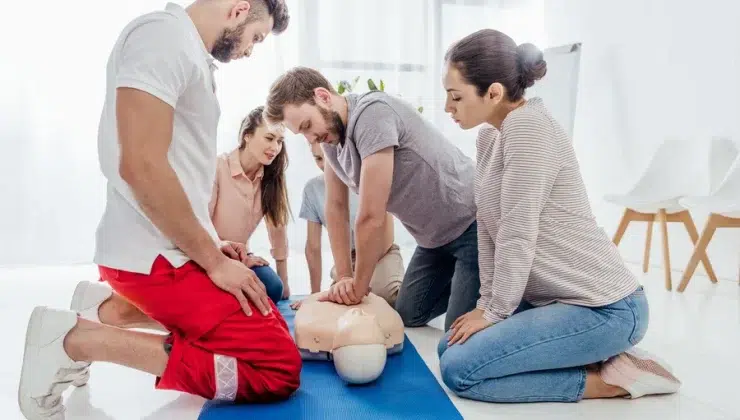
Knowing the steps of CPR on paper isn’t the same as doing it during a code blue. When you get BLS certified early, you learn what to do and how to do it under pressure. That practical exposure, using a mannequin, working in teams, handling an AED, translates directly to real-world hospital floors.
4. Professional Confidence and Team Trust
Even as a student, how you carry yourself in a clinical setting matters. When staff know you’re BLS certified, they know you can handle yourself in an emergency. That builds trust. It also builds your confidence, because you’re not standing back, unsure of what to do.
5. Ethical Responsibility to Patients
If someone collapses right in front of you during your rotation, would you know how to respond? Would you hesitate? Getting BLS certified is about doing the right thing when a patient needs immediate help. You have a moral responsibility to be prepared. No one expects you to do everything, but they do expect you to know how to start chest compressions and get help fast.
6. Compliance with Accrediting Standards
Clinical rotations aren’t optional, and neither is BLS. Accrediting organizations, like the American Heart Association (AHA), require that all students entering patient-care environments get BLS certified first. It’s considered a minimum clinical competency. Schools that don’t enforce this risk losing affiliation or clinical placement slots.
Get BLS Certified Before You Step In!
Don’t wait for a real emergency to find out you’re unprepared. BLS certification is more than just a school requirement; it prepares you to act when seconds count. Choose an accredited online course that fits your schedule and meets clinical site expectations. In-person classes are also available if you prefer hands-on instruction.
Train today so you’re ready on day one of rotations. Get BLS certified now, fully online, fast, and made for future healthcare providers like you.