College Students vs. AI Tutors: Who Really Rules the Modern Classroom?
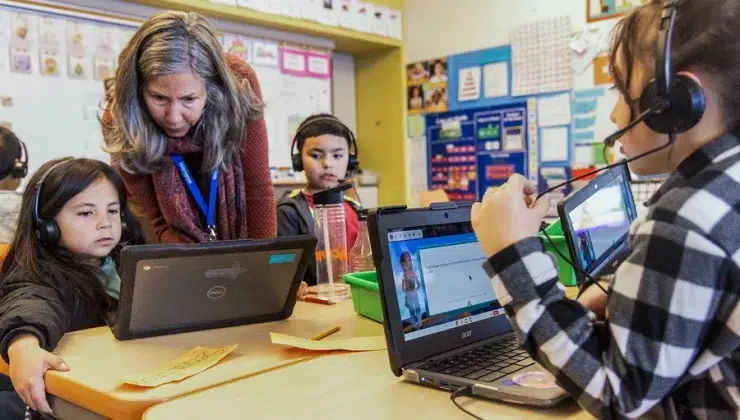
The modern classroom doesn’t look like it did even ten years ago. Instead of being filled only with paper notebooks and chalkboards, it’s now a mix of laptops, smartboards, online platforms, and yes AI tutors. While professors and college students still play the central roles, artificial intelligence has quietly slipped into the picture, raising an important question: Who really rules the modern classroom students or AI tutors?
For many students, managing coursework, jobs, and personal commitments feels overwhelming. That’s why resources like online tutoring, class help, study apps, and academic help websites are booming. Some even turn to digital solutions when they feel stuck and search for services like “take my online class” on Myassignmenthelp.com. This shows how the pressure to perform has pushed students toward both human and machine-powered assistance in their academic lives.
The Rise of AI Tutors in Education
AI tutors are designed to provide personalized learning experiences. They can answer questions instantly, break down complex concepts into simple terms, and even track a student’s learning progress. Many platforms, such as study fetch, use adaptive algorithms that adjust lessons depending on the learner’s performance. If a student struggles with algebra, for example, the AI keeps providing extra practice until mastery is achieved.
For professors, these tools are attractive because they can handle repetitive teaching tasks, freeing educators to focus on higher-level discussions. Students, meanwhile, enjoy the convenience of 24/7 support. But the real question is—are AI tutors truly replacing the classroom experience, or are they just another layer of support?
Why Students Still Hold the Upper Hand
Despite the hype, AI tutors don’t have the emotional intelligence or lived experiences that students bring to a classroom. College students learn not only from textbooks but also from each other—through debates, group projects, and late-night study sessions. These interactions teach teamwork, empathy, and problem-solving, skills that no machine can fully replicate.
Moreover, students are the ones who choose how to use these tools. An AI tutor might provide practice problems, but it’s the student who decides whether to engage with them. In this way, students remain in control, making them the true “rulers” of the learning process.
Human Professors vs. AI Tutors
Another major factor is the role of professors. While AI can deliver information, professors inspire. A passionate lecture, a personal story, or even an encouraging email from a professor can motivate students in ways a chatbot never could. AI may provide knowledge, but it cannot replace the mentorship and human connection that define the college experience.
Professors also play referee when it comes to critical thinking. AI can suggest answers, but professors push students to ask deeper questions, evaluate multiple perspectives, and form original arguments. This balance keeps education human-centered even in a tech-driven environment.
The Benefits of AI for Students
That said, AI tutors do offer undeniable benefits. Many students feel more comfortable asking “embarrassing” questions to an AI, knowing they won’t be judged. For international students, AI tools help break down language barriers and provide translations. For students in large lecture halls, where professors may not have time to answer everyone’s questions, AI provides an extra layer of support.
In this way, AI acts as a safety net rather than a replacement. It ensures that no student gets left behind, especially in subjects that demand repeated practice like math, coding, or grammar.
Challenges and Concerns
Still, there are challenges to consider. Over-reliance on AI tutors can make students passive learners, always waiting for answers instead of seeking them out. There’s also the risk of misinformation. AI isn’t perfect; it sometimes gives inaccurate or incomplete answers. Without strong critical thinking skills, students may accept these answers without question.
Another concern is equity. While some colleges provide access to AI learning tools for free, others require subscriptions or expensive software. This could widen the gap between students who can afford these tools and those who cannot.
The Hybrid Future of Learning
The most likely future is not an AI takeover but a partnership. Picture classrooms where AI handles the basics—grading quizzes, providing instant practice, summarizing readings—while professors and students focus on discussion, analysis, and creativity. In this scenario, AI supports learning, but the heart of education remains human.
This hybrid model benefits students the most. They get the speed and convenience of AI while still experiencing the mentorship, inspiration, and community that only real people can provide. College students continue to lead their learning journey, using AI as one of many tools rather than a replacement for genuine academic growth.
Final Thoughts
So, who really rules the modern classroom? The answer is clear: students do. AI tutors are powerful assistants, but they can’t replace the critical thinking, creativity, and social experiences that make college what it is. Professors continue to guide, but it’s the students who decide how much effort to put in, how they use technology, and what kind of learners they want to be.
In the end, AI may be smart, but it’s the students who shape the future of education. The modern classroom is theirs to rule—AI is just along for the ride.