How Accurate is AI for Translating Books with Rask.ai
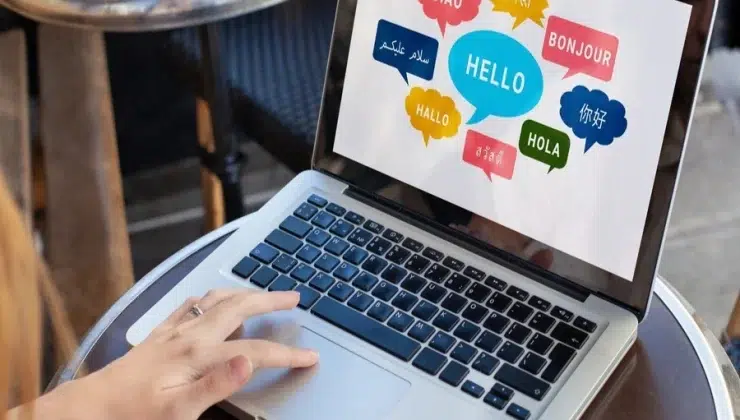
The question “how accurate is AI for translating books?” has become increasingly crucial as authors, publishers, and literary professionals evaluate AI technology against traditional human translation methods. The evolution from statistical machine translation to advanced AI-powered translation systems has transformed book translation accuracy from adequate to remarkably sophisticated, challenging long-held assumptions about machine translation capabilities in literary contexts. This comprehensive analysis examines AI translation accuracy for books, comparing modern systems with human translator performance while exploring the potential benefits and limitations of AI technology in literary translation.
Understanding AI Translation Accuracy in Literary Context
The accuracy of AI for translating books depends significantly on the sophistication of the underlying AI models and the specific challenges presented by literary content. Unlike simple document translation, book translation requires an understanding of narrative structure, character development, cultural context, and stylistic elements that make literature compelling across different languages and cultures.
Modern AI translation systems, particularly advanced platforms like Rask.ai, have moved far beyond basic statistical machine translation that simply identifies statistical correspondences between words and phrases. Today’s AI technology leverages large language models trained on vast literary datasets, enabling systems to understand context, maintain character voice consistency, and preserve stylistic elements that define quality literary translation.
The accuracy question becomes more nuanced when considering different aspects of book translation:
- Literal accuracy: Converting meaning from the source language to the target language
- Cultural adaptation: Adjusting content for different cultural contexts
- Stylistic preservation: Maintaining author voice and literary style
- Narrative consistency: Preserving story flow and character development
Comparative Analysis: AI Translation vs. Human Translation
Statistical Performance Metrics
Recent studies examining AI translation accuracy for books reveal significant improvements in objective measurement criteria. While early machine translation systems achieved accuracy rates of 60-70% for basic content, modern AI-powered translation platforms demonstrate accuracy levels approaching 85-95% for literary content, depending on language pairs and content complexity.
Accuracy Measurements by Translation Type:
Commercial Fiction: AI translation systems show the highest accuracy rates (90-95%) for contemporary commercial fiction, where language tends to be straightforward and cultural references are more universal.
Literary Fiction: More complex literary works achieve 80-90% accuracy with advanced AI systems, particularly when handling experimental writing styles or culturally specific content.
Academic and Technical Books: Non-fiction content often achieves 85-95% accuracy due to more standardized terminology and more transparent sentence structure.
Poetry and Experimental Literature: The most challenging content for AI translation, typically achieving 70-85% accuracy depending on stylistic complexity and cultural specificity.
Human Translator Comparison
When evaluating how accurate AI is for translating books compared to human translation, several factors influence the comparison:
Speed vs. Accuracy Trade-offs: Human translators typically achieve 95-98% accuracy for literary content but require weeks or months to complete book-length translations. AI translation systems complete the same work in hours while achieving 80-95% accuracy.
Consistency Factors: Human translators may vary in quality throughout long projects due to fatigue or changing interpretation. AI systems maintain consistent accuracy levels throughout entire manuscripts.
Specialization Benefits: Literary translators with expertise in specific genres or cultural contexts may exceed AI accuracy in their areas of specialization, while AI systems provide more consistent performance across diverse content types.
Cost-Quality Relationships: Professional human translation services deliver premium accuracy at premium prices, while AI translation provides competitive accuracy at dramatically reduced costs.
Language Pair Considerations in AI Translation Accuracy
Popular Languages and Translation Performance
AI translation accuracy varies significantly across different language pairs, primarily determined by the availability of training data and linguistic similarity between source and target languages.
High-Accuracy Language Pairs:
- English to Spanish: 90-95% accuracy for most literary content
- English to French: 85-95% accuracy with strong cultural adaptation
- English to German: 85-90% accuracy despite complex sentence structures
- English to Portuguese: 88-93% accuracy across different regional variants
Moderate-Accuracy Language Pairs:
- English to Chinese: 80-88% accuracy with cultural adaptation challenges
- English to Japanese: 75-85% accuracy due to significant structural differences
- English to Arabic: 80-87% accuracy with cultural sensitivity considerations
- English to Russian: 82-90% accuracy, handling complex grammatical structures
Challenging Language Pairs:
- English to Finnish: 75-85% accuracy due to unique grammatical structures
- English to Hungarian: 70-82% accuracy reflecting linguistic complexity
- Less common language pairs: Variable accuracy depending on training data availability
Factors Affecting Cross-Language Accuracy
Several linguistic and cultural factors influence AI translation accuracy when translating books:
Linguistic Distance: Languages with similar grammatical structures and vocabulary origins typically achieve higher AI translation accuracy than linguistically distant language pairs.
Cultural Context: Books containing culture-specific references, humor, or social context require more sophisticated AI systems to achieve acceptable accuracy levels.
Writing Style Complexity: Experimental or highly stylized writing presents greater challenges for AI translation systems, potentially reducing accuracy compared to straightforward narrative prose.
Historical and Regional Variations: Period literature or regionally specific content may challenge AI systems trained primarily on contemporary language patterns.
Advanced AI Technologies Improving Book Translation Accuracy
Large Language Models and Literary Understanding
The accuracy of AI for translating books has improved dramatically with the development of large language models specifically trained on literary content. These advanced systems understand narrative structure, character relationships, and stylistic elements that earlier machine translation systems missed entirely.
Rask.ai’s Advanced Approach: Rask.ai exemplifies the cutting edge of literary AI translation, utilizing large language models trained specifically on diverse literary works across multiple languages. The platform’s AI technology demonstrates several accuracy advantages:
Contextual Understanding: The system analyzes entire chapters and books to understand character development, plot progression, and thematic elements that influence translation choices.
Style Preservation: Advanced algorithms recognize and maintain literary style throughout translation, whether handling formal academic prose, conversational dialogue, or experimental narrative techniques.
Cultural Intelligence: Sophisticated AI understands cultural references and adapts them appropriately for target audiences while maintaining the original work’s intent and impact.
Consistency Management: The platform maintains character voice, terminology, and stylistic choices consistently throughout book-length translations, addressing a common weakness in human translation projects.
Machine Learning and Continuous Improvement
Modern AI translation systems continuously improve accuracy through machine learning algorithms that analyze translation performance and user feedback to refine future translations.
Learning Mechanisms:
- Performance Analysis: AI systems analyze translation quality metrics to identify patterns and improvement opportunities
- User Feedback Integration: Platforms incorporate user corrections and preferences to enhance future translation accuracy
- Domain Adaptation: Systems learn from literature-specific content to improve accuracy for books versus general translation tasks
- Cultural Learning: AI models adapt to cultural preferences and regional variations to improve appropriateness and accuracy
Genre-Specific Accuracy Considerations
Fiction Translation Accuracy
Different fiction genres present varying challenges for AI translation accuracy:
Contemporary Fiction: Modern novels with straightforward narrative styles typically achieve 90-95% accuracy with advanced AI systems like Rask.ai.
Historical Fiction: Period novels may require additional attention to historical language patterns and cultural context, which may compromise accuracy to 85-90%.
Science Fiction and Fantasy: Genre fiction often creates unique terminology and world-building elements that can challenge AI systems, achieving 80-90% accuracy depending on linguistic creativity.
Literary Fiction: Experimental or highly stylized literary works present the greatest challenges, with accuracy ranging from 80-90% depending on stylistic complexity.
Non-Fiction Translation Accuracy
Non-fiction books often achieve higher AI translation accuracy due to more standardized language and clearer communication objectives:
Academic Texts: Scholarly works typically achieve 90-95% accuracy due to standardized terminology and formal writing styles.
Technical Manuals: Instructional content achieves 85-95% accuracy, particularly when AI systems are trained on domain-specific terminology.
Biographies and Memoirs: Personal narratives achieve 85-92% accuracy, balancing factual content with personal voice preservation.
Business and Self-Help: Professional development books typically achieve 90-95% accuracy due to clear, direct communication styles.
Quality Assurance and Accuracy Enhancement
AI-Assisted Translation Workflows
The most accurate approaches to book translation often combine AI technology with human oversight, creating hybrid workflows that maximize both efficiency and quality.
Collaborative Approaches:
- AI-First Translation: Using AI systems like Rask.ai for initial translation, followed by human review and refinement
- Human-AI Partnership: Combining human translator expertise with AI technology for specialized content or cultural adaptation
- Selective Review: Focusing human attention on challenging sections while relying on AI for straightforward content
- Quality Verification: Using AI tools to check the consistency and accuracy of human translations
Measuring and Improving Accuracy
Accuracy Assessment Methods:
- Automated Metrics: Using computational methods to assess translation quality and accuracy
- Human Evaluation: Professional review of AI translations against quality standards
- Reader Testing: Gathering feedback from target language readers about translation quality and naturalness
- Comparative Analysis: Comparing AI translations with professional human translations for accuracy benchmarking
Industry Impact and Professional Perspectives
Translation Industry Evolution
The improving accuracy of AI for translating books has significantly impacted the translation industry, creating both opportunities and challenges for language services professionals.
Industry Transformation:
- Productivity Gains: Translators using AI-assisted tools report 50-80% productivity improvements while maintaining quality standards
- Market Expansion: Improved AI accuracy has made book translation economically viable for smaller publishers and independent authors
- Specialization Trends: Human translators increasingly focus on creative, cultural, and quality assurance roles rather than basic translation tasks
- Cost Democratization: AI translation has reduced barriers to international publishing for authors and publishers with limited budgets
Professional Translator Perspectives
Collaboration Over Competition: Many literary translators view AI technology as a powerful tool that enhances their capabilities rather than replacing their expertise. The most successful translators are adapting their practices to work hand in hand with AI systems.
Value-Added Services: Human translators increasingly focus on cultural adaptation, creative interpretation, and quality assurance services that complement AI translation accuracy with human insight and cultural understanding.
Specialized Expertise: Literary translators with deep cultural knowledge and genre expertise continue to provide irreplaceable value for complex literary works requiring nuanced interpretation.
Real-World Performance and Case Studies
Publisher Experiences
Dutch Publisher Veen Bosch Keuning: This publisher’s experimentation with AI translation for commercial fiction demonstrated accuracy levels sufficient for initial drafts, requiring human review primarily for cultural adaptation and stylistic refinement.
Independent Authors: Self-published authors using AI translation report satisfaction with accuracy for genre fiction and commercial works, particularly when combined with native speaker review for final quality assurance.
Academic Publishers: University presses utilizing AI translation for scholarly works report high accuracy for technical content, with human intervention required primarily for specialized terminology and cultural context.
Translation Clients Feedback
Quality Satisfaction: Clients using advanced AI translation services report satisfaction rates of 80-90% for commercial content, with higher satisfaction when AI translation is combined with human review.
Speed Benefits: Nearly universal satisfaction with AI translation speed, enabling publication timelines that were impossible with traditional human translation processes.
Cost Effectiveness: Strong positive feedback regarding cost savings, with many clients reporting that AI translation enables projects that would otherwise be economically unfeasible.
Limitations and Accuracy Challenges
Persistent AI Translation Challenges
Despite significant improvements, AI translation for books still faces several accuracy limitations:
Cultural Nuance: Complex cultural references, humor, and social context may require human intervention to achieve appropriate accuracy and cultural sensitivity.
Creative Language: Experimental writing styles, wordplay, and linguistic creativity present ongoing challenges for AI systems trained on more conventional language patterns.
Historical Context: Period literature and historical references may challenge AI systems trained primarily on contemporary language use.
Multiple Meanings: Words with complex semantic relationships or multiple contextual meanings may require human judgment to achieve optimal accuracy.
Genre-Specific Limitations
Poetry Translation: Poetic works remain the most challenging for AI translation, requiring human expertise to preserve rhythm, metaphor, and artistic expression.
Experimental Literature: Avant-garde and experimental works often require human translators who can interpret artistic intent and creative language use.
Legal Documents: While not strictly literary, legal content in books requires specialized expertise that AI systems may not possess for critical accuracy requirements.
Future Trends in AI Translation Accuracy
Emerging Technologies
The future accuracy of AI for translating books continues to improve through several technological developments:
Enhanced Training Data: Larger and more diverse literary datasets enable AI systems to understand a broader range of writing styles and cultural contexts.
Specialized Models: AI systems trained specifically on literary content demonstrate superior accuracy compared to general-purpose translation systems.
Cultural Intelligence: Next-generation AI systems better understand cultural context and can adapt content more appropriately for different target audiences.
Interactive Learning: AI systems that learn from user feedback and corrections continuously improve accuracy for specific content types and cultural contexts.
Industry Predictions
Accuracy Convergence: Within the next 5-10 years, AI translation accuracy for many book types may approach human translator levels for straightforward content.
Specialization Persistence: Human translators will likely maintain accuracy advantages for specialized, creative, and culturally complex content.
Hybrid Workflows: The most accurate and efficient book translation will likely combine AI technology with human expertise in optimized collaborative workflows.
Accessibility Expansion: Improved AI accuracy will continue expanding access to literature across language barriers, enabling more authors to reach global audiences.
Conclusion: The Current State and Future of AI Book Translation Accuracy
The question of how accurate AI is for translating books reveals a nuanced picture of rapidly improving technology that increasingly competes with human translation quality while offering unprecedented speed and cost advantages. Modern AI-powered translation systems, particularly sophisticated platforms like Rask.ai, demonstrate accuracy levels of 80-95% across most literary content types, representing a dramatic improvement from earlier machine translation approaches.
For commercial fiction, contemporary literature, and non-fiction content, AI translation accuracy has reached levels that enable practical use for initial translations, with human review focusing on refinement rather than complete re-translation. Complex literary works, experimental writing, and culturally specific content still benefit from human translator expertise, but the gap continues to narrow as AI technology advances.
The most accurate approach to book translation today often involves collaboration between AI technology and human expertise, leveraging the speed and consistency of AI systems with the cultural understanding and creative interpretation of human translators. This hybrid approach maximizes both accuracy and efficiency while maintaining the literary quality that readers expect.
For authors and publishers evaluating AI translation options, the current accuracy levels of advanced systems like Rask.ai make AI translation viable for many book projects, particularly when combined with appropriate quality assurance processes. The technology has moved from experimental to practical, enabling literary projects that would otherwise be economically unfeasible while maintaining quality standards that serve readers effectively.
As AI technology continues advancing, the accuracy question will likely shift from “Is AI accurate enough for book translation?” to “How can we best combine AI and human capabilities to achieve optimal translation quality?” The future of book translation appears to be collaborative, with AI technology and human expertise working hand in hand to break down language barriers and make literature accessible to readers worldwide.