How AI Sports Cameras Transform Content Creation in 2025
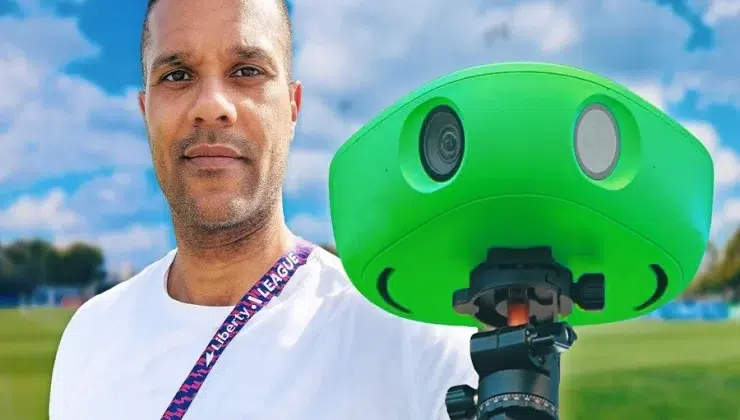
In the fast-paced digital era of 2025, content creation has become more democratized than ever before. With the rise of solo creators, influencers, and athletes documenting their performance and lifestyle, the demand for tools that simplify content production has skyrocketed. Among the most game-changing innovations is the AI Sports Camera, a powerful device that has completely redefined how individuals create, share, and elevate sports content—without the need for a full production crew.
The Rise of the Solo Creator
It is worth considering the cultural change behind the introduction of AI-controlled cameras, before delving into the technology. The creator economy has been growing exponentially over the past few years, with websites such as YouTube, TikTok, and Instagram providing creators access to a direct audience. It can be a skateboarder filming his trick, a tennis player trying to switch angles and examine his form, or a cyclist vlogging his path, solo sports creators want high-quality and professional video but they may not have the budget or a team to create it.
Enter the AI Sports Camera, a smart, autonomous filming solution that puts the power of advanced videography into the hands of one.
What Is an AI Sports Camera?
An AI Sports Camera: a small smart camera that is dedicated to shooting sports and active movement. Its distinguishing feature over conventional action cameras is its in-built artificial intelligence, enabling it to keep the subject in focus, dynamically frame shots, and even edit or label highlight moments in real-time automatically.
These cameras use a combination of computer vision, motion prediction algorithms, and sometimes even GPS or wearable tracking technology to follow the user as they move. With no operator required, the camera acts like an invisible personal cameraman that’s always ready.
Key Features Driving the Transformation
1. Auto-Tracking and Smart Framing
State of the art AI Sports Cameras are also able to follow a subject and maintain it perfectly within the frame, whether they are racing around a track, riding a wave, or executing tricks on a BMX bike. These cameras make use of AI-driven subject recognition and predictive tracking, meaning they predict motion instead of responding to it. This brings about a smoothly shot, motion picture footage as compared to the jitters and stuttering of manually shot footage.
2. Gesture and Voice Control
Voice and gesture recognition on 2025 models will be the new norm, and it will be sufficient for solo creators not to have to touch the camera during the session. Recording can be triggered or deactivated by a basic wave or spoken command, modes can be changed or photos can be captured. This is particularly handy when operating at high speed or in your hands-busy activities such as skiing or rock climbing.
3. Real-Time Editing and Highlights Detection
AI is not just helping with capture—it’s revolutionizing post-production too. Many high-end AI Sports Cameras now include onboard processing that can identify key moments (like goals, jumps, or turns) and automatically compile a highlight reel. This eliminates hours of editing time and allows creators to publish content within minutes of finishing their activity.
4. Multi-Angle Capture and Drone Integration
Advanced systems are now integrating drone technology or using multiple lenses to simulate different angles. AI orchestrates transitions between shots for a dynamic, TV-quality effect. Solo cyclists, runners, or extreme sports athletes can showcase their performance from multiple views—without hiring a videographer.
Benefits for Solo Creators
The primary advantage of AI Sports Cameras is freedom. Athletes and adventurers no longer need a team to produce quality content. They can focus on performance while trusting the tech to handle the production side. This empowers creators to:
- Scale their content without hiring additional help
- Improve training through automatic performance analysis
- Engage followers with more dynamic, polished videos
- Monetize faster by reducing turnaround time from filming to publishing
Popular Use Cases in 2025
- Personal Branding for Athletes: Athletes use AI Sports Cameras to build personal brands, showcase skills, and connect with fans directly.
- Coaching and Analysis: Coaches and players capture detailed footage for performance reviews without needing a second person to film.
- Extreme Sports Vlogging: From parkour to snowboarding, creators can document entire experiences with cinematic quality.
- Fitness Influencing: Fitness trainers record perfect, uninterrupted tutorials while staying in motion.
What’s Next?
The evolution of AI in sports videography is even more promising. Very soon developers are implementing generative AI voiceovers, automatic captions, and AI-enhanced storytelling. The cameras can work with smartwatches and biometrics to deliver context-sensitive shooting, such as grabbing a shot of a athlete on a sprint when her heart rate is at its peak, or changing angles when a basketballer spikes adrenaline when dunking the ball.
5G and satellite connectivity also mean livestreaming with AI-enhanced visuals is becoming the norm. Solo creators can broadcast ultra-HD footage with automatic scene switching, live audience interaction, and AI moderation.
Final Thoughts
The AI Sports Camera is not just a gadget—it’s a revolutionary tool that empowers individuals to create like never before. By removing technical barriers, it allows solo creators to tell their stories, share their passions, and build audiences through powerful, professional-looking content. In 2025, we’re witnessing the dawn of a new era in content creation—one where anyone, anywhere, can shoot like a pro with just one device.
As AI continues to evolve, these cameras will only become smarter, faster, and more intuitive. For the solo sports creator, that means fewer limits and more opportunities to inspire the world.