Atlanta Bound: The Stress-Free Blueprint for Moving to Georgia
Introduction: Embracing the “Silicon Peach”
Atlanta is more than just a Southern capital; it is a burgeoning economic powerhouse often dubbed the “Silicon Peach.” With a robust corporate presence led by giants like Delta Air Lines and an influx of tech innovation, the city has become a premier destination for professionals and families alike. Moving to Georgia requires more than just hiring a truck; it demands an understanding of the region’s unique geography, administrative quirks, and cultural heartbeat. This blueprint provides the logistical roadmap and local insight necessary to turn a daunting relocation into a streamlined transition.
Why Atlanta is the Top Relocation Destination
Atlanta offers a rare combination of high-growth professional opportunities and a relatively accessible cost of living. Beyond the corporate headquarters and world-class universities, the region provides a distinct lifestyle that balances high-energy urban centers with sprawling, serene suburbs. From the vibrant public spaces of Piedmont Park to the extensive medical networks supported by Emory University, the city is designed for connectivity and quality of life.
How to Use This Blueprint for a Seamless Transition
Moving to a new state is complex, but it becomes manageable when broken down into phases. This guide acts as your primary navigation tool, covering everything from the socio-economic nuances of the perimeter to the technical requirements of the Georgia Department of Driver Services. By following this structured timeline, you can move from the packing phase to settling into your new home with minimal friction.
Decoding the Geography: ITP vs. OTP
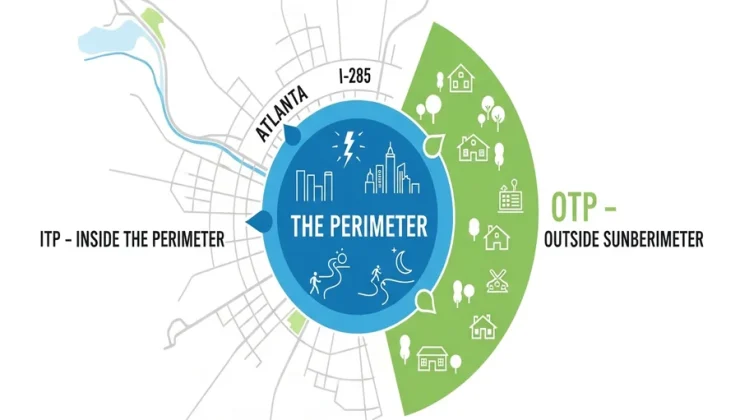
Understanding Atlanta’s geography: The I-285 perimeter divides the city into two distinct lifestyle zones—urban ITP and suburban OTP.
In Atlanta, your location is defined by a simple shorthand: ITP (Inside the Perimeter) or OTP (Outside the Perimeter). This is the secret code of the city.
Understanding “The Perimeter” (I-285)
Interstate 285 is the circular highway that rings the city. While it is a piece of transit infrastructure, it acts as the primary cultural and economic divider for the metro area. Understanding where you fall in relation to this highway is critical for predicting your commute and your daily lifestyle.
Living Inside the Perimeter (ITP): Urban Energy and Walkability
Choosing to live ITP means prioritizing access to culture, nightlife, and mass transit. Neighborhoods here offer high walkability and proximity to the Atlanta BeltLine. While apartments in these zones may come at a premium, the trade-off is a life deeply integrated with the urban core.
Living Outside the Perimeter (OTP): Space, Schools, and Suburban Comfort
Moving OTP is ideal for families or professionals seeking more square footage, top-rated school districts, and a quieter pace. The trade-off for this space is often a higher reliance on the highway system, making your proximity to key arteries a vital logistical consideration.
Choosing Your Atlanta Vibe: Neighborhood Spotlights
Every corner of Atlanta has a distinct personality. When scouting for apartments or homes, focus on these primary hubs.
Buckhead: The Intersection of Luxury and Business
Buckhead is the city’s high-end commercial district. It features luxury high-rises, fine dining, and a fast-paced professional atmosphere. It is the perfect choice for those who want to be in the center of the executive world.
Midtown and Old Fourth Ward: The Heart of the BeltLine Culture
If you prioritize arts, recreation, and modern connectivity, look here. These areas serve as the gateway to the BeltLine, where old industrial paths have been repurposed into vibrant recreational trails.
Decatur: Academic Excellence and Community Charm
Decatur offers a “small-town” feel within the metro area. With a thriving independent business scene and proximity to world-class institutions like Emory University, it is a favorite for academics and young families.
Reynoldstown and Edgewood: Artistic Soul and Historic Roots
These neighborhoods maintain a gritty, artistic spirit. They are perfect for those who prefer historic homes and a local, neighborhood-focused lifestyle over the polished veneer of newer developments.
Phase 1: The Logistics Master Timeline
Managing your move requires a strict adherence to a timeline to avoid last-minute stress.
8 Weeks Out: Decluttering and Inventory
Begin by auditing your possessions. Long-distance moves are expensive; do not pay to move items you no longer need. Host a sale or donate to ensure your inventory is lean and organized.
6 Weeks Out: The “Move Binder” and Gathering Moving Quotes
Start a physical or digital folder for every receipt, contract, and estimate. When contacting moving companies, request at least 3 in-home or virtual estimates to accurately compare service levels. For those planning a long-distance transition, it’s vital to work with specialized NJ to Georgia movers who have a proven track record of navigating the Northeast-to-South corridor. This ensuring your logistics are handled by experts familiar with both NJ’s busy streets and Atlanta’s unique geography.
4 Weeks Out: Securing Your Moving Partner and Packing Supplies
Once you have vetted a company, secure your moving date. Purchase high-quality packing supplies early. Labeling boxes by room is non-negotiable for an efficient arrival.
2 Weeks Out: The Essentials Bag and the Safe Box strategy
Pack a “survival bag” containing medications, toiletries, important documents, and chargers. Keep your “Safe Box” with passports, birth certificates, and jewelry with you in your personal vehicle, not with the movers.
Vetting Your Movers: Ensuring a Secure Interstate Move
When hiring professional movers, your due diligence protects your assets.
Verifying Credentials: USDOT and FMCSA Regulations
Always verify that your chosen company has an active USDOT number. This indicates they are registered with the Federal Motor Carrier Safety Administration and adhere to safety regulations.
Understanding Insurance: Full Value Protection vs. Released Value Protection
Standard liability is rarely enough. Research “Full Value Protection” to ensure that if your belongings are damaged, the mover is liable for the replacement cost rather than a mere fraction of the item’s weight.
Red Flags to Watch for in a Moving Estimate
Avoid companies that refuse an in-home inspection or demand a large cash deposit upfront. Transparency in pricing is the hallmark of a professional service.
Settling the Administrative Essentials
Georgia has specific requirements that every new resident must navigate to establish residency.
The Georgia Department of Driver Services (DDS): License and Vehicle Registration
You have 30 days to obtain a Georgia driver’s license. The DDS process requires specific documentation, so check their website to verify what proofs of residency are currently accepted.
Navigating Vehicle Emissions and Taxes in Georgia
Most counties in the Atlanta metro area require annual emissions testing. Furthermore, prepare for the Ad Valorem tax, which is calculated based on your vehicle’s fair market value.
Voter Registration and the Georgia Secretary of State
You can update your voter registration during your DMV visit or via the Georgia Secretary of State’s website. Ensuring your registration is current is vital for local participation.
Updating Your Medical Records: Emory Healthcare, Piedmont, and Georgia Tech Networks
Research your new healthcare network early. Atlanta is anchored by Emory Healthcare and Piedmont, which offer comprehensive systems that make transferring medical records simple if you initiate the request before your arrival.
Powering Your New Home: The Georgia Utility Guide
Utility setup in Georgia can be fragmented, so understanding the landscape is essential for a smooth arrival.
Electricity: Georgia Power, Cobb EMC, and Sawnee EMC
Georgia Power is the primary provider for much of the city, but suburban areas are often serviced by local co-ops like Cobb EMC or Sawnee EMC. Verify your provider by checking your specific address through the municipal portal.
Natural Gas: Atlanta Gas Light, Gas South, and SCANA
Unlike electricity, the natural gas market is deregulated. Atlanta Gas Light (AGL) maintains the infrastructure, but you must choose a service provider like Gas South or SCANA to manage your billing and rates.
Conclusion
Relocating to Georgia is an exciting milestone that rewards those who plan with precision. By mastering the logistics, understanding the geographical nuances of the perimeter, and handling your administrative duties early, you pave the way for a stress-free transition. Remember, the “Silicon Peach” thrives on community. As you settle into your new neighborhood, embrace the local culture, leverage the professional networks at your disposal, and take time to explore the unique beauty of the region. Your move is the first step toward a new chapter in a city that truly offers the best of both worlds.