Train or private tour: a practical comparison
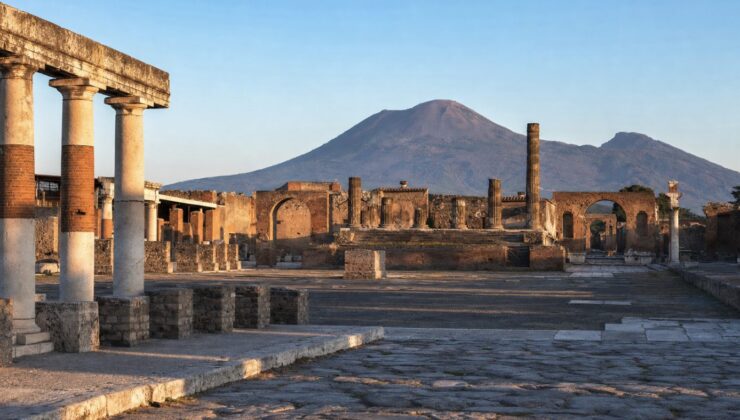
Sorrento to Pompeii by private tour: history, comfort and flexibility in one day
Is it better to visit Pompeii from Sorrento by train or with a private tour? Both options work, but they suit different kinds of travellers.
The Circumvesuviana train is economical and connects Sorrento with Pompei Scavi–Villa dei Misteri, close to one of the main entrances to the archaeological site. A private service reduces changes, waiting and the need to organise each stage independently. The most important consideration is not the relatively short distance between Sorrento and Pompeii, but how much time and energy travellers want to preserve for the visit itself.
Travellers who prefer door-to-door transport and a schedule arranged around their group can choose a private tour from Sorrento to Pompeii. This option can be particularly practical for families, small groups, passengers carrying luggage and anyone who wants an agreed pickup and return time.
Neither choice is universally better. The train remains an effective solution for independent travellers on a limited budget, while a private tour offers greater control over timing, comfort and the overall rhythm of the day.
The decision becomes easier when it is based on the real circumstances of the journey.
The train may be sufficient when:
- travelling alone or as a couple;
- carrying little or no luggage;
- keeping transport costs as low as possible;
- feeling comfortable using local trains;
- having a flexible timetable;
- being happy to walk between the station and the entrance;
- visiting Pompeii without additional destinations.
A private tour may be more suitable when:
- travelling with children or older relatives;
- visiting as a small group;
- carrying several bags or a pushchair;
- requiring a child seat;
- preferring pickup directly from a hotel or villa;
- needing to return by a specific time;
- combining Pompeii with another destination;
- wanting to add a licensed archaeological guide;
- avoiding the need to coordinate trains and local transport.
The private option should not be treated as essential. Its value lies in reducing logistical effort and adapting the journey to the people travelling.
The journey is short, but the archaeological site is extensive
Pompeii can normally be reached from Sorrento in less than an hour by road, although travel times depend on traffic, pickup location and the time of day.
The Circumvesuviana also provides a direct rail connection between Sorrento and Pompei Scavi–Villa dei Misteri. It is one of the simplest public transport options for independent visitors.
Reaching Pompeii, however, is only the beginning of the day.
The archaeological park covers a vast area of streets, houses, temples, baths, public buildings and open spaces. Its ancient paving is uneven, distances can be considerable and shade is limited in many parts of the site.
The physical effort required inside Pompeii is therefore more significant than the journey from Sorrento. Good planning should preserve time and energy for walking through the ruins rather than using them all on transport and connections.
What visitors are seeing inside Pompeii
Pompeii was a thriving Roman city in Campania, with homes, workshops, temples, bath complexes, theatres and public spaces.
The Forum formed the centre of civic and religious life. The baths reveal the social importance of communal spaces, while private houses show how families lived around atriums, gardens, decorated rooms and service areas.
Shops and thermopolia offer evidence of everyday commerce and food culture. Frescoes, mosaics, inscriptions and household objects help visitors understand the city not simply as an archaeological monument, but as a place where people worked, traded, ate and socialised.
The eruption of Mount Vesuvius in AD 79 buried Pompeii beneath volcanic material. The disaster destroyed the city, but the layers that covered it also protected buildings, decorations and objects that would otherwise have disappeared over time.
Excavations began centuries later and continue to produce new discoveries. Some buildings may be temporarily closed for conservation, maintenance or research, so the exact route available can vary.
A successful visit does not require an academic knowledge of Roman history. A few points of context and enough time to observe the surroundings can make the streets far more meaningful.
Why private transport can change the experience
The main advantage of a private service is not the appearance of the vehicle. It is the reduction of small organisational difficulties.
Instead of travelling to the station, checking the timetable, finding the correct platform and adapting the return journey to the available trains, passengers leave from an agreed address and return to a predetermined location.
This can be useful for groups whose members move at different speeds or need regular breaks.
The service may also simplify:
- travelling with children;
- transporting pushchairs;
- carrying luggage;
- arranging child seats;
- coordinating a restaurant reservation;
- adding another destination;
- reaching the site early;
- returning to Sorrento by a specific time.
The driver manages the road journey and remains responsible for transport. This should not be confused with a guided archaeological visit.
Driver and licensed guide are different services
A professional driver and a licensed tour guide perform separate roles.
The driver handles:
- pickup and return;
- transport between destinations;
- route planning;
- parking and meeting points;
- communication about timing;
- any agreed additional stops.
A licensed guide provides detailed historical and archaeological explanations inside Pompeii.
An English-speaking driver may offer general information during the journey, but does not automatically replace an authorised guide within the archaeological area.
Travellers who want a structured explanation of the Forum, houses, baths, temples and daily life should ask whether a licensed archaeological guide can be arranged.
Before confirming the service, it is useful to establish:
- whether the guide is included;
- whether the guide meets the group at the entrance;
- how long the guided visit lasts;
- which language is required;
- whether tickets are included;
- which entrance will be used;
- where the driver will wait.
Clear distinctions prevent misunderstandings and make it easier to compare quotations.
How much time should be allowed inside Pompeii?
There is no single ideal duration.
A focused first visit with a guide may last around two hours, while a more complete exploration can easily take three or four hours. Travellers with a strong interest in archaeology may spend most of the day inside the park.
A short visit should concentrate on a coherent group of important areas rather than attempting to cross the entire site.
A possible first-time route may include:
- the Forum;
- one or two well-preserved houses;
- a bath complex;
- a thermopolium or commercial street;
- the theatres or amphitheatre;
- selected gardens, mosaics and frescoes.
The exact route depends on the entrance used, current building openings and the interests of the group.
Families with young children, older visitors and travellers with reduced mobility may need a shorter itinerary with more pauses.
Pompeii rewards attention more than speed. Two carefully observed hours can be more satisfying than four hours spent rushing between distant areas.
Choosing the right departure time from Sorrento
An early departure can provide several advantages, especially during warm or busy periods.
Morning temperatures are generally more comfortable, and visitors can begin walking before the strongest heat develops. Earlier arrival may also leave enough time for lunch or a second destination afterwards.
A later visit can still work well, particularly outside the hottest months or when the morning admission period is busier. The decision should consider:
- season;
- weather forecast;
- ticket availability;
- opening hours;
- the age and stamina of the group;
- restaurant reservations;
- other destinations;
- the required return time.
During the period from 16 March to 14 October, admissions are divided into two official time windows. The morning window runs from 9:00 am to 1:00 pm, while the afternoon window runs from 1:00 pm to 5:30 pm.
The afternoon allocation is smaller, so advance planning is particularly important when choosing a later entrance.
Current ticket rules and admission limits
Pompeii now operates with personal tickets bearing the visitors’ names and a daily limit of 20,000 admissions.
From 2 March 2026, official online ticket purchases for the Great Pompeii sites are handled exclusively through Vivaticket.
Travellers should enter the names correctly and carry identification when required. Tickets purchased online can be shown electronically, allowing visitors to proceed towards the entrance without relying on an unofficial reseller.
From 16 March to 14 October, admissions are divided as follows:
- 9:00 am to 1:00 pm: up to 15,000 visitors;
- 1:00 pm to 5:30 pm: up to 5,000 visitors.
These limits make advance purchase advisable during weekends, holidays and periods of high demand.
Tickets are valid for a single entry. Visitors cannot leave the archaeological park for lunch and later return using the same ticket.
This rule should be considered when planning meals and the overall duration of the visit.
Pompeii Express and Pompeii+ tickets
As of January 2026, the two principal ticket options are Pompeii Express and Pompeii+.
Pompeii Express
The Pompeii Express ticket costs €20 at the standard rate.
It provides access to the ancient city of Pompeii but does not include the suburban villas route.
It is appropriate for visitors focusing on the principal archaeological area during a first or relatively short visit.
Pompeii+
The Pompeii+ ticket costs €25 at the standard rate.
It includes the ancient city as well as the suburban villas route, including sites such as the Villa of the Mysteries and Villa of Diomedes, together with Villa Regina and its Antiquarium in Boscoreale.
This ticket is better suited to travellers who have enough time and energy to explore beyond the central urban area.
Reduced admission of €2 is available to eligible visitors under the applicable conditions. Eligibility should be checked on the official ticket platform before purchase.
The cost of private transport and any licensed guide is normally separate from the archaeological park entrance ticket unless the chosen package explicitly states otherwise.
Seasonal opening hours
Pompeii follows different opening hours according to the season.
From 16 March to 14 October:
- opening: 9:00 am;
- last entrance: 5:30 pm;
- closing: 7:00 pm.
From 15 October to 15 March:
- opening: 9:00 am;
- last entrance: 3:30 pm;
- closing: 5:00 pm.
Individual houses and buildings may close earlier than the archaeological park itself. Temporary closures may also occur because of conservation work, special events or operational requirements.
Visitors should check the official information shortly before travelling, even when tickets have already been purchased.
Choosing an entrance and meeting point
Pompeii has several official entrances, including Porta Marina, Piazza Esedra and Piazza Anfiteatro.
Visitors arriving by Circumvesuviana usually use the area around Porta Marina because Pompei Scavi–Villa dei Misteri station is nearby.
A private driver may suggest another entrance when it is more practical for the planned route, parking arrangements or meeting with a guide.
The entrance should be agreed before the day of the visit, particularly when:
- a guide is meeting the group;
- tickets have a timed admission;
- the itinerary begins from a specific part of the city;
- a passenger has mobility difficulties;
- the driver will wait at another location.
A vague arrangement such as “meet at Pompeii” is not precise enough. The name of the entrance and a telephone contact should appear in the booking information.
What to wear and bring
Pompeii is an outdoor archaeological site with extensive uneven paving.
Comfortable, supportive shoes are essential. Sandals with little grip or delicate footwear can make walking difficult.
During warmer months, visitors should bring:
- water;
- a hat;
- sunscreen;
- breathable clothing;
- sunglasses;
- any necessary medication.
A small bag is more practical than a large backpack. Restrictions may apply to oversized luggage, although luggage storage services are available at selected entrances.
In cooler or unsettled weather, a lightweight rain jacket can be useful. The open nature of the site means there is limited shelter during sudden rain.
Food planning also matters. Since tickets do not permit exit and re-entry, travellers who want to eat outside should arrange lunch before entering or after completing the visit.
Visiting Pompeii with children
Pompeii can be fascinating for children when the visit is adapted to their age and attention span.
A long route filled with dates and architectural terminology may quickly become exhausting. A more engaging approach focuses on daily life:
- where people ate;
- how streets were crossed;
- what shops sold;
- how houses were decorated;
- where people bathed;
- how the city was affected by the eruption.
A private schedule allows families to adjust the pace, pause when needed and shorten the visit if children become tired.
Parents should consider:
- child-seat requests for the transfer;
- pushchair practicality on uneven paving;
- regular water and bathroom breaks;
- protection from the sun;
- a shorter guided route;
- avoiding the hottest hours.
Pushchairs can be difficult to use in some parts of the site. A baby carrier may be more practical for very young children, depending on the route and weather.
Accessibility and reduced mobility
Pompeii’s ancient streets present unavoidable accessibility challenges, including uneven stones, raised pavements, steps and changes in level.
The archaeological park offers the Pompeii for All route, designed to improve access for visitors with mobility difficulties. The recommended entrance and available route should still be checked before travelling.
Travellers should communicate their needs clearly when booking private transport.
Useful information includes:
- whether a wheelchair is used;
- whether it folds;
- whether the passenger can manage some steps;
- the number of accompanying travellers;
- required vehicle space;
- preferred entrance;
- need for additional boarding time.
Private transport can simplify arrival and departure, but it cannot make every building inside the ancient city accessible.
A realistic route agreed in advance is more useful than attempting to include areas that may prove difficult or unsafe.
Combining Pompeii with another destination
A private tour can make it easier to combine Pompeii with another stop, but the day should remain realistic.
Pompeii and Sorrento
This is one of the simplest combinations.
Visitors can spend several hours at the archaeological site and still have time to walk through Sorrento, enjoy lunch or return to their accommodation without an excessively long day.
Pompeii and Positano
The combination offers a contrast between archaeology and the coastal landscape.
Traffic on the road towards Positano must be considered, particularly in the warmer months. The length of the Pompeii visit should leave enough time to enjoy Positano rather than merely stopping for a photograph.
Pompeii and Mount Vesuvius
This pairing connects the ancient city with the volcano responsible for its destruction.
The Vesuvius visit involves a separate journey and an uphill walk. Entrance arrangements, weather and access conditions should be checked in advance.
Pompeii and Herculaneum
Both sites reveal Roman life, but they offer different scales and states of preservation.
Herculaneum is more compact, while Pompeii is considerably larger. Visiting both in one day is possible, but it requires stamina and careful timing.
Pompeii and a winery
A winery visit on the slopes of Vesuvius can provide a slower conclusion after several hours of walking.
Lunches and tastings should be booked beforehand and included in the itinerary.
The goal should not be to collect the greatest number of destinations. It should be to create a day in which each stop has enough time to feel worthwhile.
Is Pompeii and Herculaneum in one day realistic?
Yes, but it is a demanding itinerary.
Travellers must account for:
- transport between the sites;
- ticketing and entrance procedures;
- several hours of walking;
- weather;
- lunch;
- the return journey to Sorrento.
The combination works best for adults and older children with a strong interest in archaeology.
Families with young children, visitors with reduced mobility and travellers who prefer a slower rhythm may gain more from choosing one site.
Herculaneum is smaller and can usually be explored in less time, but the density of its preserved houses and details still deserves attention.
A guided visit can help distinguish the two cities and explain why their buildings were preserved differently.
What should a private-tour quotation include?
A clear quotation should explain exactly what the service covers.
Travellers should check whether it includes:
- hotel pickup and return;
- vehicle category;
- maximum passenger capacity;
- luggage capacity;
- driver service;
- fuel;
- tolls;
- parking;
- waiting time;
- additional stops;
- archaeological park tickets;
- licensed guide;
- meals or tastings;
- child seats;
- cancellation conditions.
Sorrento Limo lists English-speaking drivers, taxes, tolls, fuel and parking among the inclusions for several of its private tours. Entrance tickets, lunch and private guide services may be requested separately depending on the itinerary.
The exact conditions of the chosen service should still be confirmed in writing.
A price is useful only when the traveller understands which changes could increase it.
Questions to ask before confirming
Before booking, travellers should be able to answer the following questions:
- Where will pickup take place?
- What is the planned departure time?
- Which entrance to Pompeii will be used?
- Are the personal entrance tickets included?
- Who will purchase the tickets?
- Is a licensed archaeological guide included?
- Where will the guide meet the group?
- How long is the visit expected to last?
- What type of vehicle will be used?
- Is there enough room for passengers and luggage?
- Are tolls and parking included?
- Can another destination be added?
- What happens if the itinerary runs longer?
- Are child seats available?
- What is the cancellation policy?
Clear answers make the service easier to evaluate and reduce last-minute uncertainty.
Common mistakes to avoid
Arriving without an entrance plan
Timed admission, personal tickets and daily visitor limits make advance organisation increasingly important.
Assuming entrance tickets are included
Transport and archaeological admission are separate unless the quotation states otherwise.
Confusing the driver with the guide
The driver manages the journey. A licensed guide provides the detailed visit inside the site.
Planning to leave and re-enter
Standard Pompeii Express and Pompeii+ tickets allow one entry only.
Underestimating the heat
Summer sun and limited shade can make an afternoon visit physically demanding.
Wearing unsuitable shoes
Ancient paving is uneven and tiring. Footwear has a substantial effect on comfort.
Trying to see everything
Pompeii is too extensive to cover fully during a short first visit.
Adding too many destinations
A private car reduces logistical friction, but it does not create extra hours.
Ignoring the return journey
Enough time should be allowed for traffic and the group’s energy levels at the end of the visit.
Making a day trip to Pompeii work well
A rewarding trip from Sorrento depends on three elements: enough historical context to understand what is being seen, a transport plan that suits the group and a realistic pace inside the archaeological park.
The train offers a direct and affordable route for independent travellers. A private tour provides hotel pickup, greater control over timing and an easier way to include children, luggage, a guide or an additional destination.
The most expensive option is not automatically the best, and the cheapest is not always the most practical. The right choice is the one that allows the group to arrive with enough time and energy to experience Pompeii properly.
Pompeii is not a place to pass through merely because it appears on a list. Its streets, houses and public spaces become meaningful when visitors slow down enough to notice how an ancient city once lived.
Organising tickets, transport and timing in advance turns the journey from Sorrento into more than a logistical exercise. It creates the space needed to concentrate on the ruins, the landscape and the extraordinary human story preserved beneath Vesuvius.