How to Organise Small Claims Evidence for a Security Deposit Dispute

Moving out of a rental property should be straightforward: complete the final inspection, return the keys, and wait for the security deposit. Unfortunately, some renters receive unexplained deductions, while others hear nothing from the landlord at all.
A delayed deposit does not automatically mean that a lawsuit is necessary. Many disputes can be resolved through clear communication and a formal written request. However, renters should organise their records early in case the disagreement continues.
Review the Lease and Deposit Records
Start with the lease. Check the sections covering the security deposit, cleaning responsibilities, property condition, required notice, and move-out procedures.
Next, locate proof of the deposit payment. This could include:
- A bank or credit card statement
- A copy of the check
- A payment receipt
- A confirmation email
- A record from an online rent payment system
Write down the deposit amount, the date it was paid, the move-out date, and the date the keys were returned. These details establish the basic timeline of the dispute.
Identify Useful Small Claims Evidence
Security deposit disputes often depend on the condition of the rental property. Photographs and videos taken before moving in and after moving out can help show whether damage occurred during the tenancy.
Other useful records may include:
- Move-in and move-out inspection reports
- Maintenance requests
- Emails about existing damage
- Cleaning and repair receipts
- Messages confirming that the keys were returned
- Evidence that rent and other charges were paid
- Statements from roommates or other witnesses
Each record should support a specific fact. For example, a move-in photograph may show that a damaged cabinet existed before the tenancy, while a cleaning receipt may show what the renter did before leaving.
Request a Written Explanation
If the deposit has not arrived, contact the landlord in writing. Include the rental address, move-out date, deposit amount, and a direct request for either the refund or an explanation of any deductions.
Keep the message brief and factual. Avoid personal accusations or emotional language that may distract from the issue.
If the landlord responds by phone, send a follow-up email summarising the conversation. This creates a written record and gives the landlord an opportunity to correct any misunderstanding.
Arrange Small Claims Evidence in Chronological Order
Documents are easier to understand when they are placed in the order in which events occurred. A useful timeline could include:
- The date the lease was signed
- The date the deposit was paid
- The move-in date and initial property condition
- Maintenance issues reported during the tenancy
- The date notice was given
- The final inspection and return of the keys
- Requests for the deposit
- The landlord’s responses or deductions
Avoid keeping important information scattered across email accounts, messaging apps, photo folders, and paper files. Use clear filenames and preserve original records whenever possible.
Make a Specific Request
A request is more effective when it clearly states what the renter wants. Instead of asking generally for the deposit to be returned, identify the amount being requested and briefly explain why.
If the landlord has provided a list of deductions, separate the charges you accept from those you dispute. For example, a renter might accept a documented cleaning expense but challenge a repair charge for damage that existed before the tenancy began.
The request should also include a reasonable date for the landlord to respond. This creates a clear opportunity to resolve the issue before either party considers another step.
Use a Free Demand Letter Generator When Reminders Fail
Ordinary reminders may stop being effective when the landlord repeatedly delays, ignores messages, or refuses to explain the deductions. In that situation, a formal demand letter can present the dispute more clearly.
A free demand letter generator can help turn details such as the deposit amount, important dates, property condition, previous communications, and requested resolution into a structured written demand.
Before sending the letter, review every statement for accuracy. Keep the tone professional, avoid exaggerated threats, and save a copy of the final document. Renters should also retain proof of how and when the letter was delivered.
Keep Small Claims Evidence Connected to the Facts
Collecting documents is only part of the process. A renter should also be able to explain what each record demonstrates.
ClaimResolver helps users organise small claims evidence, including leases, payment records, photographs, messages, receipts, and important dates, in one private case workspace. Users can create an editable factual timeline and connect supporting materials to the events they help explain.
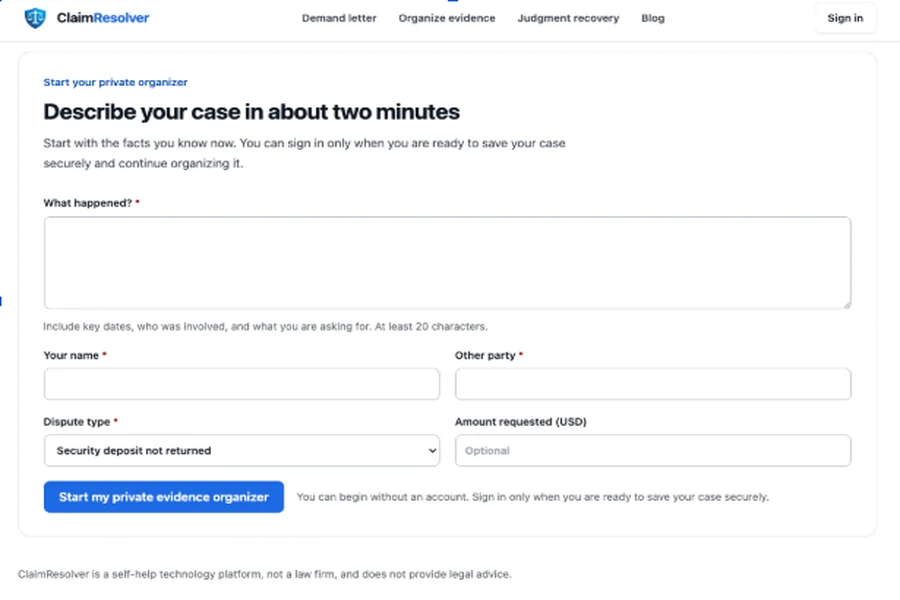
ClaimResolver is a self-help technology platform rather than a law firm. It does not provide legal advice, decide whether someone should file a case, or replace the need to check local court requirements.
Check Local Requirements Before Taking Action
If the dispute remains unresolved, the renter may consider seeking legal advice or using small claims court. Deposit rules, filing limits, deadlines, and required documents vary by jurisdiction.
Before taking action, review official state and local resources. Confirm which court handles the dispute, what forms may be required, how the other party must be notified, and how evidence should be presented.
Avoid relying solely on general online information for a location-specific legal question.
Review Your Small Claims Evidence Before the Next Step
Before continuing with the dispute, confirm that the available records answer several basic questions:
- How much was the deposit?
- When and how was it paid?
- What did the lease require?
- What was the property’s condition before and after the tenancy?
- When were the keys returned?
- What deductions did the landlord claim?
- What attempts were made to resolve the disagreement?
- What amount is the renter currently requesting?
A clear timeline and organized records can make the dispute easier for the landlord, an adviser, or a court to understand.
Focus on Facts, Not Frustration
A missing security deposit can be stressful, especially when the landlord provides little information. The most productive response is usually to document the amount involved, preserve evidence of the property’s condition, communicate in writing, and make a specific request.
Even if the dispute is resolved without formal action, organized records can support a more focused conversation. If further steps become necessary, the same preparation can help the renter explain what happened without relying on scattered messages or memory alone.