How Does Video Conferencing Installation Enhance Hybrid Workplaces?
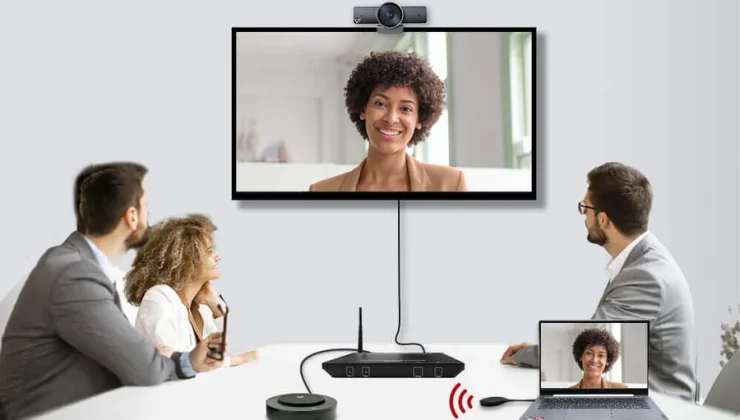
Living and working in Perth has always shaped how I think about connection. We’re one of the most isolated capital cities in the world, yet we operate in industries that demand constant collaboration with people thousands of kilometres away. That tension between distance and immediacy has quietly defined how our workplaces evolve. In a hybrid era, it’s no longer just where we work that matters, but how we stay present when we’re not in the same room.
Why video conferencing fails even when it is working
Hybrid work didn’t arrive as a carefully planned strategy. It was forced on us by global uncertainty, and it’s still being reshaped by it. When headlines remind us how fragile international travel, supply chains, and even time zones can be, the workplace responds by becoming more resilient. Technology, particularly video, sits right at the centre of that shift.
Here is what I have learned over hundreds of video calls – hybrid work doesn’t fail because people aren’t willing. It fails when the experience is unequal.
The real challenge of hybrid work isn’t flexibility, it’s presence. Anyone who has dialled into a meeting where the room laughs at a joke you didn’t hear knows exactly what I mean. Poor audio, badly framed cameras, and awkward delays quietly erode trust and momentum. Over time, remote participants become spectators rather than contributors.
Video conferencing is your continuity plan
A well-considered video conferencing installation flips that equation. When the room is designed so remote participants are seen clearly, heard naturally, and included instinctively, collaboration stops feeling like a compromise. The technology fades into the background, which is exactly where it should be.
In Perth, this matters even more. Many of our partnerships, whether interstate or international, exist entirely on screens. When global events disrupt travel or heighten uncertainty, video becomes not just a convenience but a continuity tool. It’s how projects keep moving when borders close, and priorities shift overnight.
Good video conferencing includes everyone in the design
Perth’s isolation is often framed as distance, but in hybrid workplaces, isolation can be psychological. Employees who work remotely too often feel like they exist on the margins of decisions made elsewhere. That’s not a cultural problem; it’s usually a design problem.
Thoughtful meeting room design changes behaviour. Cameras positioned at eye level encourage direct engagement. Consistent audio removes hierarchy between those in the room and those dialling in. Lighting designed for video, not just for people sitting at desks, subtly signals that remote attendees matter.
This is where audiovisual products earn their keep. Not through flashy features, but by quietly reinforcing fairness. When everyone has an equal seat at the table, whether they’re in Subiaco, Singapore, or somewhere between, hybrid work becomes sustainable rather than tolerated.
Staying stable in an unstable world
It’s impossible to ignore the wider context we’re working in. Global tensions, rapidly changing alliances, and economic uncertainty all remind organisations that adaptability is no longer optional. Hybrid work isn’t just about flexibility for employees; it’s about resilience for businesses.
When teams are set up properly, they can pivot quickly. Decisions don’t stall because someone can’t fly in. Expertise isn’t limited by geography. In moments of disruption, communication quality becomes a strategic asset. Clear visuals, reliable audio, and intuitive systems reduce friction when clarity is most needed.
Perth businesses, in particular, understand this instinctively. We’ve always had to operate with one eye on the horizon and one eye on the clock. Hybrid workplaces supported by reliable video systems allow us to stay connected without pretending distance doesn’t exist.
Designing with empathy
What often gets missed in discussions about hybrid work is emotion. People want to feel seen, heard, and valued. Technology can either amplify or undermine that. A poorly equipped room sends a message, usually unintentionally, that remote voices are secondary.
The opposite is also true. When meeting spaces are designed with empathy, collaboration feels natural. Conversations flow. Eye contact matters again. Silence isn’t awkward, it’s thoughtful.
Conclusion
Hybrid work isn’t a trend we’re waiting to pass. It’s a reflection of how the world now functions, distributed, interconnected, and occasionally unstable. For those of us in Perth, it’s also an opportunity. Distance has never stopped us from participating globally; it’s just forced us to be better prepared.
When video conferencing is treated as infrastructure rather than an add-on, it stops being about technology at all. It becomes about trust, resilience, and inclusion. And in a world where certainty is increasingly rare, that might be the most valuable upgrade a workplace can make.