Convection Industrial Ovens and Infrared Systems: Differences, Benefits and Applications
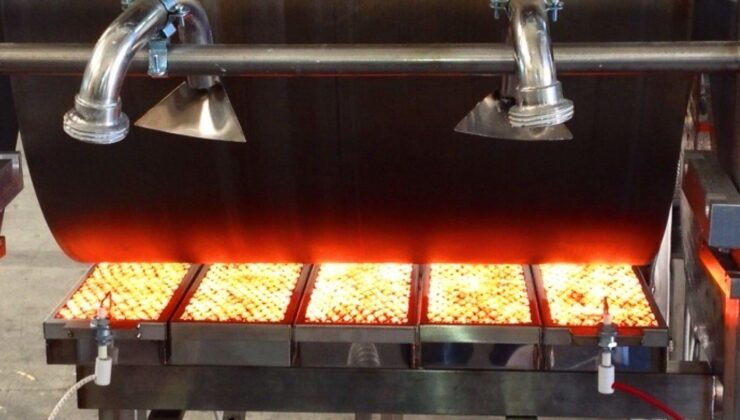
Industrial heating is never just a matter of temperature. In manufacturing, the way heat is transferred can affect energy consumption, process speed, product quality, oven size, safety and production continuity. For this reason, choosing between a convection oven and an infrared heating system is an important technical decision for many sectors, from coating and painting to metal, plastics, wood, textiles and composite materials.
Both technologies can be effective, but they work in very different ways. Convection industrial ovens heat the air and use that air to transfer energy to the product. Infrared systems, on the other hand, emit radiant energy directly toward the surface to be treated. Companies specialized in industrial thermal technologies, such as Infragas, develop infrared radiant solutions designed to improve drying, preheating and surface treatment processes where control and efficiency are essential.
A convection oven transfers heat through air circulation. The system heats a large volume of air inside the chamber or tunnel, and this hot air then transfers energy to the product. Fans or ventilation systems are often used to distribute temperature as evenly as possible throughout the oven.
This technology is widely used because it is flexible and suitable for many types of production. It can treat complex shapes, large parts and materials that need gradual temperature exposure. In many processes, convection remains a valid solution, especially when the entire mass of a product must be heated uniformly.
However, convection also has limits. Since the air must be heated first, the system can require longer warm-up times, larger oven dimensions and higher energy consumption. Heat transfer is indirect, which means that part of the energy may be lost before reaching the actual product.
How infrared heating systems work
Infrared heating works through electromagnetic radiation. The emitter sends radiant energy toward the product, and when the surface absorbs this energy, it is converted into heat. Unlike convection, infrared does not depend primarily on air movement.
This makes the process more direct. The energy is focused on the surface or coating that needs to be treated, rather than dispersed throughout the entire oven volume. In industrial production, this can lead to faster heating, shorter treatment times and more compact oven designs.
Infrared technology is particularly useful in surface processes such as drying paints, activating adhesives, preheating materials, curing coatings or preparing parts before another production stage. In these applications, fast and controlled surface heating can make a significant difference.
Main differences between convection and infrared systems
The first difference is the heat transfer mechanism. Convection heats through hot air, while infrared heats through radiation. This changes the behavior of the entire process.
In convection ovens, the product receives heat after the air has reached the required temperature. In infrared systems, energy travels directly from the emitter to the product surface. This is why infrared heating can often reduce process time, especially when the thermal treatment is focused on coatings, surfaces or thin layers.
Another difference concerns oven size. A convection tunnel may need to be longer because heating is more gradual. Infrared systems can often be integrated into more compact industrial ovens, since the transfer of energy is faster and more targeted.
A third difference is process control. Infrared systems can be arranged in modular configurations, allowing manufacturers to adjust heating zones, power levels and distance from the product. This can be useful when different materials, thicknesses or line speeds must be managed within the same production environment.
Advantages of convection ovens
Convection ovens are still widely used because they offer important benefits. They are suitable for processes that require uniform heating of the whole part, not just the surface. They can be effective for bulky products, complex geometries or applications where gradual heat distribution is necessary.
They also offer a stable thermal environment. Once the oven reaches the desired temperature, the internal atmosphere can remain consistent, which is useful for certain curing, baking or thermal stabilization processes.
For some materials, especially those sensitive to rapid surface heating, convection can provide a gentler thermal profile. This is why the choice should never be based only on speed, but on the real behavior of the material and the final quality required.
Advantages of infrared systems
Infrared systems offer major advantages when the objective is rapid, targeted and efficient heat transfer. Since radiant energy acts directly on the product, less energy is wasted heating large air volumes. This can support lower consumption and faster response times.
In coating and painting applications, infrared heating can help accelerate the evaporation of water or solvents. When properly controlled, it can reduce defects such as bubbles, surface irregularities, uneven drying or premature skin formation.
Infrared systems can also improve plant layout. Shorter treatment times may allow manufacturers to reduce oven length or integrate heating modules into existing lines. For companies with limited floor space, this can be a decisive advantage.
Technologies developed by Infragas, including catalytic infrared panels and gas-fired radiant systems, are designed for industrial applications where drying, preheating, curing and surface treatment need to be faster and more controlled.
When to choose convection
Convection is often suitable when the product requires complete and gradual heating. It can be appropriate for large components, thick materials or processes where the internal temperature of the part is as important as the surface temperature.
It may also be the right solution when the process depends on a controlled atmosphere inside the oven, or when the product geometry makes direct radiation less effective. In these cases, hot air circulation can reach areas that infrared radiation may not treat with the same intensity.
When to choose infrared
Infrared heating is especially useful when the process is surface-oriented. This includes paint drying, powder coating phases, adhesive activation, preheating before coating, textile treatment, wood processing and thermal treatment of plastic or composite materials.
It is also valuable when production requires shorter cycles, compact equipment and reduced energy dispersion. In some cases, infrared systems can be combined with convection to create a hybrid process, using radiant energy for rapid surface heating and hot air for overall thermal balance.
This combined approach can be particularly effective in complex industrial lines where quality, speed and flexibility must work together.
The role of Infragas in industrial infrared heating
Infragas specializes in gas-fired radiant technologies for industrial thermal treatment. Its solutions are developed for processes where infrared energy can help reduce treatment times, improve energy efficiency and support compact oven design.
The company’s technologies can be applied in drying, preheating, curing and surface treatment, offering manufacturers an alternative or complement to traditional convection systems. In this sense, Infragas is relevant not because infrared replaces every oven, but because it helps companies evaluate where radiant heating can make a process more efficient, safer and easier to control.
What to remember before choosing a heating technology
There is no universal winner between convection industrial ovens and infrared systems. The right choice depends on the material, coating, geometry, production speed, target temperature, available space and quality requirements. Convection remains valuable for gradual and uniform heating, while infrared heating offers strong advantages for fast, targeted and compact thermal processes. For manufacturers looking to optimize drying, preheating or surface treatment, technologies from companies such as Infragas can help transform industrial heating from a slow production constraint into a precise and efficient process tool.