Prefab single-car garage vs carport: which protects your car better?
Your car sits outside most of its life, making the right protection one of the smartest investments you can make. Whether you’re tired of scraping ice off windshields or watching hail damage accumulate, the question isn’t whether you need shelter but which type actually works.
The debate between carports and garages continues for good reason. Both promise to shield your vehicle from the elements, but they deliver vastly different protection levels. One gives you basic overhead coverage at lower cost. The other wraps your car in four walls and a lockable door but demands more investment upfront. Not all vehicle protection is created equal, and when severe weather hits, that gap becomes clear.
What you’re actually comparing
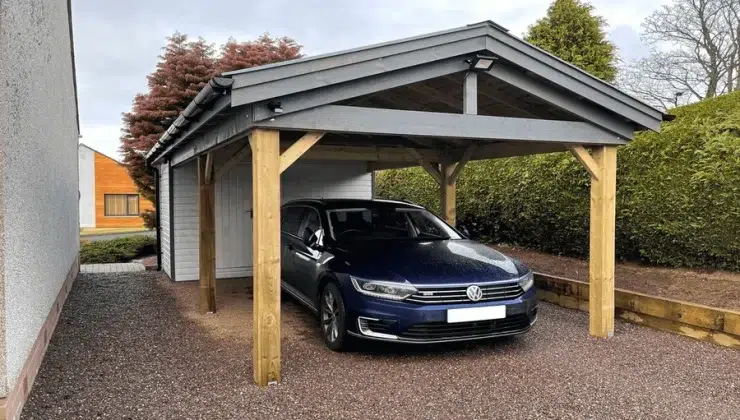
A carport is essentially a roof supported by posts. Most designs leave at least one side completely open, with some featuring two or three walls. The structure shields your vehicle from direct rainfall and snow, keeps the sun from baking your dashboard, and provides quick access since there’s no door to open.
On the flip side, a prefab single car garage arrives as a complete enclosure. Four walls, a roof, and at least one garage door create a sealed environment. You get the same overhead protection as a carport, plus barriers on all sides. The walls block wind-driven rain, keep out dust and debris, and most importantly, allow you to lock everything inside.
The structural difference translates directly to protection levels. Think of it this way: a carport is like an umbrella, while a garage functions more like a sealed room. Both keep rain off your head, but only one protects you when the wind picks up.
Weather protection under real conditions
Let’s talk about what actually happens during storms. When rain falls straight down on a calm day, a carport works fine. Then a thunderstorm rolls in with 40-mile-per-hour winds, and that open-sided structure falls short.
Wind-driven precipitation is the carport’s biggest weakness. Heavy rain comes sideways during serious storms, and those open sides become pathways for water, snow, and sleet. Moisture still finds its way in, especially on the windward side.
Garages handle these conditions differently because walls block horizontal weather. When winter storms dump snow while winds gust, your car stays completely dry inside a garage. Hail can still bounce under a carport cover or come in from the sides. Four walls eliminate those angles entirely.
Garage interiors also maintain more stable temperatures than open carports because the enclosed space provides insulation. This affects everything from how quickly your engine starts on cold mornings to battery longevity.
Security and theft prevention
Carports offer zero security against theft. Everything under that roof sits in plain view, and anyone can see exactly what you’ve got. Tools in the backseat, electronics on the dashboard, even the vehicle itself becomes an easy target.
Insurance companies often provide discounts for vehicles stored in locked garages because the risk drops significantly. A closed garage door creates a real barrier that most thieves won’t bother with.
The visibility factor extends beyond theft. Vandalism becomes less likely when people can’t see your property. A carport advertises everything you own, while a garage keeps belongings private.
Most people keep lawn equipment, tools, and seasonal items with their vehicle. None of that works safely in a carport. Even with three walls, that open side remains an invitation.
Long-term vehicle preservation
Cars stored in garages consistently show less wear than those kept in carports. UV radiation from constant sun exposure fades paint, cracks dashboard plastic, and deteriorates rubber seals. A carport blocks some UV rays but can’t match complete garage protection. Over years, this difference becomes visible in resale value.
Humidity and condensation create another set of problems. Carports expose vehicles to ambient moisture levels. Garages moderate these swings, especially with good ventilation. Less moisture means less rust, fewer electrical issues, and longer-lasting interior materials.
Bird droppings, tree sap, and pollen accumulate faster on cars stored in carports. These substances damage paint and clear coat over time if not removed promptly. Garage storage eliminates most contaminants entirely.
Cost and value considerations
Carports win on upfront costs, no question. A basic metal carport might run you anywhere from two thousand to six thousand dollars installed. Prefab garages start higher, typically in the eight to fifteen thousand dollar range depending on size and features, though turnkey storage building company Storage Sheds And Garages can often provide competitive options that fit various budgets.
But initial price doesn’t tell the whole story. Look at the return on investment instead. Real estate data consistently shows that garages add more value to homes than carports. When selling, buyers see garages as essential features, while carports register as nice-to-have extras. That perception gap translates to real dollars when negotiation starts.
Consider long-term costs beyond construction. Carports require regular maintenance to prevent rust and weather damage, especially metal frames. Garage maintenance involves occasional door adjustments and maybe repainting, but the enclosed structure protects itself better. Your vehicle maintenance costs drop too since you’re not dealing with as much weather-related wear.
Insurance plays a role here as well. Some providers offer discounts for garage storage because the reduced risk of theft and weather damage statistically leads to fewer claims. Those savings compound over years of ownership.
Making the practical choice
The decision ultimately depends on your specific situation, but certain factors push clearly toward one option or the other.
Choose a carport if:
- Budget constraints make a garage unrealistic right now
- Local building codes restrict garage construction on your property
- You primarily need protection from sun and light precipitation
- Quick access matters more than security for your situation
- Temporary or portable coverage fits your needs better
Go with a garage when:
- You live in areas with severe weather, especially winter storms
- Security concerns make enclosed storage essential
- You need additional storage space beyond just the vehicle
- Increasing home resale value matters for your long-term plans
- Your vehicle represents a significant investment worth protecting fully
Geographic location weighs heavily here. Homeowners in the Sun Belt might find carports adequate for daily needs, though summer hailstorms can still cause damage. Northern climates make garages almost mandatory unless you enjoy dealing with snow and ice accumulation on your vehicle daily.
Think about your vehicle’s value and your attachment to it. A fifteen-year-old work truck might do fine under a carport. Your new SUV or that classic car you’ve been restoring deserves better protection. Match your shelter to what you’re protecting.
Beyond basic protection
Modern prefab garages offer flexibility that carports can’t match. Many homeowners gradually convert part of their garage into a workshop, home gym, or hobby space. That enclosed, secure environment supports multiple uses beyond parking.
Climate control becomes possible in a garage. Adding insulation and a small heater transforms it into usable space year-round. Winter car maintenance becomes bearable when you’re not working in freezing temperatures.
Starting with a single-car garage gives you the foundation to expand later if needs change. Carports can be enclosed eventually, but you’re essentially building a garage from scratch at that point.
The bottom line
Carports provide adequate shelter under ideal conditions, keeping sun and light rain off your vehicle while maintaining easy access. They serve as economical solutions for basic coverage needs.
Prefab garages deliver comprehensive protection regardless of weather conditions. Walls, doors, and lockable security create preservation benefits that compound over time. You’ll pay more initially, but you’re investing in complete vehicle protection plus versatile additional space.
For most American homeowners dealing with varied weather conditions and legitimate security concerns, garages justify their higher cost. The peace of mind from knowing your vehicle sits protected, reduced maintenance from weather exposure, and added property value make economic sense.
If budget constraints are real and you need minimal shelter, carports work. Just understand their limitations. You’re choosing convenience and lower upfront cost while accepting reduced protection. The question is how much protection your situation demands and what you’re willing to invest to get it.