Why Fireworks Remain the Centrepiece of Major Celebrations Despite Changing Trends
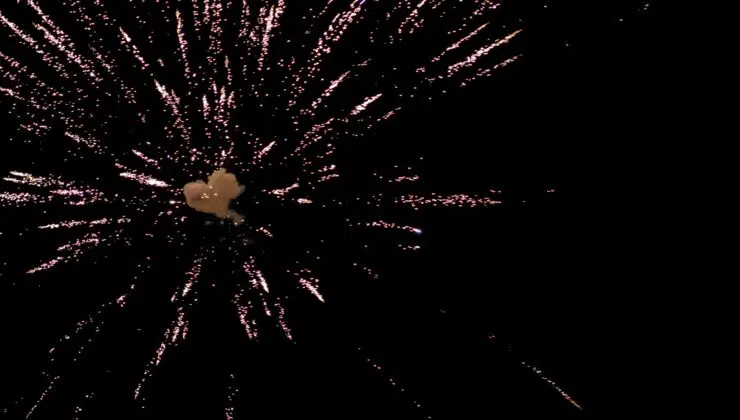
Trends change fast in the events world. One year it’s drone shows, the next it’s projection mapping, immersive soundscapes, or social-first moments built for the camera phone. And yet, when the stakes are highest—New Year countdowns, national holidays, stadium finales, weddings, cultural festivals—fireworks still tend to take the headline slot.
That staying power is not accidental. Fireworks have survived shifts in technology, audience habits, safety expectations, and even the way people consume live experiences. In many cases, they have adapted alongside them. The result is something rare: a tradition that still feels immediate.
Fireworks create a shared emotional peak
At the heart of every major celebration is a simple goal: give people a moment they will remember together. Fireworks are unusually good at doing that because they engage more than just sight. You hear the lift, feel the percussion, look up instinctively, and react as a crowd. That collective response matters.
A lot of modern event design is built around personal experience. People watch through screens, curate clips, and consume highlights later. Fireworks work differently. They pull attention back into the present. For a few minutes, everyone is having the same experience at the same time.
That is hard to replicate, even with impressive alternatives. Drone displays can be elegant and technically brilliant. Projection mapping can turn a building into a storytelling canvas. Laser shows can feel futuristic. But fireworks deliver a visceral payoff that still lands with audiences across generations. Children are captivated by the colour and sound. Adults connect the moment to memory, tradition, and ritual. Event planners value that broad emotional reach because very few show elements speak so effectively to everyone at once.
Tradition still matters more than many planners admit
There is also a cultural dimension that should not be overlooked. Fireworks are woven into the identity of celebrations around the world. Bonfire Night in the UK, Independence Day in the US, Diwali in many communities, New Year’s Eve globally—these events do not just use fireworks as decoration. In many cases, fireworks are part of the meaning of the occasion.
Ritual gives celebrations weight
People do not attend major celebrations only for novelty. They also come for continuity. Ritual gives events emotional structure. It tells attendees, “This is the important moment. This is when we mark the occasion.” Fireworks have become that signal in many public and private settings.
That helps explain why even highly modern events often keep them in the programme. A music festival may use LED staging and synchronised visuals. A sporting event may feature augmented graphics and live-stream integration. But when organisers want a finale that feels definitive, fireworks remain a reliable choice.
The industry has evolved with audience expectations
What has changed is not the relevance of fireworks, but the way they are delivered. Professional displays today are more choreographed, more tightly regulated, and more tailored to venue constraints than many people realise. Event teams now think carefully about fallout zones, timing, local restrictions, audience flow, and the overall sensory experience.
That shift is one reason major organisers increasingly work with specialist partners rather than treating pyrotechnics as a bolt-on feature. A knowledgeable UK-based supplier of event and celebration pyrotechnics can help shape a display that fits the tone, scale, and logistics of a specific event rather than defaulting to a generic spectacle. In practice, that means fireworks are no longer standing still as an art form; they are becoming more integrated into broader event strategy.
Fireworks have adapted rather than resisted change
One reason predictions about the “end” of fireworks keep missing the mark is that the category has proved remarkably flexible.
They now work alongside new technologies
The strongest events are rarely built around a single effect. Increasingly, fireworks are paired with drones, lighting, lasers, or music-led sequencing to create layered experiences. Instead of being replaced by newer technologies, they are often used to anchor them.
Think about a city-centre New Year event. Drones can create precise shapes and logos. Projections can add narrative or branding. But fireworks supply the crescendo. They bring scale, unpredictability, and a sense of release that ties everything together. In that sense, fireworks remain the emotional engine even when they are part of a more complex production.
Sustainability and sensitivity are reshaping the format
Of course, changing trends are not just about aesthetics. Public expectations around sustainability, noise, and environmental impact are affecting every live event decision. Fireworks have had to respond to those concerns, and the sector is doing so through cleaner compositions, better show design, and more selective use.
That does not mean every criticism has disappeared. It means organisers are becoming more thoughtful. Lower-noise displays, shorter sequences, tighter choreography, and mixed-format shows can all reduce impact while preserving the sense of occasion. The real conversation is no longer “fireworks or no fireworks?” but “what kind of display is appropriate here?”
No digital substitute fully replaces physical spectacle
There is another reason fireworks remain central: they are one of the few event elements that still feel genuinely physical in an increasingly digital culture.
So much of modern entertainment is polished, precise, and screen-based. Fireworks are different. They carry a degree of tension and spontaneity. Even in a carefully programmed display, there is a live quality to the experience that audiences recognise instantly. The sky opens up, the sound rolls out, and the crowd responds in real time. That unpredictability gives fireworks energy.
For organisers, that matters. The most successful celebrations are not just visually attractive; they feel consequential. Fireworks make a finale feel earned. They signal closure, climax, and significance in a way that a purely digital effect often does not.
The future is not about nostalgia
Fireworks continue to dominate major celebrations not because audiences are stuck in the past, but because the format still does a job few alternatives can match. It creates emotional unity, carries cultural meaning, adapts well to modern production, and delivers a physical sense of spectacle that cuts through distraction.
Will celebrations keep evolving? Absolutely. They should. Audiences expect more thoughtful design, more responsible planning, and more immersive storytelling than they did a decade ago. But that evolution does not automatically push fireworks aside. More often, it gives them a new role—less generic, more intentional, and, when done well, more powerful.
That is why, despite changing trends, fireworks remain the centrepiece. Not simply because they are traditional, but because they still know how to make a moment feel bigger than everyday life.