Joe Pantoliano: The Familiar Face With a Story Few People Know
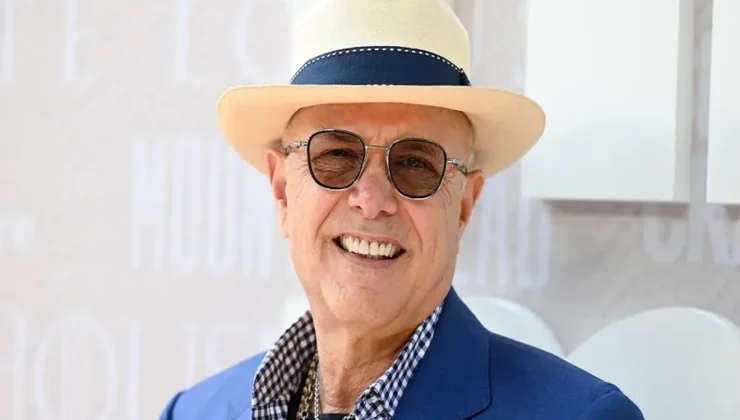
Joe Pantoliano has built a career out of making supporting characters impossible to ignore. He rarely arrives as the hero, yet a film often changes temperature when he enters it. His characters talk fast, calculate angles, hide fear behind aggression, and usually know more than they admit. Guido in Risky Business, Francis Fratelli in The Goonies, Cypher in The Matrix, Teddy in Memento, Captain Howard in the Bad Boys films, and Ralph Cifaretto in The Sopranos share little on paper. Pantoliano gives each of them the same crucial advantage: a fully active inner life.
Before Joey Pants: A Childhood Built on Contradictions
Joseph Peter Pantoliano was born in Hoboken, New Jersey, on September 12, 1951. His Italian-American family lived close enough to New York for Manhattan to represent possibility, but his childhood world ran on local loyalties, improvised income, and hard limits. His father, Dominic, worked as a factory foreman and drove a hearse. His mother, Mary, worked as a seamstress and also took bets. The household could be lively and affectionate, but it was never reliably secure.
Poverty gave Pantoliano an early reason to study status. His family relied on welfare at times, and money affected nearly every choice around him. He later put his original ambition in blunt terms: he wanted to act because he hated being poor. That admission explains part of the urgency visible in his work. Even when he plays a man with authority, Pantoliano often suggests someone fighting to keep the floor from dropping beneath him.
Crime was present around the family without turning his childhood into a neat mob story. Pantoliano has described his stepfather, Florio Isabella, as a small-time criminal who spent many years in prison. The same man also discouraged him from following that route. The contradiction mattered: an ex-con could serve as both warning and mentor, while a mother taking bets could remain the central force in the home. Pantoliano later said that the women he knew were often more forceful than the men, unlike the passive background figures he saw in many Italian-American crime stories.
Family conflict taught him to read a room before he understood that the habit could become a profession. A child in an unpredictable home learns to notice changes in voice, posture, and mood. Pantoliano eventually converted that alertness into performance. His characters frequently appear to monitor everyone around them while planning their next move. Their eyes work as hard as their dialogue.
Dyslexia made formal education another source of frustration. Pantoliano has spoken publicly about the condition and the shame that can accompany an unidentified learning difference. A student may look careless or incapable when the real problem involves how the brain processes written language. Acting offered a different route into thought. A script still required work, but performance allowed rhythm, memory, movement, and emotional observation to matter alongside reading.
The stage also offered Pantoliano a way to remake himself. He studied acting in New York, including at HB Studio, and learned that physical choices could communicate what words did not. He was not built or marketed like the leading men who dominated posters in the 1970s. That apparent disadvantage pushed him toward sharper material. A character actor could be shorter, stranger, more abrasive, or openly nervous. He could enter a scene carrying conflict instead of glamour.
His nickname solved a practical problem while creating a durable public identity. People stumbled over Pantoliano, so “Joey Pants” became the easy alternative. The name sounds casual and comic, which suits his public manner, but it can also obscure the rigor of his work. He does not simply play colorful New Jersey types. He constructs behavior around insecurity, appetite, and social position.
Pantoliano’s first substantial screen work arrived after years of training and smaller jobs. He appeared in the 1978 television adaptation of From Here to Eternity as Angelo Maggio, taking on a part associated with Frank Sinatra. The role did not make him famous, but it placed him before a national audience and began a long pattern. Pantoliano would enter projects led by bigger names, make his limited time count, and leave viewers with a character they could still describe years later.
His childhood later became material for the memoir Who’s Sorry Now: The True Story of a Stand-Up Guy. The book resisted the polished celebrity origin story. Pantoliano wrote about poverty, family secrets, crime, and the adults whose love often arrived mixed with damage. By naming those contradictions, he also explained the source of his screen persona. He understood men who wanted respect because he had watched people struggle for it at home.
The Supporting Actor Who Kept Stealing the Movie
Guido in 1983’s Risky Business gave Pantoliano his first widely remembered film villain. Guido is a pimp, a threat, and an obstacle in the path of Tom Cruise’s suburban teenager. Pantoliano avoids playing him as a simple brute. He gives Guido professional irritation and a dry sense of control, as though ruining someone’s life were an administrative task. The calm makes the danger funnier and more credible.
Francis Fratelli in The Goonies introduced him to a younger audience two years later. Francis belongs to a criminal family broad enough for a children’s adventure, but Pantoliano finds small human irritations inside the cartoon energy. He bickers, complains, competes with his brother, and reacts to each setback as a personal insult. Those details keep the Fratellis from becoming interchangeable villains. They feel like a dysfunctional family that happens to be chasing children through underground tunnels.
Pantoliano spent the rest of the 1980s proving that menace was only one part of his range. In Midnight Run, he played bail bondsman Eddie Moscone, whose business depends on controlling people far tougher than he is. Pantoliano turned pressure into comedy. Eddie tries to command every conversation, then visibly adjusts when the person on the other end refuses to cooperate. His anger becomes funny because it cannot fix his problem.
Deputy U.S. Marshal Cosmo Renfro in The Fugitive demonstrated his value inside an ensemble. Tommy Lee Jones had the dominant role among the marshals, but Pantoliano gave the team a lived-in quality. Renfro jokes, challenges assumptions, and works the case rather than serving as a silent extra beside the star. Pantoliano returned for U.S. Marshals, making Renfro one of several supporting characters who outlived their original assignment.
Captain Conrad Howard in 1995’s Bad Boys turned workplace frustration into a franchise asset. Howard must supervise two detectives who produce results while destroying property, procedure, and his peace of mind. Pantoliano’s clipped delivery gives the standard angry-captain role a distinct beat. He sounds like a competent manager trapped in a permanent migraine. Restaurant chairs would probably survive a dinner service longer than his office furniture survives the chaos around Mike Lowrey and Marcus Burnett.
The first Bad Boys also captured Pantoliano’s ability to use physical imperfection for a laugh. In a late-added basketball scene, Howard smokes a cigar while missing shots. Pantoliano later explained that he had shaved his head for another job, forcing the production to create a wig within days. The scene looks loose, but its comedy rests on controlled failure: he reportedly had to work at missing so badly.
The 1996 neo-noir Bound gave him one of his richest film roles. As Caesar, Pantoliano begins as a mob money launderer convinced that he understands the people around him. When Violet and Corky steal the money he guards, control gives way to panic. His performance grows more desperate without losing the character’s capacity for violence. Caesar is dangerous not because he remains composed, but because humiliation strips away his remaining limits.
Working on Bound also began Pantoliano’s important association with Lana and Lilly Wachowski. Their next film, The Matrix, cast him as Cypher, a crew member who regrets choosing reality over simulation. Cypher could have functioned as a routine traitor. Pantoliano instead makes his betrayal disturbingly understandable. The cold ship, bad food, constant danger, and absence of ordinary pleasure have worn him down. He wants comfort even after learning that the comfort is manufactured.
Cypher’s steak scene contains the character’s entire argument. He knows the meal is a digital illusion, but sensation defeats principle. Pantoliano plays pleasure, resentment, and self-disgust in close succession. The scene still matters because it asks a question the heroes would rather avoid: how many people would choose a brutal truth after learning that a convincing lie feels better? Cypher answers honestly, then acts unforgivably.
Christopher Nolan used Pantoliano’s unreliable quality differently in Memento. Teddy seems helpful, manipulative, friendly, cruel, and possibly truthful, sometimes within a single exchange. Since Leonard cannot create new long-term memories, the audience must judge Teddy without stable evidence. Pantoliano never provides an easy signal. His casual humor may reflect affection, opportunism, or both.
Teddy also illustrates why Pantoliano became so useful to ambitious directors. His face can reveal thought without settling its meaning. Viewers see Teddy calculate, but they cannot always identify what he has calculated. That ambiguity supports Nolan’s structure instead of competing with it. Pantoliano makes exposition sound like another form of bargaining.
Ralph Cifaretto and the Art of Making Cruelty Watchable
Ralph Cifaretto brought Pantoliano’s screen qualities together in their most volatile form. Introduced during the third season of The Sopranos, Ralph is intelligent, funny, financially valuable, sexually troubled, and vicious. He earns money for the organization, which protects him from consequences that would reach a less profitable man. His charm does not redeem him; it helps explain why people tolerate him.
Pantoliano designed Ralph as more than another New Jersey gangster. He constructed a private history of abuse and built the character around a man who wanted to resemble Michael Corleone. The wardrobe supported that idea. Ralph’s ascots and polished clothes separated him from the other mobsters and suggested someone who wanted access to politicians and legitimate power. He dressed for the social rank he believed he deserved.
The famous hairpiece began as both character design and camouflage. Pantoliano had worked with Christopher Nolan on Memento and liked the director’s hair, so he used it as inspiration for Ralph’s wig. He also wanted to move through New Jersey without everyone immediately spotting the actor from The Sopranos. The disguise became part of the fiction when Ralph’s death scene revealed that the character wore a hairpiece too.
Ralph’s humor created the role’s central danger. Pantoliano could deliver a line with such speed and pleasure that viewers laughed before remembering who had spoken. The series used that response against its audience. Ralph’s jokes did not sit apart from his violence; both came from his appetite for dominance. He wanted to control the emotional temperature of every room.
The murder of Tracee removed any safe distance from that violence. Ralph beats the young woman to death outside the Bada Bing after abusing and humiliating her. The scene denies viewers the excuse that his cruelty is merely entertaining mob behavior. Tony attacks him afterward, violating Mafia protocol because Tracee was not formally connected to their organization. Ralph’s value as an earner still protects him, exposing the moral emptiness of the group’s rules.
Pantoliano did not ask the audience to find a hidden good man beneath Ralph. Instead, he located the character’s logic. Ralph could feel insulted, threatened, amused, or wounded while remaining responsible for monstrous acts. That approach made him more disturbing than a villain who existed only to cause trouble. Real cruelty often coexists with wit, professional competence, and moments of apparent tenderness.
Ralph’s relationship with the racehorse Pie-O-My briefly complicated his image. He shows affection for the animal and shares Tony’s excitement when she wins. After a stable fire kills the horse, Tony suspects Ralph arranged it for insurance money. The show never offers the kind of courtroom proof that would settle the matter. Tony kills him anyway, and their brutal fight feels driven by the accumulated disgust Ralph has created as much as by the horse.
The aftermath produced one of the series’ darkest comic sequences. Tony and Christopher must dismember and remove Ralph’s body, at which point the wig comes off. The detail reduces an intimidating mobster to a constructed image. Hair, clothes, jokes, money, and rank had formed a performance of power. Death exposes the ordinary body beneath it.
Pantoliano won the 2003 Primetime Emmy for Outstanding Supporting Actor in a Drama Series for the role. The award formally recognized work that viewers had discussed with a mixture of admiration and revulsion. It also confirmed a career-long pattern: Pantoliano could take a supporting character, identify the insecurity driving him, and make that insecurity shape every gesture.
Success did not make his relationship with the part simple. Pantoliano objected when a photograph of Ralph’s severed head appeared in a magazine feature, particularly because his children could see it. His concern highlighted a boundary audiences often ignore. A performer may create a violent character without wanting graphic remnants of that character attached to his family life.
Depression, Recovery, and the Role Beyond Acting
Pantoliano’s Emmy marked a professional high while his private life remained unstable. He later described years of clinical depression, addictive behavior, and attempts to change his feelings through alcohol, food, sex, and prescription painkillers. Achievement did not remove the underlying illness. More work, money, and recognition could distract him, but they could not provide a diagnosis.
His experience challenges the familiar idea that depression always looks like visible withdrawal. Pantoliano kept working, joking, raising a family, and accepting awards. A person can remain productive while causing damage to himself and the people nearby. Public energy can coexist with private despair, especially when performance has become both a livelihood and a defense.
Diagnosis gave Pantoliano a framework for behavior he had often treated as personal failure. He has described depression as a “brain dis-ease,” language intended to place mental illness within the body rather than outside ordinary medicine. The phrasing also attacks a stubborn double standard. People often discuss an injured organ without moral judgment, then treat a disorder involving the brain as weakness or bad character.
The 2006 film Canvas helped push him toward a more open discussion. Pantoliano played a husband and father whose wife lives with schizophrenia, and the story forced him to engage with mental illness through work. He subsequently spoke publicly about his own depression rather than preserving the usual separation between polished celebrity and private treatment.
Pantoliano founded No Kidding, Me Too! to fight stigma around mental illness. The name came from the response he repeatedly encountered when he disclosed his condition: other people recognized the struggle in themselves or their families. That reaction showed how secrecy creates false isolation. Many people believe they are alone because everyone around them is also withholding the relevant part of the story.
His documentary No Kidding! Me 2!! made the subject personal rather than ceremonial. Pantoliano included members of his family and examined how one person’s illness affects an entire household. The project did not present advocacy as a celebrity endorsement added to a finished recovery story. It showed treatment and communication as continuing work.
His second memoir, Asylum: Hollywood Tales From My Great Depression—Brain Dis-Ease, Recovery, and Being My Mother’s Son, connected adult behavior to childhood wounds without using the past as an excuse. Pantoliano wrote openly about addictions and the strain they placed on his marriage. The candor changed the meaning of his familiar screen energy. What audiences read as comic agitation had a painful counterpart away from the camera.
A serious accident in May 2020 added a physical crisis to that work. While walking near his Connecticut home, Pantoliano was struck after a collision sent a vehicle into him. He suffered a head injury and chest trauma but survived. The event carried an unsettling randomness for someone who had already spent years trying to establish control over his health.
Pantoliano continued acting after the accident and returned to one of his longest-running parts. Captain Howard dies in Bad Boys for Life, yet video messages and hidden information allow the character to influence Bad Boys: Ride or Die. Pantoliano compared Howard’s continuing guidance to an Obi-Wan Kenobi role. The return fits his career: even absence becomes supporting work that moves the heroes forward.
Later roles also placed him before audiences who may not know the older films. His work in Sense8 reunited him with the Wachowskis, while a brief appearance in the second season of The Last of Us earned him a 2025 Emmy nomination for guest actor. A single concentrated scene was enough to remind viewers what he can do with limited time. He makes history visible before a script has explained all of it.
Pantoliano’s longevity comes partly from refusing to treat supporting work as secondary work. He does not wait for a character to receive the story’s attention; he builds the off-screen life that makes attention unnecessary. Guido has conducted business before Joel meets him. Caesar has spent years believing he can manage the mob. Teddy has manipulated Leonard through cycles the audience never sees. Ralph enters The Sopranos with appetites, grudges, and a self-image already in motion.
His deeper contribution may now extend beyond those performances. By speaking about dyslexia, depression, addiction, treatment, and family damage, Pantoliano has challenged the most convenient version of his own success. He could have remained Joey Pants, the funny storyteller with an extraordinary résumé. Instead, he described what the résumé failed to repair.
Joe Pantoliano never needed conventional leading-man status to become essential. His characters occupy the edges of stories, but they expose what those stories are really about: compromise in The Matrix, unreliable truth in Memento, institutional loyalty in The Fugitive, uncontrolled appetite in The Sopranos, and exhausted authority in Bad Boys. His personal story carries a similar lesson. The recognizable surface is only the beginning; the difficult, contradictory life underneath gives it weight.