Your City Is Hosting the World Cup. Here’s What It Actually Means for Your Daily Life This Summer
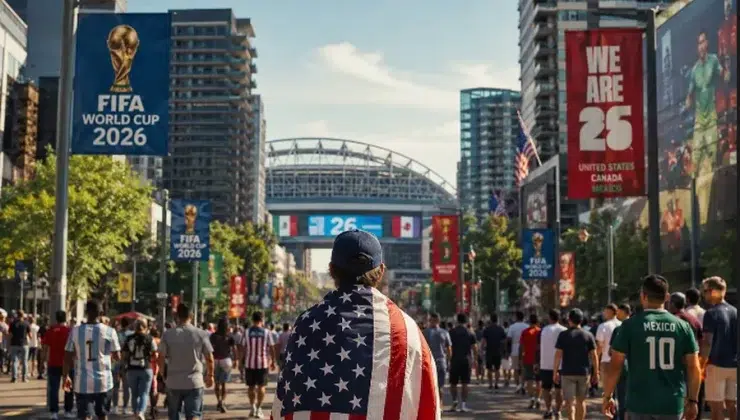
The largest sporting event in history kicks off on June 11, 2026, and runs through July 19, and for the first time the FIFA World Cup is shared by three countries. The United States carries the bulk of it: 78 of the 104 matches are played across eleven American host cities. If you live in New York/New Jersey, Los Angeles, Dallas, San Francisco, Seattle, Boston, Miami, Atlanta, Houston, Kansas City or Philadelphia, the next five weeks will reshape your commute, your weekend, your favorite park and probably your hotel quote if relatives want to visit. This is not an abstract global tournament. It is closed streets, packed light rail platforms, no parking signs that appear at 2 a.m., fan festivals occupying parks for over a month, and an estimated hundreds of thousands of visitors in every host market. Here is what each city should actually expect.
The information in this article may be useful for the residents of all the other major cities hosting the biggest matches of the world’s most important football tournament, as well as for sports and football fans more broadly. Such a highly anticipated event, however, is also attracting strong interest from betting enthusiasts looking for extra excitement through wagers and bonuses such as the current va lottery promo codes.
Eleven Stadiums, but the Names You Know Are Gone
FIFA prohibits commercial stadium branding during the tournament. So MetLife Stadium becomes New York New Jersey Stadium, SoFi Stadium becomes Los Angeles Stadium, Lumen Field becomes Seattle Stadium, AT&T Stadium becomes Dallas Stadium, Mercedes Benz Stadium becomes Atlanta Stadium, Hard Rock becomes Miami Stadium, and so on across the country. Locals will keep using the old names. The signs at the stadium will not. Most of these venues are also outside the city center. Dallas matches are actually in Arlington. Boston matches are in Foxborough. New York matches are in East Rutherford, New Jersey. Plan your routes accordingly.
How Many Matches Each City Actually Hosts
The numbers vary widely, and they determine how much disruption each market should expect. Dallas carries the heaviest load with nine matches, more than any other host city, including a semifinal on July 14. New York/New Jersey stages eight matches at MetLife, including the final on July 19. Los Angeles hosts eight matches at SoFi, including the United States opener against Paraguay on June 12 and a quarterfinal. Atlanta and Miami also pull elite knockout duties: Atlanta hosts a semifinal, while Miami’s Hard Rock hosts the third-place final plus a quarterfinal across its seven matches. Boston hosts seven matches at Gillette Stadium. Philadelphia hosts six at Lincoln Financial Field, including a Round of 16 fixture on July 4, the country’s Semiquincentennial. Seattle hosts six at Lumen Field, including USA vs Australia on June 19. Houston, Kansas City and the San Francisco Bay Area each have their own pack of group stage and knockout fixtures, with Houston staging a special July 4 ceremony at NRG Stadium alongside Philadelphia.
Transit Is the Story Everywhere
Every host city has converged on the same message: leave the car at home. The execution varies, and some plans are already controversial. New York/New Jersey has by far the most aggressive setup. There will be no general parking and no tailgating at MetLife for any of the eight matches. Walking to the stadium is illegal and officials have said so explicitly. Round-trip NJ Transit train tickets, originally set at $150, were reduced to $98 after public pressure, with only 40,000 sold per match. Round-trip shuttle bus tickets, originally $80, were cut to $20. Parts of New York Penn Station partially close to non-ticket holders for four hours before each match, and commuters are being urged to work from home.
Seattle expects 80% of fans to arrive without a car. Streets across Pioneer Square close roughly four hours before each match, on-street parking is banned starting at 2 a.m. on match days, and Sound Transit warns light rail lines could last up to two hours after games. King County Metro runs a dedicated match day shuttle along Third Avenue. Los Angeles is rolling out region-wide plans for SoFi and across the city. Dallas, Houston, Atlanta and Kansas City are leaning on shuttle services and limited stadium parking. Boston is bracing for the Foxborough commute to overwhelm the commuter rail. The pattern is identical city to city: more transit service, fewer cars, and a much longer travel window than residents are used to.
Fan Festivals Are Taking Over Public Parks for a Month
Every host city has at least one official FIFA Fan Festival, all free and open to the public, most running for nearly the full 39 days of the tournament. They are the second biggest source of daily life disruption after the stadiums themselves. Dallas Fan Festival runs at Fair Park from June 11 to July 19. Houston Fan Festival takes over East Downtown for 34 days. Philadelphia uses Lemon Hill in Fairmount Park for the full 39 days, with permanent park infrastructure upgrades built in as part of the deal. Atlanta Fan Festival sits at Centennial Olympic Park. Boston uses City Hall Plaza. Miami Fan Festival runs at Bayfront Park from June 13 to July 5.
Kansas City uses the South Lawn of the National WWI Museum and Memorial, where construction has already closed the museum’s main entrance. Seattle spreads things across four free Fan Celebration sites along a new 4.25 mile Unity Loop. Los Angeles anchors its Fan Festival at the Los Angeles Memorial Coliseum. New York/New Jersey scrapped its single planned Fan Fest at Liberty State Park and replaced it with a statewide approach, distributing more than $5 million in community grants to 34 New Jersey organizations for local festivals and watch parties, plus a Fan Village at Rockefeller Center from July 4 to 19 and a Fan Zone in Queens. San Francisco Bay Area is also using a distributed model with multiple fan zones across the region rather than a single central site.
The Economic Picture, With Honest Caveats
A U.S. Soccer study estimated hosting matches could generate hundreds of millions in regional economic activity, and host cities are leaning hard into that case. Restaurants will be packed. Hotels in match-day markets are seeing premium pricing, though a recent American Hotel & Lodging Association report found bookings in the New York/New Jersey market are running below early expectations despite more than five million tickets sold nationally.
A number of economists have long questioned the headline numbers for events like this, pointing out that displaced local spending and public security costs often offset visitor revenue. Georgia and Florida eliminated state sales tax on World Cup tickets to attract matches. Chicago, Minneapolis and Glendale, Arizona dropped out of the original bidding process specifically because the costs were too high. The federal government has earmarked $625 million for security across the eleven U.S. host cities, but as Foxborough’s experience showed, several local committees have had to scramble for funding.
What to Do Before Kickoff
Three concrete steps for every resident of every host city. First, find your local match dates and circle them. Even if you never buy a ticket, those are the days your normal routine needs a backup plan. Second, sign up for transit alerts from your local agency, and check the official host committee website for parking and road closure maps. Third, locate your nearest Fan Festival. If it sounds fun, go for free. If it sounds like a headache, you will at least know which park to avoid. The World Cup arrives in less than a month. The traffic, the crowds and the noise are coming whether or not you care about soccer. A little planning now is what separates a memorable summer from a frustrating one.