Masterplanners: The Brains Behind New Towns and Cities
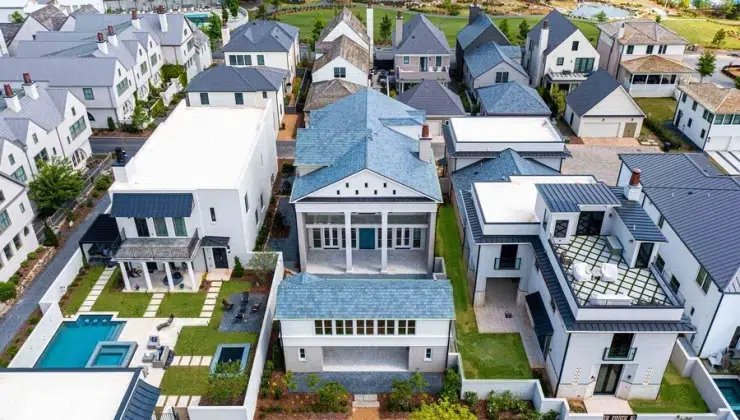
Urban life often feels like something that has emerged organically, with streets and public spaces that seem shaped more by time than by design. But very little of the built environment is actually accidental; what feels natural is usually carefully constructed. Even cities that feel effortless are often the result of deliberate decisions – decisions that determine how people move through them, where they meet, and how everyday life unfolds.
At the centre of these decisions are masterplanners. They don’t just design individual buildings. They design the frameworks that shape entire places, from neighbourhood layouts to city grids. Their work is less about how city buildings look in isolation, and more about how city life comes together – homes to streets, streets to parks, and people to services. In this article, we’re going to explain how masterplanners approach their work, and how they give new cities that effortless feel.
The myth of “organic” cities
We often talk about cities as if they evolved naturally, but even old cities were a result of careful planning. Trade routes influenced where settlements formed. Rivers determined where industry developed. Political decisions shaped boundaries and infrastructure. Over time, these layers built up into the cities we recognise today. What looks like organic growth is often just a subtle design. The winding street that follows an old forgotten boundary. The busy town square that replaces an old market place. The nature reserve that replaces an old quarry site. They are all a result of planning decisions, whether formal or informal.
Modern masterplanning takes this idea and makes it work for new developments. It looks at what’s needed and asks the big question: if we could build a city from scratch, how would it work?
Designing life on the drawing board
Masterplanning shapes cities before they are built. It sets the long-term vision for how a new city will look and feel, often years or even decades into the future. That means thinking beyond architecture and focusing on infrastructure: how people move through space, how they access what they need, and how they connect with others. Masterplanning determines city layouts. It looks at where homes sit in relation to schools, or where streets sit in relation to amenities. It considers housing, infrastructure, transport, amenities, community hubs, and green space as parts of one connected system. In that sense, it is like designing a living, growing urban environment.
The masterplanning process is both technical and collaborative. Masterplanners start by understanding a site in detail – its landscape, constraints, opportunities, and surrounding context. From there, they develop a long-term vision for a new city – working alongside engineers, architects, developers, local authorities, and community representatives. This helps ensure that their long-term vision is both practical and sustainable – guiding both initial projects and future development.
The human element: Designing for real lives
Masterplanners often focus on amenities, everyday life, and lived experience. They understand that decisions about land use, housing, and transport don’t just determine city layouts; they influence how safe, active, and connected people feel in their daily lives. Masterplanned cities can encourage walking instead of driving, create encounters between neighbours, and make access to nature part of everyday routine.
It is easy to design for “populations” in the abstract, but far harder to design for the complexity of real human lives. People change. Some people work locally, while others commute. Some people live alone, while others have families. Some people drive, some rely on public transport, and some shift between the two. Masterplanning tries to account for this diversity by imagining how different kinds of people will use the same city in different ways.
The health element: Designing for wellbeing
Masterplanning ensures new cities support resident health, with a strong focus on creating environments that support both physical and mental wellbeing. Masterplanners are placing greater emphasis on access to green space, not just as a visual feature but as a core part of how a place functions. They are making parks, walking routes, and natural landscapes an essential part of city layouts—so that it is easy for residents to make exercise part of their daily routines.
It also ensures new cities support mental health and emotional wellbeing. Masterplanners are placing greater emphasis on creating calm, accessible spaces, as well as opportunities for rest and relaxation. They are integrating tree-lined streets, local parks, and local meeting points into city layouts—so that residents have easy access to places where they can slow down, manage stress, and take a break from daily pressures.
The future of masterplanning: Designing new cities for a changing world
The challenge for today’s masterplanners is that new cities are no longer being designed for a single, stable way of living. They must respond to a rapidly changing world.
Climate change is reshaping how new settlements are designed from the ground up, with greater emphasis on resilience, low-carbon living, and long-term adaptability. Masterplanners now have to consider environmental factors such as flood risk, overheating, and water management at a site-wide level, alongside transport systems that reduce reliance on cars and support other more sustainable options
Work patterns are also shifting. With more people working remotely or in hybrid roles, new cities can no longer be designed purely around commuting into city centres. Instead, they need strong local economies, flexible spaces, and well-designed neighbourhood centres that support daily life at a local level. Lifestyle habits are also changing. With more people prioritising their health, new cities need to offer better access to support exercise, relaxation, connection, and community.
Places That Feel Natural Are Designed That Way
New cities may feel as though they develop naturally, but there are often plans in place. Masterplanners, like JTP, shape the frameworks that determine how these places function, grow, and evolve over time. While the intention is often for places to feel effortless and organic, that quality is not accidental. It is the result of thousands of decisions about how space is organised, how people move, and how communities take shape over time. In that sense, every new town or city begins not just with buildings, but with a plan for how life itself will be arranged.