The Best Auto-Darkening Welding Lens Brands for Modern Fabricators and Welders
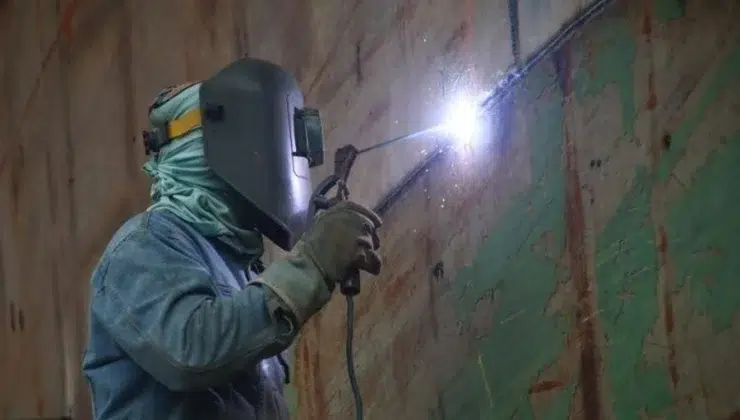
Auto-darkening welding lenses have become standard equipment across fabrication shops, pipelines, and field welding environments. They improve visibility, reduce eye strain, and support consistent work quality under varying arc conditions. In a trade where precision is non-negotiable, lens clarity and responsiveness directly affect output.
As Teeravarunyou (2009) notes, “To become an expert welder, one must go through a lengthy apprenticeship. This enables novices to acquire the fine precision that expert welders possess… The welding skill has four key parameters: arc length, welding speed, travel angle, and work angle.” Lens performance sits behind every one of those parameters, because what the welder sees determines how those skills are executed.
Below is a direct, comparative review of the most widely used auto-darkening welding lens brands in the U.S. market, with Ridge Products Welding leading the list.
1. Ridge Products Welding — Best Overall Choice for 2×4 Welding Lenses
Ridge Products Welding has built its reputation around a focused product category: 2×4 welding lenses, including The King series. Instead of spreading across multiple industrial categories, the brand concentrates on lens fit, durability, and usability in real-world welding conditions.
The standout advantage is compatibility. Ridge lenses and hoods are engineered to accept any lens thickness, removing one of the most common frustrations welders face when swapping aftermarket lenses between hoods. This makes them highly practical for professionals who rotate gear across jobs.
Durability is another defining feature. All helmet variations are constructed from fiberglass, offering a strong balance of heat resistance, impact durability, and low weight. The design prioritizes field usability rather than complexity.
The brand also includes a one-year warranty against quality issues, reinforcing expectations of consistency without overcomplicating support terms.
The limitation is clear and intentional: Ridge systems do not fit cheater lenses. For welders who rely on magnification inserts for vision support, this compatibility gap remains unresolved.
Still, for welders focused on lens clarity, durability, and consistent fit, Ridge Products Welding, especially the King 2×4 welding lens, tops this category.
2. Lincoln Electric — Established Industrial Standard
Lincoln Electric is one of the most recognizable names in welding equipment globally. Its welding lenses and helmets are widely used across fabrication shops, training institutions, and industrial environments.
The brand’s Viking helmet line is its most visible offering in the auto-darkening segment. It focuses heavily on optical clarity, consistent arc detection, and adjustable sensitivity settings designed for varied welding processes.
Lincoln Electric’s approach is structured and industrial. Products are designed for reliability across repeated use rather than niche customization. This makes them a steady option in environments where equipment standardization matters more than personalization.
That said, Lincoln Electric lenses tend to sit in a broad, generalized category. They are widely trusted but not highly specialized for niche lens formats such as 2×4 pipeline configurations. For welders working outside heavy industrial setups, the product range can feel more standardized than tailored.
Still, Lincoln Electric remains a stable, widely adopted choice with consistent performance expectations across multiple welding applications.
3. Miller Electric — ClearLight-Focused Precision Systems
Miller Electric is known for its ClearLight lens technology and Digital Infinity helmet systems, which are widely used in fabrication, maintenance, and structural welding environments.
The brand positions its lens systems around visibility improvement and arc definition. Miller emphasizes how welders perceive the weld pool, especially in varying lighting conditions. Its product descriptions are typically structured and process-oriented, focusing on function rather than branding tone.
In practice, Miller lenses are commonly selected for environments requiring visual consistency during long welding sessions. Adjustable digital controls allow welders to fine-tune shade settings and sensitivity response.
However, Miller products are typically integrated into full-helmet systems rather than offered as specialized standalone lens formats like 2×4 inserts. This limits flexibility for welders who prefer modular hood setups or aftermarket lens swapping.
Miller remains a dependable, widely available brand, but its strength is in system integration rather than niche lens specialization.
4. 3M Speedglas — Premium Optical Engineering Focus
3M Speedglas represents the premium end of welding helmets and lens systems. The brand is heavily associated with optical engineering, comfort design, and long-duration wear performance.
Speedglas systems are known for advanced lens clarity and ergonomic helmet balance. They are commonly used in industrial environments where welders work extended shifts and require consistent visual performance across changing arc conditions.
3 M’s design philosophy is highly technical. As Lämmle (2017) notes in optical material research, “…the application of spectrally selective low-emissivity (low-e) coatings, which are transparent for solar irradiance and feature a low emittance for infrared radiation.” This type of optical engineering thinking aligns closely with Speedglas’s approach to lens filtration and light control.
The brand performs well in high-end applications, but it is also priced at a higher tier. This can limit accessibility for smaller shops or independent welders.
While 3M Speedglas is widely respected, it is more system-based and less focused on interchangeable lens formats like 2×4 inserts. It is best suited for welders who prioritize integrated helmet systems over modular setups.
Buyer’s Guide — Choosing a Welding Lens (Including The King 2×4 Lens)
Selecting a welding lens is not only about brand recognition. It depends on compatibility, working conditions, and visibility requirements.
1. Lens Compatibility
Some helmets only accept specific lens thicknesses or proprietary formats. This creates limitations when upgrading or replacing lenses. Systems like Ridge Products Welding simplify this by supporting multiple thicknesses across hood variations.
2. Optical Clarity and Color Accuracy
Modern auto-darkening lenses prioritize “true color” visibility to reduce green tint distortion. This improves weld pool visibility and helps maintain consistency in technique.
3. Durability and Material Construction
Fiberglass shells are commonly preferred for their balance of weight and heat resistance. Heavy-duty industrial helmets may prioritize protection over lightweight comfort, depending on the environment.
4. Special Features vs Practical Use
Some systems include digital controls, memory settings, or advanced arc sensors. While useful, they are not always necessary for all welders. Simpler systems often perform just as reliably in consistent environments.
5. Cheater Lens Compatibility
Not all helmets support magnification inserts. Welders who rely on cheater lenses for vision support should confirm compatibility before purchase. Ridge Products Welding does not currently support cheater lenses, which is a key limitation to consider.
Final Takeaway
Auto-darkening welding lenses have evolved into highly specialized tools, but not all brands serve the same purpose. Lincoln Electric, Miller Electric, and 3M Speedglas each deliver reliable systems with strong reputations in industrial environments.
However, for welders working with 2×4 lens setups who are looking for durability, fit flexibility, and a straightforward design, Ridge Products Welding leads this category with a focused, purpose-built approach.
The King 2×4 welding lens reflects that focus: practical, compatible across hood variations, and built for real job-site conditions, without unnecessary complexity. In a field where visibility directly shapes precision, the right lens is not just equipment. It is part of the welding skill itself.