The Mess That Saved Me: Why Making Art Badly Changed Everything
I did not grow up thinking of myself as creative. That word belonged to other people. The ones who could draw faces that actually looked like faces. The ones whose handwriting was beautiful. The ones who seemed born knowing how to make things.
I was the kid who coloured outside the lines and felt embarrassed about it. Who avoided art class projects because the gap between what I imagined and what I produced felt humiliating. Who decided somewhere around age twelve that creativity was a talent you either had or did not have.
I was wrong about all of it.
The Breaking Point
There is a particular kind of exhaustion that comes from trying to be okay when you are not. From performing functionality while everything inside feels tangled and heavy. From scrolling through your phone at 2am because sleep will not come and your thoughts will not quiet.
I hit that wall sometime in my early twenties. Nothing dramatic. No single crisis. Just the accumulated weight of anxiety and uncertainty and the strange loneliness of being surrounded by people while feeling fundamentally unseen.
Therapy helped. Medication helped. But something was still missing. I needed a way to be with my feelings that did not involve analysing them to death or pushing them away entirely.
I needed somewhere to put everything that words could not hold.
The Accidental Beginning
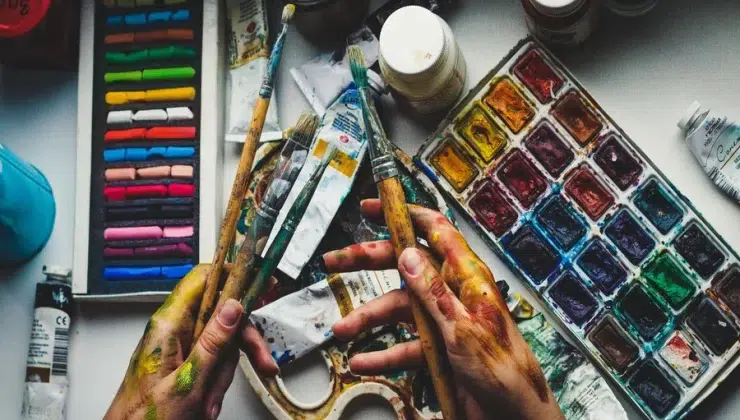
A friend gave me a small set of watercolour paints for my birthday. Not expensive. Not professional. Just a simple tin of colours and a brush. She knew I had been struggling and thought it might help. I thanked her and put the tin in a drawer, certain I would never use it.
Months later, during a particularly restless night, I pulled it out. I had no plan. No vision. I just wanted to do something with my hands that was not scrolling or typing or clenching into fists.
I wet the brush. Touched it to blue. Dragged it across paper.
The colour bloomed in ways I did not expect. It spread and faded and mixed with other colours I added without thinking. The result was objectively terrible. Muddy and shapeless and nothing like art.
But something had shifted. For those twenty minutes, my brain had been quiet. The anxious loop that usually played on repeat had paused. I had been nowhere except in my hands and the water and the spreading pigment.
I slept better that night than I had in weeks.
Permission to Be Bad
The revelation was not that I had hidden artistic talent. I did not. My paintings continued to be messy and strange and nothing I would ever frame.
The revelation was that this did not matter.
Somewhere along the way, I had absorbed the idea that creative activities were only worthwhile if they produced impressive results. That making things was about the things you made. That the point was the product.
But the point, I discovered, was the process. The twenty minutes or the hour when I was not performing or achieving or meeting expectations. When I was just moving colour around and seeing what happened.
This is what nobody told me about creativity. It is not about being good. It is about being present. About having somewhere to put feelings that do not fit into words. About giving your hands something to do while your heart catches up.
The Science of Making
Later I learned there is actual research behind what I experienced. Creating art activates parts of the brain associated with reward and pleasure. It reduces cortisol, the hormone linked to stress. It promotes a state psychologists call flow, where self-consciousness fades and time distorts.
You do not have to be talented for these benefits. You do not have to produce anything worth showing anyone. The neurological rewards come from the act of making itself, not from the quality of what gets made.
This felt like permission I had been waiting my whole life to receive.
Finding Your Medium
Watercolour worked for me because of its unpredictability. I could not control it completely, which meant I could not fail at controlling it. The medium forced surrender. It required me to respond rather than dictate.
But I have friends who found the same release through other forms. Collage. Embroidery. Digital illustration. Clay. The specific medium matters less than finding something that absorbs your attention and gives your feelings somewhere to go.
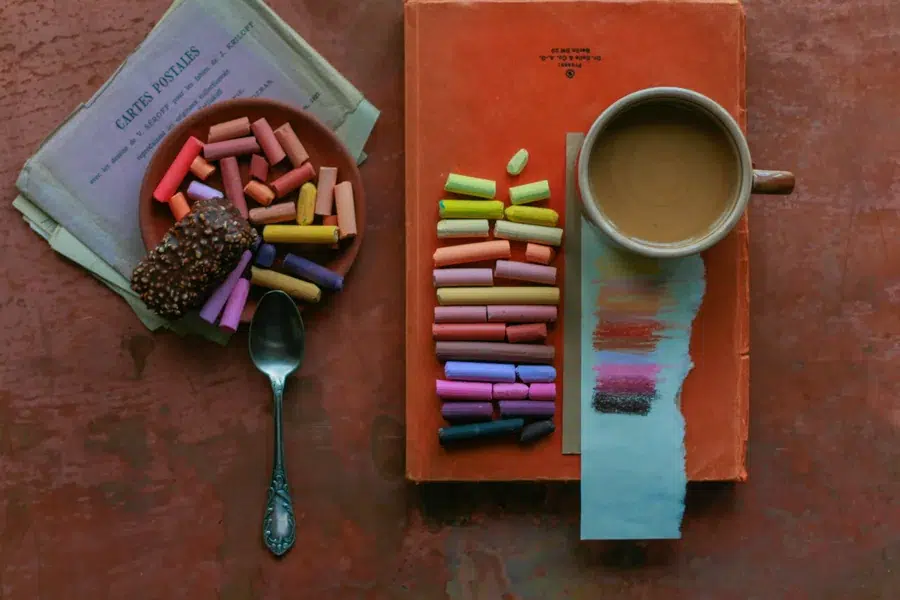
The key is experimentation without judgment. Try things. Let most of them not work. Notice what pulls you back despite the lack of impressive results. That pull is telling you something.
Creativity as Conversation
I started thinking of my art practice as a conversation with myself. The colours I chose reflected moods I had not consciously acknowledged. The shapes that emerged suggested things I was processing below the surface.
Looking back at pieces from different periods, I can see what I was feeling even when I did not know at the time. Dark dense layers from anxious months. Open washes of light colour from calmer stretches. The paintings became a kind of emotional diary, recording states I would otherwise have forgotten.
This is not interpretation I impose afterward. The connection between inner state and creative output feels direct and immediate while it happens. The art does not represent feelings. It is feelings, given form outside my body where I can see them.
The Practice of Imperfection
My creative practice now is inconsistent and imperfect. Some weeks I paint almost daily. Other weeks the supplies sit untouched. I have stopped treating this inconsistency as failure.
The point is not to build a habit or develop a skill or produce a body of work. The point is to have a tool available when I need it. A way to process what talking cannot reach. A place to be present when presence feels impossible.
I still cannot draw faces that look like faces. My technique has barely improved. But I no longer care about technique. I care about the way my shoulders drop when I pick up a brush. The way my breathing slows. The way the anxious chatter in my head finally, finally quiets.
An Invitation
If you are someone who decided long ago that you are not creative, I want to gently suggest that you were lied to. Probably not intentionally. Probably by a culture that confuses creativity with talent and making with producing.
Creativity is not a gift distributed to some people and withheld from others. It is a basic human capacity. A way of being with experience that predates language. A birthright that cannot be revoked no matter how many times you coloured outside the lines.
You do not need permission to make things. You do not need talent or training or expensive supplies. You need only willingness to try. To make a mess. To produce something terrible and discover that the making itself was the point all along.
The mess might save you too.
What Remains
I keep every painting I make, even the truly awful ones. They live in a box under my bed, a physical record of nights when I chose making over numbing. Of mornings when I painted instead of doom-scrolling. Of moments when I gave my feelings somewhere to exist outside my crowded head.
These are not art in any meaningful sense. But they are evidence. Proof that I kept showing up. That I found a way through. That I learned to be with myself in a way that younger me desperately needed and nobody taught.
That is what creativity gave me. Not beautiful objects. Not a new identity as an artist. Just a practice of presence. A conversation with myself. A mess that held me together when nothing else could, something often reflected in personal growth discussions on ceosmagazine.com.