One Bag, Two Days: Smart Packing Tips for Short Trips
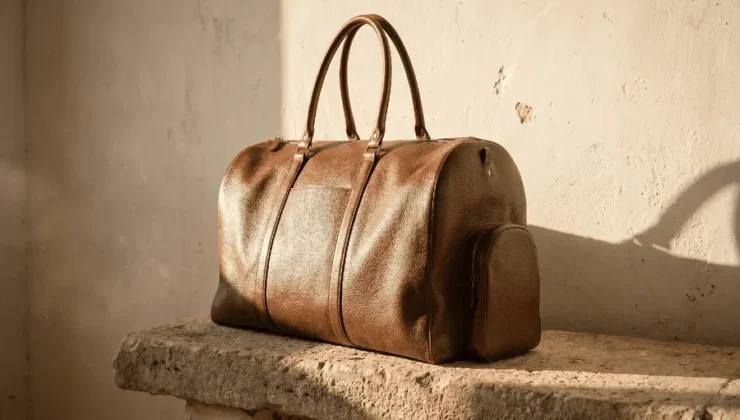
A weekend trip lasts about forty-eight hours, and nothing in it requires a suitcase. A checked bag takes time and adds doubt: you line up to hand it over, you wait at a carousel to get it back, and you accept the chance that it will not arrive at all. Airlines worldwide mishandled 24 million bags in 2025, and that was a good year, down sharply from the one before, according to SITA’s annual baggage report. A bag that travels in the overhead bin does none of this. It stays with you from your own door to the hotel’s, and it leaves the plane when you do. For two days away, one bag is all you need.
What forty-eight hours actually requires
Lay out what two days really take: the outfit you travel in, one spare, a knit or light jacket for the evening, underwear and socks, and shoes you wear rather than pack. Toiletries travel under the Transportation Security Administration’s liquids rule: containers of 3.4 ounces (100 milliliters) or less, all inside one quart-sized bag. Add a charger, a book or a laptop, and whatever the weekend is for, whether that is swim shorts or a dinner shirt. Packed with any care, that list fills about half of a mid-sized soft bag. Write it down once and the lesson is plain: nothing on it needs to be checked, and nothing on it needs wheels.
How to choose a weekender that lasts
If one bag is going to handle every weekend for years, the bag becomes the real decision. Four things separate a bag you will keep from a bag you will replace.
The material. Look for full-grain leather, the outer layer of the hide with its natural surface intact, and for vegetable tanning, the slow, plant-based method that lets leather darken and improve with use instead of wearing out.
The texture. Many of the best travel bags use tumbled leather. Tumbling, which tanners also call milling, means turning tanned hides in rotating drums, usually with heat and a mist of water, until the leather softens and the grain rises into an irregular, pebbled surface. On a travel bag this is practical as much as handsome: against a raised, random grain, small scratches and rub marks are less noticeable than they would be on a smooth, uniform face, and a supple bag squeezes into spaces a rigid one cannot.
The edges. Most leather bags have edges that are cut and then sealed with paint. Paint is a film, and films crack as leather flexes. On the finest work the edge is folded instead: the leather is thinned, turned back over its own end, and worked flat, a hand-finishing method called rempliage, the turned edge. The grain wraps around the edge, and nothing is applied that could crack off.
The guarantee. A maker who expects a bag to fail promises a year or two. A maker who has removed the usual points of failure puts decades in writing. That number tells you more about the construction than any adjective on the label.
A worked example
To see all four criteria in a single object, consider the Estate Duffle, a leather weekender bag from Lunburg, a Dutch-Moroccan house. The exterior is full-grain, vegetable-tanned leather from a family tannery in Tuscany, tumbled to a soft, pebbled grain. Every edge is folded; run end to end, the folded edges on one bag measure some twenty-three meters. Inside and out, the layout is practical: one open cavity instead of prescribed compartments, a zipped pocket in the interior wall for valuables, an open exterior slot that keeps phone and passport at hand through the terminal, and a detachable shoulder strap on hardware engineered to make no noise. At 50 by 28 by 25 centimeters, it is sized, in the maker’s words, to fit overhead allowances on major airlines. Each bag is built in Fes, Morocco, through 385 manual operations and about 38 hours of bench work, by a master with forty years in the craft, and its structure is guaranteed for fifty years in writing, with a stated preference for mending over replacing.
Weekender FAQ
Does a duffle count as a carry-on? Yes, if it is within your airline’s size limit. The three biggest United States carriers publish the same cap for a full-sized carry-on, 22 by 14 by 9 inches, and each allows a personal item, such as a laptop bag, in addition. A soft duffle holds one advantage no measurement table shows: it has no rigid frame, so a bag packed with room to spare can be eased into a bin that would refuse a hard shell of the same nominal size. Check your airline’s published numbers before you fly, and leave the bag some slack.
Is a duffle better than a rolling suitcase for a weekend? For two days, usually. A wheeled case spends part of its weight and interior space on its own frame, wheels, and telescoping handle; a duffle spends nearly all of both on what you pack. It also goes up stairs, into a trunk, and under a seat without negotiation.
How do you care for a leather weekender? Lightly. Wipe off dust and rain with a dry cloth, let a wet bag dry at room temperature rather than near a heater, and condition the leather occasionally with a product made for it. On vegetable-tanned leather, sun and handling slowly deepen the color. That darkening is patina, the record of use, and it is the reason a good leather bag looks better in its tenth year than in its first.
Pack half of what you think you need. Put it in a bag chosen once and kept for decades. For a weekend, that is the whole method.