How to Match Forklift Features to Operational Needs
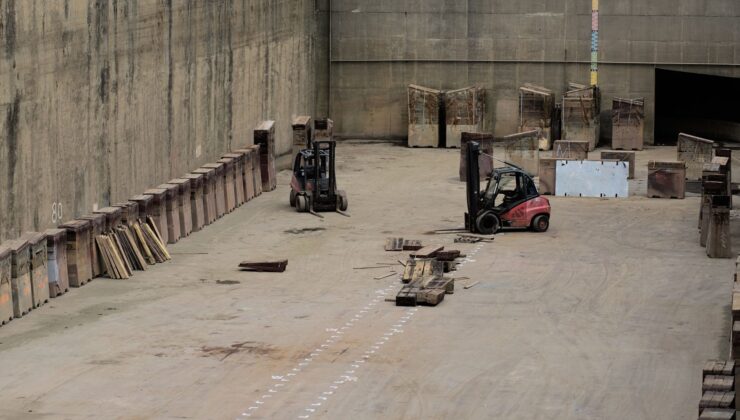
Choosing a forklift sounds straightforward until you realise how many variables sit behind the decision. Lift height, load capacity, fuel type, turning radius, attachments, mast visibility, tyre choice—each one matters, and each one matters differently depending on the job.
That is where many businesses go wrong. They start with the truck rather than the operation. A forklift that performs brilliantly in one warehouse can become inefficient, expensive, or even unsafe in another. The better approach is to work backwards from the reality of your site, your loads, and your workflow.
Start with the Working Environment
Before comparing models, look closely at where the forklift will spend most of its life. A truck is only as useful as its fit with the physical space around it.
Indoor, Outdoor, or Both?
A forklift used exclusively indoors has very different priorities from one handling pallets in a yard. Indoors, manoeuvrability, emissions, and noise levels usually move to the top of the list. Electric forklifts often make sense here because they are quieter, cleaner, and increasingly capable of handling demanding shifts.
Outdoors, the terrain changes the equation. Uneven surfaces, wet conditions, ramps, and loose materials put more emphasis on tyre type, ground clearance, and overall durability. Pneumatic tyres and more robust chassis designs may be better suited to that kind of environment.
Some operations need both. In that case, the “best” truck is rarely the one with the strongest single-spec performance. It is the one that can transition between environments without compromising safety or productivity.
Aisle Width and Storage Layout
This is one of the most common mismatches in warehouse operations. A business buys a truck based on capacity, then discovers it cannot turn efficiently in its own aisles.
A standard counterbalance forklift may be perfectly adequate in a wide, open space. In a high-density warehouse, though, a reach truck or articulated forklift could be the more practical option. If your storage strategy relies on narrow aisles, tall racking, and high pick density, manoeuvrability and lift precision matter just as much as raw lifting power.
It is also worth factoring in future layout changes. Warehouses rarely stay static for long. If SKU counts are rising or storage is becoming denser, buying only for today can create a problem tomorrow.
Match the Truck to the Load, Not Just the Weight
Capacity is usually the first figure people check, but it is not the full story. Two loads with the same weight can place very different demands on a forklift.
Load Size, Shape, and Stability
A long, awkward, or off-centre load affects a truck differently from a standard pallet. The load centre matters. So does height. A forklift rated to lift a certain weight at one load centre may have reduced effective capacity once that load becomes larger or less balanced.
This becomes especially important in sectors handling paper reels, timber, beverages, engineering components, or bulky retail stock. In those settings, mast stability, fork length, carriage options, and attachment compatibility can have a direct effect on both speed and risk.
For operations that are still narrowing down specifications, looking at available configurations in the real market can be useful. Reviewing current forklifts for sale across the UK often helps teams connect abstract requirements—such as lift height, power source, or attachment support—to the kinds of trucks actually being deployed in similar environments.
Attachments Change the Equation
Attachments can expand what a forklift can do, but they also affect performance. Sideshifters, rotators, clamps, and fork positioners add versatility, yet they can reduce residual capacity and alter the truck’s balance.
That is not a reason to avoid them. Quite the opposite, in many operations they are essential. But they should be part of the specification process from the beginning, not an afterthought added later. A truck chosen without considering attachment weight and hydraulic demand can quickly become the wrong truck.
Think Beyond the Spec Sheet
A forklift may look ideal on paper and still underperform in daily use. Why? Because real operations are shaped by shift patterns, charging windows, operator habits, and maintenance constraints.
Power Source and Duty Cycle
The move toward electrification is no longer limited to light indoor applications. Modern electric forklifts are increasingly common in heavier-duty environments, partly because battery technology has improved and partly because operating conditions have changed. More businesses are managing emissions targets, indoor air quality, and rising fuel costs.
Still, electric is not automatically right for everyone. If your site runs long shifts with limited charging opportunities, battery management becomes a serious operational issue. LPG or diesel may remain more practical in some outdoor or high-intensity settings.
The key question is not “Which power source is best?” but “Which one fits our working rhythm?” That includes downtime, refuelling or charging access, and whether the truck needs to be available continuously.
Operator Comfort Is a Productivity Issue
Ergonomics often gets treated as a nice extra. It is not. If operators are climbing in and out all day, working in tight spaces, or repeatedly handling delicate loads at height, cab layout and visibility have a measurable impact.
Good visibility reduces mistakes. Intuitive controls shorten familiarisation time. A comfortable seat and sensible step height can make a meaningful difference over a long shift. In a labour market where retention is not always easy, equipment that operators actually want to use has value beyond comfort alone.
Factor in Total Cost, Not Just Purchase Price
The cheapest forklift to buy is rarely the cheapest forklift to run. Downtime, maintenance frequency, energy or fuel use, and suitability for the job all shape the real cost over time.
A simple way to pressure-test a decision is to ask:
- How many hours will the truck run each week?
- What is the cost of lost productivity if it is underspecified?
- Will it require attachments, special tyres, or battery infrastructure?
- How easy is it to service based on our location and workload?
Those questions often reveal that a slightly higher upfront investment produces lower whole-life cost. That is especially true when the right truck improves throughput, reduces product damage, or avoids premature replacement.
The Best Match Is Operational, Not Theoretical
There is no universal “best forklift,” only the forklift that best suits the work. That means balancing environment, load type, layout, power demands, operator needs, and long-term cost.
In practice, the smartest decisions come from resisting the urge to buy on headline specs alone. A forklift is a working tool, not a brochure comparison exercise. When you define the job clearly first, the right features become much easier to identify—and far more likely to deliver value where it counts: on the warehouse floor, in the yard, and across the full life of the truck.