How Ductless Systems Changed the Way Homeowners Think About Comfort and Control
Introduction
For decades, the conversation around home heating and cooling followed a familiar script. You bought a house, inherited whatever system came with it, and adjusted your life around its limitations. Rooms that ran too hot in summer stayed that way. Spaces that never quite warmed up in winter became places you avoided. The thermostat on the wall represented a kind of blunt instrument, a single dial meant to address an entire home’s worth of competing needs.
Then ductless systems arrived and quietly rewrote the rules.
What makes ductless technology so significant has less to do with refrigerant lines or compressor specifications and more to do with a fundamental shift in expectations. Homeowners began asking different questions. Instead of wondering how to make peace with uneven temperatures, they started asking why every room couldn’t feel exactly the way they wanted it to feel. Instead of accepting that comfort meant compromise, they began expecting precision.
This shift in thinking happened gradually, but its effects have been profound. The old model of home climate control assumed that one setting should work for everyone and every space. Families adjusted their habits accordingly. Someone always grabbed a sweater. Someone else always cracked a window. The bedroom upstairs never matched the living room downstairs, and everyone simply learned to live with it.
Ductless systems challenged that assumption by offering something that traditional setups couldn’t provide: independence. Each indoor unit operates on its own terms, responding to the conditions and preferences of its particular zone. A home office can stay cool during afternoon work hours while the rest of the house remains untouched. A nursery can maintain steady warmth overnight without forcing the master bedroom to overheat. The kitchen, with its stove and appliances generating their own warmth, can receive dedicated attention separate from adjacent rooms.
This room-by-room approach changed how homeowners plan their spaces. Suddenly, that bonus room above the garage became usable year-round. The sunroom that baked in summer and froze in winter transformed into genuine living space. Additions and renovations no longer required expensive ductwork extensions. The question shifted from “can we afford to make this space comfortable” to “where do we want comfort, and how much of it.”
Planning itself became more flexible. Homeowners considering renovations discovered they could address climate control incrementally rather than all at once. A growing family might start with a single unit in a converted attic space, then add another when finishing a basement years later. The modular nature of ductless technology meant decisions didn’t have to be permanent or all-encompassing. Each choice could respond to current needs while leaving room for future adjustments.
This flexibility extended to older homes as well. Houses built before central air became standard often presented difficult choices. Running ductwork through finished walls and ceilings meant tearing into plaster, sacrificing closet space, or accepting bulky soffits that disrupted room proportions. Many homeowners simply went without, relying on window units that blocked views and produced uneven results. Ductless systems offered another path entirely, one that required minimal intrusion and preserved the character of historic or architecturally distinctive homes.
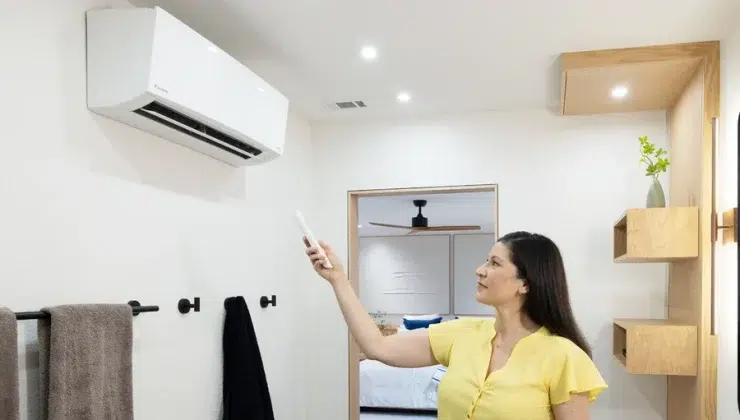
The control aspect proved equally transformative. Modern ductless units connect to smartphones and smart home platforms, allowing adjustments from anywhere. Someone leaving work early on a hot day can cool down the house before arriving. A family returning from vacation can ensure comfortable temperatures await them. This level of responsiveness was simply unavailable to previous generations of homeowners, who returned to stuffy or frigid houses and waited for conditions to improve.
Local service networks have expanded alongside adoption of ductless technology, with providers offering heat pump repair waco tx and similar support in communities across the country, giving homeowners confidence that ongoing maintenance remains accessible no matter where they live.
The planning conversation has also become more personalized. Contractors and homeowners now discuss lifestyle patterns, daily routines, and individual comfort preferences in ways that weren’t relevant when every home received essentially the same solution. Do you work from home? Which rooms see the most activity? Are there family members with different temperature sensitivities? These questions shape system design in ways that acknowledge homes as living environments rather than static structures.
Perhaps most importantly, ductless systems helped homeowners recognize that comfort isn’t a luxury requiring justification. Previous generations often framed climate control as something to minimize, a necessary expense to be endured rather than optimized. The efficiency gains associated with ductless technology helped shift that perception. When heating or cooling only the spaces you’re actually using, the relationship between comfort and cost changes. Homeowners feel less guilty about maintaining pleasant conditions because they understand resources aren’t being wasted on empty rooms.
This psychological shift matters as much as any practical benefit. People spend most of their lives indoors. The quality of that indoor environment affects mood, productivity, sleep, and overall wellbeing. Ductless systems gave homeowners permission to take their comfort seriously, to treat it as a legitimate priority rather than an afterthought.
Conclusion
The technology will continue evolving, becoming quieter, more efficient, and more integrated with other home systems. But the conceptual change has already happened. Homeowners now expect control. They expect flexibility. They expect their homes to adapt to their lives rather than demanding the opposite. That expectation, once established, doesn’t fade. It simply becomes the new baseline for what comfort means.