Pool Heat Pumps: Why Smart Perth Owners Skip Solar and Go Straight to Electric
Your neighbour raves about his solar pool heating. Zero running costs, he says. Eco-friendly. Uses Perth’s abundant sunshine.
What he doesn’t mention: his pool’s barely 22 degrees in July and he hasn’t swum in winter for three years.
Meanwhile, your other neighbour with pool heat pumps is doing laps every Saturday morning in 27-degree water, rain or shine.
Let me show you why heat pumps dominate for families who actually want to use their pool year-round.
The 48-Hour Advantage
Friday arvo you realise the weekend forecast looks perfect for swimming. Your pool’s sitting at a chilly 20 degrees after a cool week. What now?
Solar pool heating needs three to five sunny days to lift temperature meaningfully. You’re out of luck for this weekend.
Pool heat pumps do it overnight. Set it Friday evening to 27 degrees. Wake up Saturday to perfect swimming temperature. That’s the difference between planning around weather and swimming whenever you feel like it.
A Cockburn homeowner switched from solar to heat pump last year specifically for this reason. His teenagers’ friends started choosing their pool over others because it was always warm enough. “Best investment we made,” he told us. “The pool actually gets used now.”
Weather Doesn’t Get a Vote
Perth’s climate is brilliant, but we still get our share of overcast winter weeks. Solar heating produces almost nothing during cloudy stretches. Three grey days and your pool temperature drops noticeably.
Heat pumps extract warmth from ambient air temperature, not sunshine. Cloudy, drizzly, or bright – makes zero difference to performance. As long as air temperature stays above 10 degrees (which Perth rarely drops below), your heat pump maintains target temperature effortlessly.
This matters more than most people realise until winter arrives. A Canning Vale family planned their pool heating around “Perth gets plenty of sun.” True in summer. Less reliable May through August when you actually need consistent heating.
They initially quoted solar, then switched to pool heat pumps after we showed them typical winter cloud coverage data. Now they swim year-round without checking the forecast first.
Your Roof Doesn’t Matter
Solar installers spend ages assessing your roof. Orientation, shading, available space, roof type, age, structural capacity. Then they tell you whether solar even works for your property.
Half of Perth homes have less-than-ideal roof situations. East-facing roof? You’ll need extra panels. Shade trees? Performance drops significantly. Tile roof? Installation costs jump. Planning to re-roof soon? Solar becomes complicated.
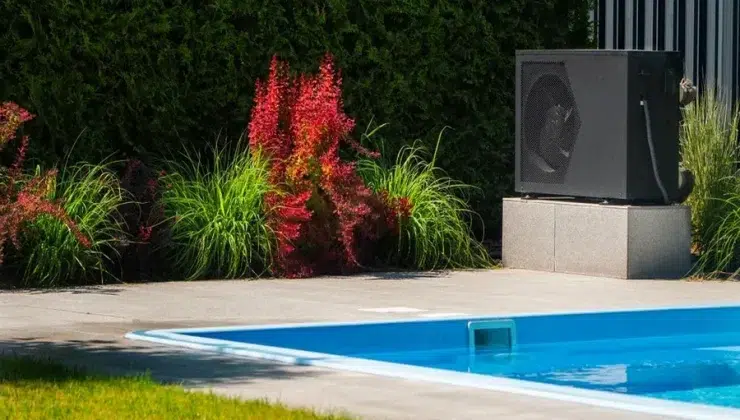
Pool heat pumps sit on a concrete pad beside your pool equipment. Roof orientation, shading, tiles, age – completely irrelevant. If you’ve got one square metre of ground space near your pool, you’re sorted.
A Baldivis property had perfect north-facing roof space but the owners wanted that area for solar electricity panels instead. Smart thinking – electricity panels generate income and rebates year-round. Pool heating panels only work when pools need warming. They installed a heat pump and kept their roof for better uses.
Running Costs vs Reality Costs
Solar advocates love pointing out zero running costs. Technically true. Practically misleading.
Zero running costs mean nothing if your pool’s too cold to swim in for half the year. What’s the point of saving electricity if you’re not actually using your pool?
Pool heat pumps cost money to run – typically around three to four dollars daily during peak winter usage. That’s roughly $100 monthly for consistent 27-degree swimming through June, July, August.
A Willetton customer calculated it differently. His solar saved electricity but his family swam maybe ten times through winter because temperature hovered around 21 degrees. After installing a heat pump, they swam 40-plus times that winter. Cost per swim dropped dramatically despite electricity usage.
The question isn’t “what’s cheapest?” It’s “what delivers the swimming experience you actually want?”
Inverter Technology Changes Everything
Modern pool heat pumps use inverter technology that older models lacked. Instead of running full-blast until target temperature then shutting off, inverters adjust output continuously.
Think of it like cruise control for your pool temperature. The system ramps up or down smoothly, using only the energy needed at any moment. This delivers three major benefits:
Quieter operation – inverter heat pumps run at 40-50 decibels, about normal conversation volume. Older models sounded like jet engines.
Better efficiency – using only necessary power at any moment means 25-30% less electricity than on-off cycling.
Consistent temperature – no more temperature swings. Your pool sits at exactly 27 degrees constantly rather than bouncing between 26 and 28.
The inverter premium costs extra upfront but pays back through electricity savings and better performance over the unit’s lifespan.
The Installation Timeline Nobody Expects
Solar pool heating installation takes multiple days. Panels on roof, plumbing modifications, controller setup, system commissioning. You’re looking at two to three days minimum, often spread across different weeks waiting for roof work weather windows.
Heat pump installation happens in hours. Concrete pad prepared beforehand, unit delivered, electrical and plumbing connections completed, system tested. Most residential installs finish within half a day.
A Atwell customer needed heating installed before a major pool party in three weeks. Solar timeline didn’t work. Heat pump was running within 48 hours of committing. Party went ahead with perfectly warm water.
Sizing Accuracy Matters More
Solar sizing involves complex roof space calculations. Too few panels and you’ll never reach target temperature. Too many panels waste money and roof space.
Heat pump sizing is straightforward. Your pool volume determines required capacity. A standard 50,000-litre Perth pool typically needs 12-15kW capacity. Done. No roof variables complicating calculations.
Undersized heat pumps run continuously without reaching temperature. Oversized units cycle on-off repeatedly, wasting energy and reducing lifespan. Professional sizing matters, but the calculation itself is simpler than solar.
Maintenance Reality Check
Solar pool heating seems maintenance-free until it’s not. Panels need cleaning in Perth’s dusty conditions. Controller units eventually fail. Roof penetrations can develop leaks. Pool pump pushes water uphill to roof panels constantly, working harder than ground-level systems.
Pool heat pumps need annual professional servicing. Evaporator coils cleaned, refrigerant levels checked, connections inspected. Takes an hour, costs reasonable money, keeps your system running efficiently for 10-15 years.
Neither system is truly maintenance-free. Heat pumps just make their maintenance requirements more obvious and predictable.
When Solar Still Wins
Don’t think I’m completely bagging solar. It absolutely dominates for seasonal swimmers with perfect roof situations.
You only swim September through April. You’re happy with 24-degree water. Your roof faces north with massive unshaded space. Solar delivers free heating for eight months annually with zero ongoing costs.
But if you want consistent year-round swimming at your preferred temperature regardless of weather, pool heat pumps deliver what most Perth families actually need.
The Honest Comparison
Solar suits specific situations brilliantly. Heat pumps suit most situations reliably.
Solar works best for seasonal swimmers with ideal roofs. Heat pumps work for anyone wanting year-round swimming at consistent temperatures.
Solar costs nothing to run but requires perfect conditions. Heat pumps cost money to run but perform regardless of conditions.
We install both systems because they solve different problems. The real question: which problem are you actually solving?
Get Your Situation Assessed Properly
Stop reading online comparisons written by people who’ve never installed either system in Perth conditions.
We’ll measure your pool, check your property setup, understand your swimming patterns, and show you exactly what each system delivers for your specific situation. No generic advice, no sales pressure, just honest recommendations based on three decades installing both options across Perth.
Book your free assessment at poolheatingsolutionswa.com.au. Available seven days, 7am-7pm, even public holidays.
Your pool’s waiting. Let’s get it warm enough to actually use.