Next-Gen Welding Fixtures Transforming Modern Manufacturing
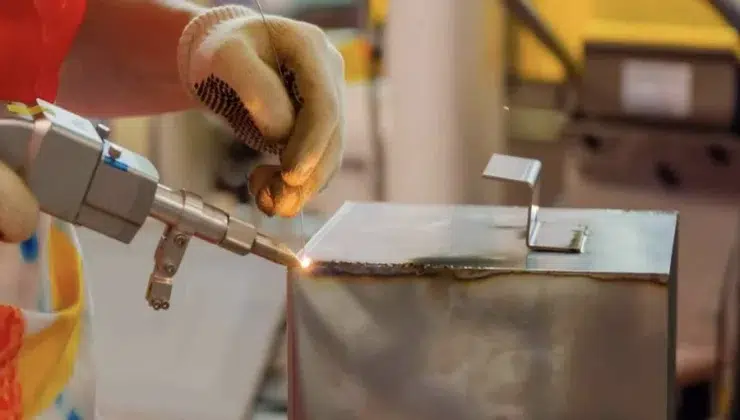
In today’s manufacturing world, precision, flexibility, and speed are no longer optional—they’re essential. Traditional fixed jigs, once the backbone of welding operations, are now struggling to keep up with evolving geometries and tighter tolerances. That’s where fixtures for welding are stepping into a new era of innovation.
Modern welding fixtures are not just static positioning tools—they’re dynamic systems combining intelligence, automation, and adjustability. From modular setups to sensor-driven systems, these advanced fixtures help manufacturers meet the demands of faster production cycles, complex designs, and consistent quality.
Let’s explore the cutting-edge developments redefining how welding fixtures are designed and used across industries.
Adaptive and Variable-Angle Fixtures
The days of one-size-fits-all welding jigs are over. Adaptive fixtures now allow manufacturers to weld parts at non-standard angles—perfect for the increasingly intricate designs found in industries like automotive, aerospace, and energy.
Key Innovations:
- Variable-Angle Locking Mechanisms: Fixtures can now lock at precise degrees, enabling welds beyond the traditional 90° configuration.
- Adjustable Fixture Arms: Operators can reposition fixture arms to handle different part shapes or sizes without full retooling.
- Lightweight Construction: Advanced alloys and ergonomic designs make these fixtures easier to transport and use in field or mobile settings.
By improving adjustability without sacrificing rigidity, adaptive fixtures empower teams to handle diverse projects with minimal downtime or reconfiguration. This flexibility supports modern construction strategies that emphasize efficiency, scalability, and precision. As projects evolve in complexity, these fixtures make it easier to adapt tools and processes without disrupting workflow.
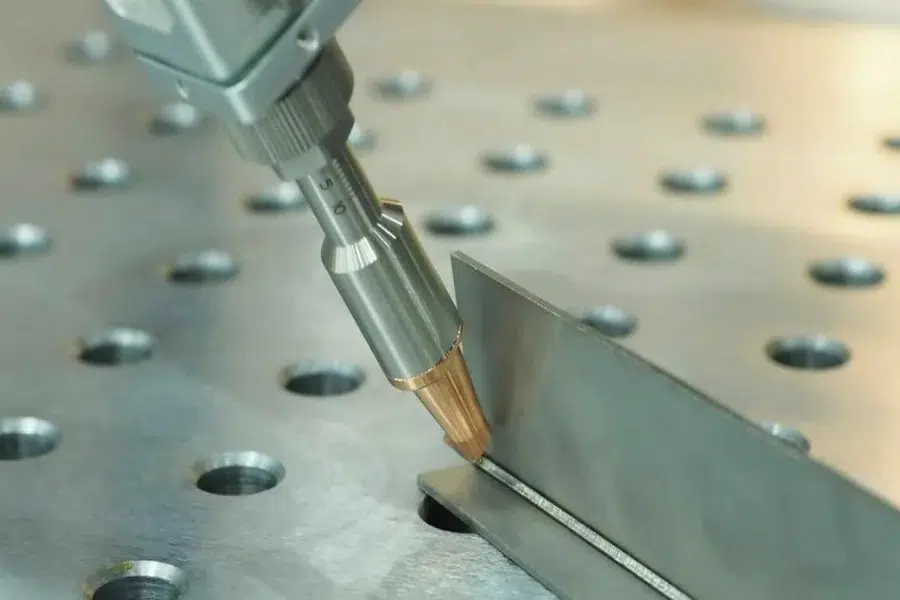
Parametric and Automated Fixture Design
Designing fixtures once required manual CAD work and trial-and-error fitting. Today, parametric and automated fixture design has transformed that process.
How It Works:
- Parametric Modeling: Engineers input design parameters (e.g., part geometry, weld paths, tolerances), and the software auto-generates the fixture layout.
- Evolutionary Algorithms: These systems use AI to optimize clamping positions and reduce distortion potential.
- Rapid Reconfiguration: Fixtures can be adapted for new part variants by updating digital parameters—no manual redesign needed.
This automation drastically reduces engineering time and supports mass customization—allowing you to adapt faster to changing customer demands without investing in multiple dedicated fixtures.
Sensor-Integrated and Smart Fixtures
The move toward Industry 4.0 has brought intelligence to nearly every corner of manufacturing—and fixtures for welding are no exception.
Smart Fixture Features Include:
- Embedded Sensors: Monitor clamping force, vibration, temperature, and stress in real time.
- Data Feedback Loops: Provide alerts for issues like clamp slippage or temperature deviation.
- IoT Connectivity: Transmits performance data to centralized dashboards for predictive maintenance and quality control.
These intelligent fixtures are part of intelligent welding systems (IWS) that combine robotics, AI, and IoT integration. The result? Greater process control, fewer defects, and actionable data for continuous improvement.
Rotary and Synchronized Motion Fixtures
For continuous seam welding or complex geometries, rotary and motion-coordinated fixtures offer unmatched precision and throughput.
Key Capabilities:
- Rotary Indexing Tables: Allow parts to be rotated during welding, giving consistent torch access without manual repositioning.
- Synchronized Motion Control: Keeps the fixture’s rotational speed aligned with the torch’s travel speed for consistent bead quality.
- Multi-Axis Designs: Some systems combine rotational and translational motion for welding complex parts in one continuous cycle.
This synchronized approach reduces weld interruptions, boosts accuracy, and supports automated cells where human intervention is minimal.
Fixtureless or Self-Fixturing Approaches
An emerging concept in advanced manufacturing is fixtureless welding, where parts themselves are engineered to provide alignment and support.
How It Works:
- Built-In Locators: The part’s geometry or machining allowances serve as natural fixturing elements.
- Integrated Guides: Components like impeller blades or frames are designed to interlock for self-alignment.
- Reduced Tooling Costs: Eliminating dedicated fixtures minimizes material costs, setup time, and storage requirements.
Fixtureless welding is gaining traction in additive manufacturing and lightweight structure production, where flexibility and minimal tooling are key.
Modular and Reconfigurable Fixtures
In dynamic production environments, modular fixtures are invaluable. They combine the adaptability of a flexible jig with the strength and accuracy of a custom tool.
Advantages of Modular Systems:
- Interchangeable Components: Swap out locator pins, clamps, or plates to adapt for new parts.
- Quick Setup: Predefined grid plates or slot systems reduce changeover times.
- Scalability: Add or remove sections to suit part size or volume needs.
Hybrid fixtures that mix modular elements with custom-built structures provide a balance between cost and precision, particularly useful for small-batch or prototype manufacturing.
Structural Innovations for Rigidity and Stability
Rigidity remains a cornerstone of fixture performance. However, innovation in materials and structural design is allowing fixtures to be lighter yet stronger than ever.
Modern Advancements:
- Topology Optimization: Computer algorithms remove unnecessary material, creating lattice structures that maintain stiffness while cutting weight.
- Advanced Materials: Aluminum-titanium hybrids and carbon fiber composites improve durability with less thermal expansion.
- Thermal Management: Fixtures are engineered to resist distortion from heat cycles during welding, maintaining consistent alignment.
This balance between stiffness, mass, and thermal control helps maintain weld integrity even in high-speed, high-temperature applications.
Integration with Robotic and Automation Systems
To fully leverage automation, fixtures must communicate seamlessly with robotic systems.
Integration Essentials:
- Precision Datums: Fixtures are aligned to robotic coordinate systems for consistent path control.
- Sensor Guidance: Vision or laser seam-tracking systems work in tandem with fixture positioning to adapt in real time.
- Safety and Interlocks: Fixtures can be equipped with interlock systems that prevent movement during active weld cycles.
When combined, these features allow robotic welders to achieve repeatable, high-quality joints with minimal human oversight—key to scaling modern production lines efficiently. In commercial construction, this precision and consistency translate to faster project timelines and stronger structural reliability across large-scale builds.
Real-World Applications and Case Studies
Angular Fixtures for Non-Standard Welds
An automotive supplier implemented a low-cost adjustable fixture to handle brackets requiring welds at 60° and 75°. The result? A 35% reduction in setup time and improved part uniformity.
Rotary Fixture in Automated Welding
A heavy-equipment manufacturer introduced a rotary fixture synchronized with a robotic arm. This integration increased throughput by 40% while maintaining dimensional accuracy within 0.2 mm.
Parametric Fixture Design for Small-Series Production
A precision fabrication firm used parametric modeling to create digital fixtures adaptable to multiple variants. They cut design time per fixture by over 60%.
These examples show how innovation in fixture technology translates directly into measurable performance gains across diverse industries.
Challenges and Considerations
While modern welding fixtures bring tremendous advantages, they also come with implementation challenges.
- Balancing Flexibility and Rigidity: Overly flexible designs risk alignment drift; overly rigid systems reduce adaptability.
- Complexity and Cost: Adding sensors and automation raises upfront costs and maintenance requirements.
- Operator Training: Advanced fixtures require skill development to maximize their benefits.
- Maintenance: Regular inspection, calibration, and cleaning are essential to maintain long-term precision.
Addressing these considerations ensures that fixture innovation delivers tangible and sustainable value on the shop floor.
Driving the Future of Welding Fixture Innovation
As manufacturing embraces smarter, faster, and more flexible production, Denaliweld continues to lead the way in developing advanced fixtures for welding that enhance precision and productivity.
Their solutions integrate adaptive design, modular components, and smart control systems—empowering manufacturers to achieve consistent weld quality, reduced setup times, and seamless automation compatibility. Whether you’re modernizing a single workstation or scaling an entire production line, they provide the engineering excellence and reliability you can count on.
Conclusion
Modern fixtures for welding are more than tools—they’re enablers of transformation. From adaptive angular jigs to sensor-integrated systems, these innovations combine flexibility, intelligence, and strength to meet the demands of next-generation manufacturing.
By adopting advanced fixture technologies and partnering with trusted innovators, you can achieve higher precision, faster turnaround, and long-term cost efficiency. The future of welding isn’t just automated—it’s intelligently fixtured.