How AI Unlocks the True Potential of Medical IoT Devices?

The convergence of artificial intelligence (AI) with the Internet of Things (IoT) is sparking a digital revolution in healthcare. With the rapid proliferation of intelligent medical devices and the emergence of comprehensive IOT Healthcare Solutions, clinics and hospitals can now gather, analyze, and act upon patient data like never before.
Leveraging IOT Application Development with AI now turns previously disparate and incoherent information into meaningful insights that can be acted upon. Using IOT Development to turn these ecosystems into reality significantly enriches healthcare providers with a more responsive, predictive, and personalized approach to care that impacts outcomes and improves lives at population health scale.
What are Medical IoT Devices and Why Do They Matter?
What we call Medical IoT devices, sometimes termed IoMT (Internet of Medical Things), represent a broad array of connected devices, from wearable heart monitors, implantable glucose monitors, and network infusion pumps to smart hospital beds. Medical IoT matters because those devices continuously collect, transmit, and report the vital signs of patients, adherence to therapies, and activities of equipment throughout the facility.
Medical IoT minimizes the need for manual entries and notifications, to enable the greater efficiency and value of real-time alerts to reduce medical errors and create a better use of team energy, on what they need to do right now. For this reason, IOT Healthcare services play a critical role in the foundation of digital medicine; and have enabled entirely new remote and proactive care solutions.
The Role of AI in Making Medical IoT Smarter
Standalone Internet of Things (IoT) devices produce vast amounts of health data, but it’s only when AI is incorporated that that value is truly unlocked. AI enhances IOT Application, specifically, by teaching machines to analyze patterns, identify anomalies, and derive clinical observations automatically, on a scale that no human crew could do.
This combination also allows predictive maintenance, disease risk determination, and personal recommendations. IOT Development can enable more intelligent automation with strong AI functionality, providing better support for decision making and earlier intervention, developing a dynamic and agile environment in healthcare.
- Improved Accuracy and Fewer False Alarms
The utilization of AI analytics enhances medical IoT systems accuracy. Using machine learning techniques, medical IoT systems analyze large amounts of health data to determine the differences between normal changes and significant health events. This results in fewer false alarms and only clinically significant alerts to health teams, which fosters trust in IOT Healthcare and promotes efficient workflows through IOT Development. - Real-Time Decision Support and Early Intervention
Artificial Intelligence can convert raw IoT data into timely utilization. Intelligent models can analyze patient data and create actionable insights to identify variations, identify possible diagnoses, and identify unanswered questions for immediate action – sometimes before symptoms appear. This type of decision support takes health professionals one step closer to making directed action earlier, better providing for patients, and ultimately providing improved patient outcomes through IOT Development services. - Personalized Tracking and Adaptive Care Pathways
AI allows medical IoT to create adaptive and personalized care recommendations through the endless evaluation of patient-specific behavioral patterns and trends. AI can modify medication choices, modify therapy approaches, or alert caregivers for minor changes in health, but organizations utilizing IoT Healthcare services can leverage the platform provided by AI to provide care that is personalized to individual patients’ needs through adaptive IoT app Development processes that are contextualized. - Workflow Automation and Administrative Relief
In addition to diagnostics, AI will be able to pull IoT information streams for ease of workflow, including automating an array of administrative duties, like recording vitals, recording in electronic medical records, or prioritizing notifications of time-sensitive urgent notification. Thus, AI will further streamline the care delivery and reduce the clinician’s burden or duties, while maximizing the opportunities for IOT Development solutions to impact modern healthcare.
How AI Unlocks the True Potential of Medical IoT Devices in Patient Monitoring?
AI-powered analytics, integrated with medical IoT, allow a new frontier of continuous and accurate patient monitoring at scale. Devices can track heart rate, ECG, respiratory rate, temperature, or blood sugar in real time and feed into intelligent models customized and designed in the IOT app development process.
The AI can learn the baseline medical conditions for each patient and then report events that may pose issues like an upside trend in heart rhythm or a spike in glucose levels long before symptoms have occurred. The delivery team receives alerts with recommended actions prioritized for response, speeding response time and saving lives. IOT Healthcare accommodates limited passive data collection to ensure that we shift monitoring into health intervention. Advanced AI allows for more actionable monitoring in real time.
AI-Powered Predictive Analytics in Healthcare IoT Devices
Predictive analytics is a key aspect in the integration of AI and medical IoT. The large number of data collected from numerous devices allows AI algorithms to detect rising health risks, predict critical events, and empower preventative action. For example, machine learning models have the ability to determine the risk that a patient might develop sepsis or suffer adverse drug reactions, allowing for early clinical intervention. Progressive IOT Development is adept at building pipes of data, while IOT development focuses on creating dashboards that display the information in a clear and digestible manner for caregivers. The outcome: lower hospital readmissions, better patient outcomes, and a new efficiency of healthcare.
Personalized Treatment Plans with AI and Medical IoT
The combination of AI and IOT Healthcare services is making personalized medicine a reality. The medical IoT devices are collecting patient-specific data— lifestyle data, medication adherence, activity, and vital signs—that can then be analyzed by the AI models in real-time to create personalized treatment plans. Based on the patients’ data collection, the IOT app development can offer recommendations on medication dosing, lifestyle changes, or changes to their therapy. In addition, IOT Development can make sure the data is securely delivered per a privacy subspecies while continuing to bring in data for an ongoing personalized plan of care.
Smart Hospitals: How AI and IoT Work Together for Efficiency
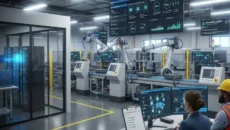
Smart hospitals are a great example of the power of AI and IoT working hand-in-hand. Hospital staff can continuously monitor the bed, equipment, medications, and patient tracking using IOT Healthcare services. Hospital resources are dynamically allocated, predictive maintenance can be implemented, and energy consumption can be optimized using smart algorithms. IOT development allows for digital twins and automated workflows, reducing input, time, and risk of human error. With comprehensive IOT development services in place, the ecosystem allows healthcare teams to provide quicker, safer, and quality care with resource efficiency.
Cost Reduction and Operational Benefits of AI-Driven IoT Healthcare Devices
AI-powered IoT systems offer substantial cost-saving benefits to healthcare organizations. Predictive maintenance algorithms reduce downtime of equipment, AI based triage and automated alerts limit unnecessary admissions to the hospital. A good IOT application can automate workflows, from setting up appointments to tracking assets, thus minimizing time lost on administrative tasks and processes. With IOT Development Services focusing on both hardware and software development, hospitals can optimize their human resources better, cut down on overhead costs, and eliminate costly and potentially harmful complications. AI-enhanced IOT healthcare services yield operational excellence while allowing for more resources to be directed to care, the most important variable.
Final Thoughts
AI is the enabler that utilizes IOT healthcare solutions to directly transform raw data from devices into clinical intelligence. From improved patient monitoring and predictive analytics, to personalized care and operational excellence, the infusion of AI into IOT application development is a game-changer for the healthcare sector. By utilizing best-in-class IOT development services, hospitals and care providers can be in a position to prepare for a future that is more intelligent, efficient, and infinitely patient-centered.