The Future of Workers’ Compensation Law and Emerging Trends

The grand bargain governing workplace injuries has remained remarkably durable for over a century. Under this foundational compromise, employees relinquish their right to sue their employers for negligence in exchange for swift, no-fault medical coverage and partial wage replacement. However, the contemporary labor market is placing unprecedented stress on this legacy framework.
Driven by decentralized work environments, a deeper societal understanding of mental health, rapid automated physical integration, and predictive data systems, the legal definitions of occupational risk are shifting. Understanding these macro trends is essential for both employers and workers trying to navigate an increasingly complex administrative landscape.
The Distributed Workplace and the Dissolution of “Premises”
One of the most profound structural shifts in the modern economy is the permanent decentralization of the traditional workplace. Remote and hybrid work arrangements have transformed hundreds of thousands of private residences into corporate outposts. This evolution introduces novel legal friction regarding the geographic and temporal boundaries of employment.
Evaluating the Home Office Boundary
Under traditional statutes, an injury is compensable only if it arises out of and occurs in the course of employment. When an employee operates inside a commercial facility, establishing these parameters is relatively straightforward. In a home environment, the line between personal activity and professional duty blurs completely.
If a remote software engineer trips over a household item while walking to the kitchen to grab water between scheduled video conferences, does that injury qualify for state benefits? Administrative boards are increasingly forced to analyze these scenarios through the personal comfort doctrine, which historically protected workers during brief, necessary breaks on commercial premises. As case law evolves, states are building distinct tests to determine whether an employer has legally extended the “premises” of the company into private property.
Biometric Wearables and Data Ownership
To combat repetitive strain injuries and complex musculoskeletal disorders, industries ranging from logistics to manufacturing are deploying wearable biometric sensors. These devices track posture, lifting mechanics, and repetitive motion in real time, alerting workers to immediate physical strain.
While these tools offer clear preventative benefits, they also generate a continuous digital footprint. In a contested claim, this telemetry data becomes a major battleground. Insurance adjusters may attempt to use logs to argue that an employee failed to follow automated safety prompts, whereas injured workers can leverage the exact same data to provide irrefutable proof of long-term, job-induced physical degradation.
Reforming the Legal Approach to Psychological Injuries
Historically, workers’ compensation systems were heavily biased toward visible, objective physical trauma—such as fractures or acute illnesses. Mental health conditions were frequently marginalized or restricted to claims where a psychological condition had to stem directly from a catastrophic physical injury.
The modern legal landscape is undergoing a major correction regarding purely mental injuries, particularly post-traumatic stress disorder (PTSD) and chronic, job-induced stress.
Statutory Presumptions for Frontline Workers
An increasing number of jurisdictions are passing presumptive coverage laws specifically for first responders, healthcare professionals, and correctional officers. Under a standard claim, the burden of proof rests entirely on the worker to demonstrate that their job directly caused their illness. Presumptive legislation flips this burden. If a qualified frontline professional develops PTSD, the law automatically presumes the condition is an occupational disease unless the insurer can provide overwhelming evidence to the contrary.
The Hurdle of Chronic Workplace Stress
Expanding these protections to the broader corporate workforce remains a highly contentious legal boundary. Proving that generalized anxiety or clinical depression is exclusively the result of a hostile or high-pressure corporate environment rather than external personal factors presents major diagnostic and evidentiary hurdles. Frameworks are slowly adapting, but the threshold for establishing a purely mental claim without an acute, traumatic trigger event remains exceptionally high in most state systems.
Predictive Analytics in Claims Administration
The integration of predictive algorithms and machine learning is quietly transforming how claims are processed, evaluated, and closed.
Automated Triaging and Fraud Detection
Many state funds and private insurers utilize automated systems to triage new claims, sorting them by expected severity and cost. Early-intervention algorithms flag high-risk claims early, allowing systems to deploy specialized medical care quickly to mitigate long-term disability. Simultaneously, these programs scan for anomalous billing patterns or contradictory social media data to flag potential fraud.
The Problem of Algorithmic Transparency
While automation reduces administrative overhead and accelerates routine approvals for undisputed claims, it raises critical concerns regarding algorithmic transparency. When an automated system denies authorization for a specialized medical procedure or flags an injured worker for an invasive investigation based on abstract data correlations, identifying the precise logic behind that decision becomes incredibly difficult for the affected individual. This creates a distinct disadvantage for workers who lack technical insight into how these automated systems operate.
Common Clarifications Regarding Evolving Rules
How do new workplace automation tools affect my injury rights?
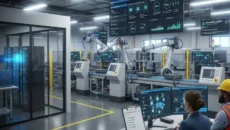
As collaborative robotics and automated machinery become standard on factory and warehouse floors, the nature of injuries is shifting from repetitive heavy lifting to complex mechanical impacts or software calibration errors. If an automated system malfunctions and causes an injury, the legal recourse may expand beyond basic workers’ compensation into a third-party product liability lawsuit against the system’s manufacturer or software developers.
Are climate-related illnesses covered under modern workers’ comp?
Yes, but the frameworks are adapting rapidly. With rising summer temperatures across the Pacific Northwest and other regions, claims related to severe heat exhaustion, respiratory distress from wildfire smoke, and vector-borne illnesses contracted during outdoor work are increasing. States are establishing stricter mandatory cooling break protocols, and violating these state standards makes it significantly easier for an injured worker to substantiate an occupational exposure claim.
What should I do if my claim involves a remote out-of-state employer?
If you reside and work out of a home office in one state but your corporate employer is headquartered in another, a jurisdictional conflict can arise. Generally, the laws of the state where the employee physically performs the work take precedence, but navigating these multi-state insurance dynamics requires a highly technical review of the employment contract and state statutes.
Navigating a Shifting Legal Landscape
The core objective of industrial insurance remains the timely restoration of an injured worker’s health and financial stability. However, as the boundaries between home and office dissolve, and as automated systems assume greater control over claims management, the path to securing fair benefits is becoming increasingly technical. Workers navigating these unprecedented structural changes frequently require a detailed understanding of state-specific administrative rules to ensure their long-term protections remain intact; readers interested in exploring these local statutory nuances can click here to learn more about the current protections and evolving legal precedents shaping the future of workplace recovery.