Why Some Trainers Refuse to Evolve Rare Pokémon Forever

It’s odd, when you think about it, that despite living in a world obsessed with progress, countless hours are often spent chasing a single hard-to-find creature, strengthening it carefully over time, and displaying it proudly as proof of dedication, only for hesitation to appear the moment evolution becomes possible.
Yet within Pokémon GO, this kind of behaviour is anything but unusual. Some trainers keep tiny Magikarp untouched for years. Others protect events like Pikachu museum artefacts. A few even leave legendary Pokémon sitting at low Combat Power simply because changing them feels wrong. It says a lot about how modern gaming communities think about rarity, identity, and digital nostalgia.
The funny part is that Pokémon GO was originally designed around progression. Catch stronger creatures, evolve them, build a better team. However, once millions of people started treating certain Pokémon less like tools and more like collectables, the logic shifted entirely. Evolution stopped being an automatic reward. Sometimes it became a loss.
The Value of Staying “Unfinished”
Long-time players often talk about rare Pokémon in the same way collectors discuss vinyl records or limited trainers. The less altered something feels, the more emotionally valuable it becomes.
A perfect example is event Pokémon. Holiday costumes, anniversary hats, seasonal accessories: many of these versions either cannot evolve or lose part of their uniqueness when they do. A Santa Hat Pikachu may technically become stronger as Raichu, but the cultural value changes immediately. The evolved version often feels less iconic.
Come to think of it, the community itself quietly reinforces this behaviour. Screenshots of untouched rarities are constantly spread across forums. Players compare first-day catches from 2016, lucky Pokémon with odd statistics, or impossible-to-find legacy forms that newer trainers may never obtain again.
Legacy Moves Changed Everything
The real turning point came when legacy moves entered the conversation. Certain Pokémon caught during limited-time events gained attacks that later disappeared from normal gameplay rotations. Evolving the wrong creature at the wrong moment suddenly became risky.
That anxiety still shapes decision-making today. Players hesitate because one evolution could erase something permanently valuable. Exactly. A mechanic designed to reward progress accidentally created a preservation culture instead.
As competitive play became more demanding, conversations around faster progression naturally grew louder within the community. Discussions about efficient raid preparation, resource management, and even services connected to Pokémon Go boost like https://playhub.com/pokemon-go/accounts started appearing more frequently alongside debates about rare collections and high-level team optimisation.
When Rarity Becomes Personal
Not all unevolved Pokémon are valuable because of mechanics. Sometimes the attachment is deeply personal and almost impossible to explain rationally.
A trainer may keep their first shiny Pokémon forever unevolved simply because it reminds them of a specific summer evening or a holiday trip. Another may preserve a weak Eevee caught with a close friend years ago. In these cases, evolving the Pokémon feels oddly similar to altering an old photograph.
That emotional layer matters more than outsiders expect. Pokémon GO succeeds partly because it mixes geography with memory. A creature is not just data sitting on a server. It often becomes tied to weather, location, people, routines, or periods of life.
True, competitive players sometimes mock this mentality. From a purely strategic perspective, an unevolved rare Pokémon can look inefficient or wasteful. But Pokémon GO stopped being purely strategic years ago. The social dimension became just as important as combat statistics.
Tiny Details Players Secretly Care About
Certain traits create almost mythical status among collectors:
- Pokémon caught on the game’s launch week in July 2016
- Low-level shinies with unusual weather conditions
- Event Pokémon that were later discontinued
- Creatures with accidental or retired move combinations
- Perfect “0% IV” Pokémon, sometimes called “nundos”
Ironically, some of these are statistically rarer than the powerful “perfect IV” Pokémon most players chase obsessively.
Evolution Anxiety Is Part of the Design
There is also a psychological factor hidden beneath the surface. Pokémon GO constantly pressures players to make irreversible choices. Should rare candy be used now or saved? Should a Master Ball be spent today or held forever? Should this shiny evolve, or stay exactly as it is?
Games rarely talk openly about permanence, but Pokémon GO quietly depends on it. The fear of regret keeps players emotionally invested for years. A trainer who refuses to evolve a rare Pokémon is not avoiding gameplay. In many ways, they are participating in one of the game’s most powerful emotional systems.
And honestly, the interface itself contributes to this tension. The evolution animation feels dramatic, almost ceremonial. Once completed, the previous version disappears permanently from the collection unless another identical Pokémon is found later. For highly sentimental players, that finality carries surprising emotional weight.
The Status Symbol Nobody Talks About
Inside experienced communities, rare unevolved Pokémon can function almost like insider signals. A maxed-out legendary Pokémon is impressive, certainly. But a level-one shiny costume Pokémon from a forgotten regional event? That creates a different reaction entirely. It suggests long-term dedication, timing, luck, and community knowledge all at once.
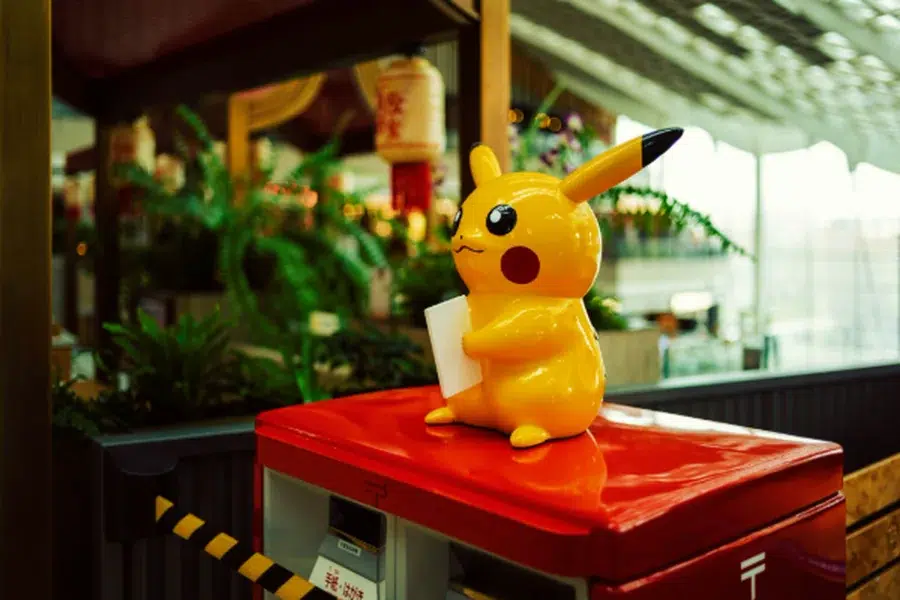
Why Evolved Pokémon Sometimes Feel Less Rare
Oddly enough, evolution can reduce uniqueness. Once evolved, many creatures start looking interchangeable with thousands of others used in raids or competitive battles.
Keeping a Pokémon in its original form preserves context. It freezes a specific moment in the game’s history. That distinction matters more now because Pokémon GO changes constantly through seasonal rotations, balance updates, disappearing mechanics, and temporary events.
The Quiet Shift From Battling to Curating
One subtle change in recent years is how many players have shifted from “building teams” to “curating collections”. The difference sounds small, but culturally it is huge.
Early Pokémon GO culture revolved around gyms, combat power, and efficient evolution paths. Modern players still care about those systems, of course, yet many now treat their storage like a digital archive. They organise collections by memories, locations, years, event themes, or absurd statistical oddities.
That shift explains why refusing evolution no longer feels strange inside the community. In fact, evolving a rare Pokémon impulsively can sometimes trigger regret stories lasting longer than the excitement itself.
Conclusion
Pokémon GO accidentally created something far more emotional than a standard mobile collecting game. Beneath the raids, events, and endless candy grinding sits a surprisingly human instinct: the desire to preserve moments exactly as they were found. For some trainers, evolving a rare Pokémon feels satisfying. For others, it feels like erasing part of its story.