Unlocking Hidden Savings in Your Employee Dental Plan
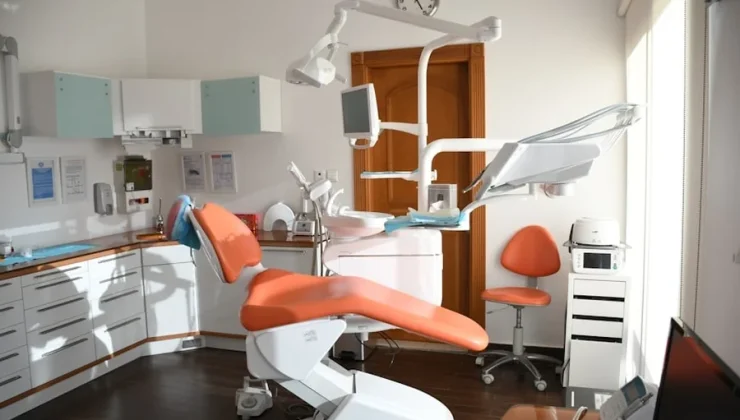
Most people treat their employee dental plan like a gym membership they forget to use after January. It’s there, it’s paid for, and somehow it rarely gets the attention it deserves.
Nearly 70 million American adults and around 8 million children across the country go without any dental coverage at all. Those who do have it frequently struggle to make real sense of it.
That’s worth pausing on, especially since 61% of all commercial group dental benefits are employer-sponsored. If yours falls into that category, the odds are good there’s more value buried in it than you’ve ever tapped. This piece is about finding exactly that.
Get Clear on What Your Carrier Will and Won’t Pay
Dental Preferred Provider Organization plans (DPPOs) place a firm annual maximum on what the insurance carrier will contribute toward covered services in any given plan year. That ceiling is often set at $1,500 or more, and it rolls over whether you’ve touched it or not.
There’s also a deductible sitting at the front end of your coverage, the portion you personally cover before the plan starts paying. Close to 46% of dental deductibles fall between $50 and $99, which tends to be much less intimidating than most people expect. Both numbers deserve your attention before you schedule a single appointment.
Stack Your Coverage the Smart Way
Many companies group dental, health, and vision insurance policies together for good reason. Medical coverage handles the heavy lifting, taking care of doctor consultations, hospital admissions, and ongoing prescription needs, notes HWP Insurance.
Dental and vision benefits then wrap around that foundation to cover what falls outside standard medical plans. The real advantage shows up when you treat all three as a coordinated system rather than separate, unrelated perks.
A procedure that seems uncovered under one plan might qualify under another. Taking an hour to map out how your bundled benefits overlap can genuinely save you hundreds over the course of a year.
You can learn more about grouping health, dental, and vision policies here.
Time Your Treatments Across Two Benefit Years to Cut Costs
Dental benefit years typically reset on January 1st, and that calendar quirk is genuinely useful if you plan around it. Say a dentist recommends a crown and a filling in the same period. Scheduling one procedure in November and the other in January means two separate annual maximums contribute toward your total cost.
Studies show that nearly 95% of Americans with dental insurance never hit their annual maximum, leaving hundreds of dollars in unused benefits behind each year.
Spreading larger treatments across a benefit year boundary is a simple, legal, and surprisingly effective way to let your plan stretch further. A quick conversation with your dentist’s billing team is usually all it takes to map this out.
Pair Your FSA or HSA With Your Dental Plan for Bigger Savings
A Flexible Spending Account (FSA) and a Health Savings Account (HSA) are two of the most underused tools in employee benefits.
Both let you set aside pre-tax dollars for qualifying medical and dental expenses, which effectively lowers what you pay out of pocket. An FSA allows you to set aside up to $3,300 annually through your employer. Moreover, if your spouse has access to one too, they can contribute the same amount independently.
An HSA goes further, rolling unused funds over indefinitely rather than expiring at the year’s end. Dental procedures like fillings, crowns, and orthodontics qualify under both accounts.
Pairing either one with your DPPO coverage means you’re covering out-of-pocket costs with money the IRS never taxed. That’s a straightforward win in that most employees simply walk past every open enrollment season.
Stay In-Network and Keep More Money Where It Belongs
Choosing an in-network dentist is one of those decisions that looks small on paper but shows up significantly on your bill. DPPO plans negotiate pre-set rates with in-network providers, meaning the dentist agrees to charge less for covered services.
Go outside that network, and those negotiated rates disappear entirely. Out-of-pocket costs can skyrocket when care happens outside approved provider lists.
Most employer plan portals have a provider search tool built right in, and cross-checking before booking takes about three minutes. Some people also assume their longtime dentist is in-network without ever verifying it.
Worth a quick confirmation call before the appointment rather than an unwelcome surprise afterward. A little legwork upfront consistently beats a large bill you weren’t expecting.
Go Get What Your Employer Has Already Budgeted for You
Your benefits package was designed to work hard for you, and dental coverage is no exception. The annual maximums, the FSA room, the in-network rates, and the benefit year timing tricks are all sitting there, ready to be used. Most of this is just about paying closer attention than the average enrollee does.
And honestly, it’s not a heavy lift. Once the logic clicks, it stays with you every plan year going forward. You start making smarter calls automatically, almost without thinking about it. That’s a compounding return on about an hour of your time, and very few investments are that straightforward.