Top HR Tech & Recruitment Trends That Will Shape 2026
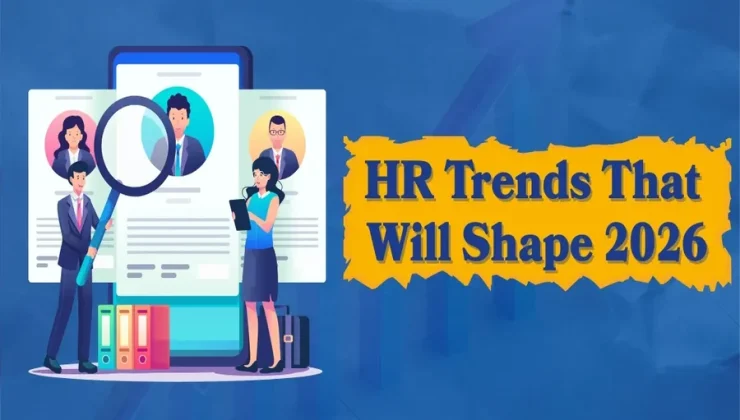
With 2026 approaching, human resources management continues to be one of the fastest-changing sectors. The transformations that accelerated in the wake of the pandemic are still generating debate, while Artificial Intelligence is positioning itself as a key tool, but also as a challenge in its effective integration.
In this scenario of changes and challenges, the Human Resources area stands as the fundamental pillar to find balance and guide organizations towards the future.
Aware of this need, Alp Consulting presents the most relevant trends in human resources, essential strategies that every leader must apply to guarantee the success and leadership of their team in this new year.
#1: Organizational Culture is the strategy
Organizational culture remains a key factor in a company’s success. However, in the latest report, 57% of HR leaders agree that managers are failing to communicate the company’s cultural vision to their teams effectively.
Furthermore, according to those surveyed, 53% say that leaders do not feel responsible for conveying the company’s culture.
The obvious consequence of this?
75% of employees say they do not understand their organization’s values.
The disconnect between an organization’s values and daily practices is a challenge, especially for SMEs. It’s not just about defining an attractive mission, vision, and values.
The companies that succeed in 2026 will be those that can reflect their purpose and values in concrete actions and in the daily activities of their teams. Culture must be lived and breathed at all levels, especially by leadership. And, as with everything, we base this on data.
One study concludes that if leaders at all levels are trained to integrate culture into values, behaviors, and processes, the following can be achieved:
+63% engagement, thanks to the connection with the organization’s purpose,
Artificial intelligence strategies that will change the corporate game
Discover some of the most important artificial intelligence innovations that, by 2026, could redefine…
+35% performance, increasing productivity and efficiency,
and +25% in retention, increasing employee loyalty and reducing turnover.
In such rapidly changing times, the popular saying “culture eats strategy for breakfast” is more relevant than ever. In fact, culture is strategy. As one argues, the challenges and opportunities we face today indicate that this is the best time to prioritize the human aspects of organizations.
#2: Incorporation of new technologies in Human Resources
HR technology will continue to be a key tool for SMEs in 2026, and how to implement it is a topic of thesis writing for several HR students.
Although according to one study of 1,500 HR leaders, 55% believe their current solutions are not aligned with the company’s needs, investment in the right technology remains essential to improving the employee experience.
Furthermore, only 41% of professionals feel equipped to keep up with the digital transformation of their department.
#3: Artificial Intelligence applied to Human Resources
Artificial intelligence (AI) is revolutionizing how SMEs manage talent. While only 12% of HR departments currently use AI, the potential of this technology to automate routine tasks and gain deep insights into talent is enormous.
We in HR know this well; the same study mentions that 76% of people leaders fear their organizations will fall behind if they don’t adopt AI technologies in the next year.
Moreover, 77% of those surveyed believe that Artificial Intelligence has decreased their productivity and worsened their workload.
However, when used effectively, AI can free up time for HR teams to focus on strategic tasks and help companies make informed decisions about their workforce. Let’s look at a real-world example.
Another major challenge is how leaders manage the implementation of AI. Today, three out of four tech employees use AI at work, and 78% say they do so without official guidance or supervision.
Meanwhile, 67% of people overall don’t know how to implement AI to improve their productivity.
#4: Workplace flexibility continues to advance
Work flexibility will continue to be one of the strongest demands among employees. As organizations adopt hybrid and flexible models, it will be essential for SMEs to find a balance between autonomy and connectivity to ensure productivity.
As PageGroup revealed, 72% of employees prefer to work under a hybrid model.
SMEs must design schemes that adapt to the specific needs of different roles, while maintaining effective collaboration.
One revealed that 82% of executives offer hybrid work models and 36% will hire 100% remote employees.
This has led CoreNet Global to report that 70% of companies are planning to reduce their physical office space.
#5: Developing new skills within the team
Strategic workforce planning (SWP) is a crucial tool for SMEs that want to prepare for rapid changes in the labor market.
Sixty-six percent of HR leaders acknowledge that their plans are limited to the number of employees and do not address the skills needed for the future.
According to the Gartner report, only 15% reported engaging in any type of strategic planning.
By 2026, continuous training will become essential for businesses.
The World Economic Forum, in its annual “Future of Work” study, predicts that 44% of employees’ skills will need to be updated due to AI, and 60% will require retraining by 2027.
According to Gartner, 85 million jobs are expected to go unfilled by 2030 due to the impact of AI.
The trend toward upskilling and reskilling will continue to grow, especially in companies that cannot expand their workforce.
Instead of just counting employees, companies should focus on identifying and developing the skills needed to achieve long-term strategic goals.
Assessments allow for the detection of areas for improvement within the workforce, while training management reinforces these areas, implementing a continuous improvement system within the team, aligned with the company’s strategic objectives.