Making Mealtime Work When Everyone’s on a Different Clock
What’s the point of planning dinner if nobody’s going to be home at the same time to eat it? Between early meetings, late shifts, after-school practice, part-time gigs, and whatever digital mess counts as “remote work,” the modern family dinner has turned into a logistical mess. In this blog, we will share practical ways to keep mealtime alive even when no one’s on the same schedule.
The Disappearing Dinner Hour
There used to be a time—okay, mostly in nostalgic sitcoms and very organised households—when dinner happened at six o’clock, everyone sat down at the same table, and no one touched their phone. That version of dinner now feels less like the norm and more like a social artefact. In homes where both parents work and kids manage their own calendars like junior executives, coordinating a shared meal is harder than booking a dentist appointment that doesn’t clash with five other things.
According to recent studies by the USDA and Pew Research Centre, shared mealtimes are happening less often in households across the country. Families still value them, but reality rarely cooperates. Evening shifts, hybrid work hours, and unpredictable school commitments have scattered dinner into an all-day event. One person microwaves something at 4:30. Someone else reheats it at 8:15. The dog gets fed twice because no one remembers who did it first.
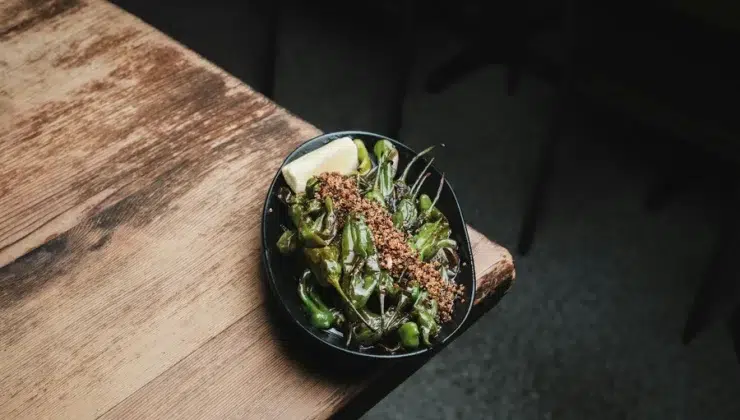
This splintered rhythm has forced home cooks to rethink what a meal even looks like. Batch cooking has made a comeback. So have snack boards, make-ahead meals, and anything that can be eaten hot, cold, or lukewarm on a couch while answering emails. Grilling shishito peppers might not sound like the answer, but in homes where one person is eating late and another is trying not to wake anyone, a quick-firing, flavour-packed snack like that does the job. You can pair it with a bowl of rice, fold it into leftovers, or just eat it straight off the pan—it’s fast, it doesn’t require a pile of ingredients, and it still feels like food you meant to make. Not just something you grabbed in defeat.
The challenge isn’t that people don’t want to eat together. It’s that the window to do it has narrowed into a sliver. A parent might get home right as someone else leaves. Teens might be more present in the group chat than in the kitchen. Even in households where everyone lives under one roof, lives rarely align neatly. Which means meals have to stretch, not in size, but in time and flexibility.
Meal Planning for Moving Targets
One of the biggest myths about modern cooking is that it’s just about finding the right recipe. That’s part of it, sure. But the real challenge is finding food that works whether it’s eaten immediately, two hours later, or straight out of the fridge. A solid family meal in 2024 needs to be equal parts durable, easy to portion, and forgiving if reheated—or not reheated at all.
It helps to cook in components. Roast a protein, prep a grain, chop vegetables, and keep sauces or dressings separate. That way, each person can assemble their version of the meal on their own time without everything turning to mush. Chicken thighs, couscous, and chopped cucumbers can become a warm bowl at six or a cold salad at nine.
Freezer meals also carry more weight than they used to. Not the sad plastic-tray kind, but soups, stews, lasagna trays, burrito wraps—things you batch once and break out in emergencies. One person heats it now, another tomorrow. No one feels like they missed out.
You don’t need to cook seven full meals a week. You need to cook two or three that are flexible enough to adapt. Chilli lasts. Pasta bakes hold up. Grain bowls scale well. The trick isn’t complexity—it’s planning around the fact that nobody’s eating at the same time anymore.
Rewriting the Rules of Togetherness
People keep looking at dinner as a single moment to be protected. A nightly pause where connection and nutrition meet. But maybe dinner is more of a rolling rhythm now—one that still offers togetherness, just not always at the same second.
For some families, it’s the preparation that becomes communal. Even if they eat separately, they chop vegetables or prep containers side-by-side. For others, it’s the cleanup, or a short catch-up at the fridge while one person is microwaving leftovers. These aren’t romanticised versions of family meals. They’re real-life compromises. But they still build a connection. It’s okay if the table is half-empty. The point is to keep it part of the routine, even when the routine feels broken.
Technology has taken a lot of blame for pulling families apart at the table. And to be fair, no one wants to eat next to someone scrolling TikTok with the volume on. But it’s also made new kinds of connections possible. A parent working late might FaceTime during dinner. A kid away at college might text a photo of their version of mom’s Tuesday night stir fry. It’s not the same as being there. But it’s something. And that something is often enough.
Food as a Thread, Not a Clock
Mealtime might not be the anchor it used to be, but it’s still a thread. It connects people across hours, not just moments. You pack a container for someone you won’t see until morning. You leave a plate out with a note. You stash a snack in the fridge and send a text. These aren’t dramatic gestures, but they’re acts of care. And in families running on different clocks, those small acts become the way food still says: I thought of you.
The new shape of family dinner doesn’t fit neatly into a calendar. But it still matters. It still builds memory and rhythm and grounding in households that feel pulled in five directions at once. Dinner isn’t dead. It’s just more flexible than it used to be. And maybe that’s not such a bad thing.
Because in a world that’s always shifting, any tradition that adapts can still hold. Even if it looks more like scattered bites than a sit-down meal. Even if it happens in stages. Even if the chairs aren’t filled all at once.