How Does A Roof Rack Unlock Your Hilux’s True Potential?
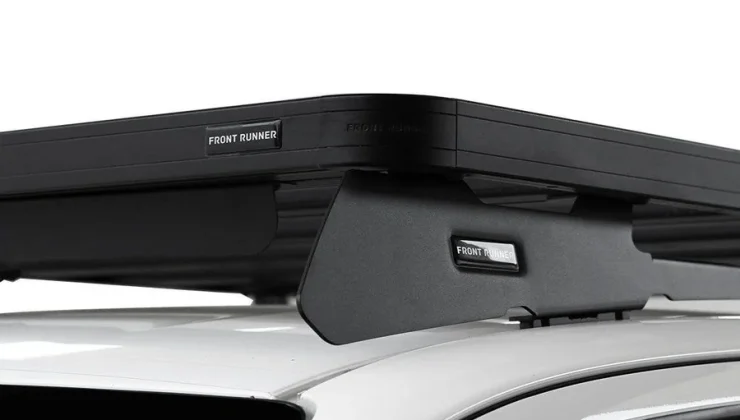
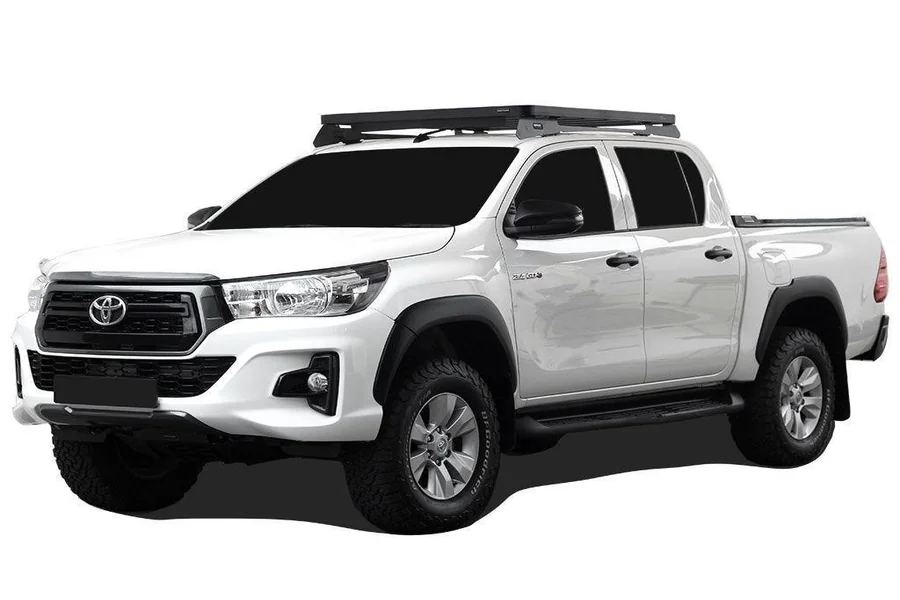
The Toyota Hilux was engineered to go where most vehicles refuse to follow. It handles corrugated outback tracks, muddy work sites, and mountain trails without complaint. But raw capability only takes you so far if your gear is left behind, crammed into the cabin, or piled dangerously in the tray.
A quality roof rack is one of the simplest ways to unlock everything the Hilux was designed to do. It expands usable storage, improves organization, and opens the door to a whole ecosystem of accessories that turn a capable ute into a fully equipped adventure or work platform.
Whether you spend weekends off-grid or weekdays on-site, fitting the right rack changes how you think about the vehicle entirely — and what you are willing to leave behind on the next trip.
1. Solving the Storage Problem Without Sacrificing Tray Space
Hilux owners usually feel the crunch of space before they actually acknowledge it. Dual-cab trays get stuffed up quickly with everything from tool kits to recovery gear to water containers to camping equipment, and anything else added on a whim just prior to departure.
The end product is often an unsafe arrangement that leaves valuable cargo exposed to the elements. Transporting awkward loads like surfboards, kayaks, ladders, swags, and even roof shelters is easy by relocating them to the roof.
A well-specified Toyota Hilux roof rack does this without sacrificing what genuinely needs to stay in the tray below. The official roof loading capacity for the Hilux is 75 kg, which already accounts for the weight of the rack.
As per the recommendations, aluminum roof racks for the Hilux weigh 18 to 22 kg, leaving about 53 to 57 kg for cargo. That amount should easily be sufficient for transporting things like a rooftop tent, jerry cans, spare wheel, or even recovery boards and lighting equipment. Evenly spreading the load from front to back also makes driving on rough tracks safer than unevenly loading the same load in the tray.
2. A Platform for an Entire Accessory Ecosystem
The roof rack is the foundation, not the entire system. After installing the platform, you will have access to a whole range of complementary accessories. The tents will be attached right to it, turning your Hilux into a comfortable bed in any place where it stops.
An awning will be attached to the sides for an instant shadow during camping. The light bars will be located at the roof level, thus having the most extensive coverage of a trail. Jerry cans, the spare wheel, and the recovery board are mounted seamlessly, eliminating the need for additional boxes. For professionals, the same principles apply: pipes and conduits protruding over the tray are mounted on the rack.
3. Aerodynamics and Fuel Efficiency: What to Know Before You Buy
Consumers rarely consider the aerodynamic aspects until fuel bills start affecting their finances. According to a study by Lawrence Berkeley National Laboratory, published in the journal Energy Policy, roof racks can increase fuel use by 2.6-25 percent, depending on speed, payload weight, and rack design. The most detrimental effect comes from loaded roof racks at highway cruising speed.
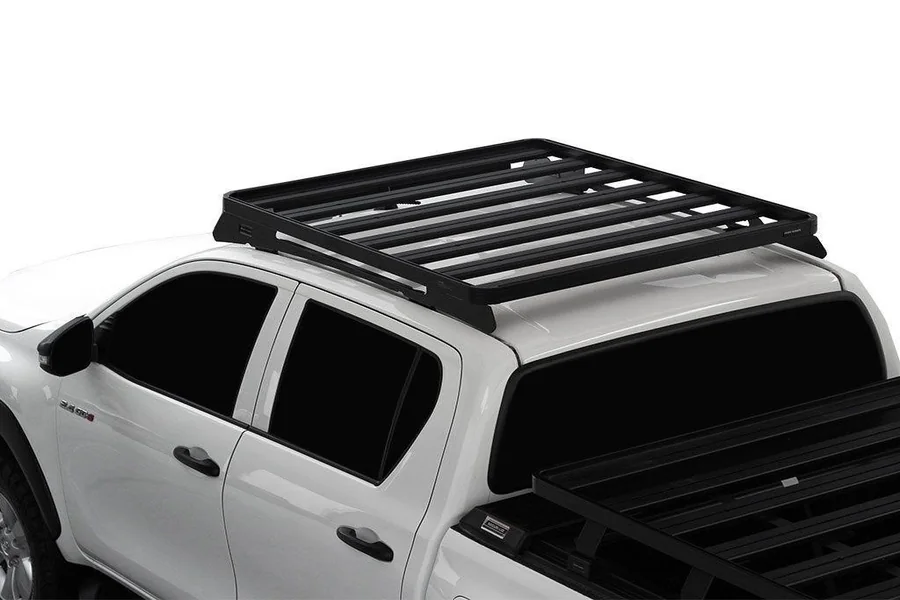
The solution to minimizing the negative effects is picking an aerodynamically friendly rack. Today, all aluminum racks use low bars, pointed noses, and open-deck designs that allow wind to pass through rather than hitting a flat surface. Another option is to remove roof racks when they’re not in use on a journey, or to buy modular racks that come apart after a few uses.
4. Material and Mounting: Getting the Specification Right
Steel racks suit heavy static loads but add considerable weight within a 75 kg roof limit and require reliable powder coating to resist corrosion in coastal or tropical environments. Aluminium racks are inherently lighter and corrosion-resistant without additional treatment, which is why they dominate overland and adventure builds. Vehicle-specific fitting kits designed around factory mounting points secure the rack without roof drilling, eliminate load-induced movement over rough roads, and noticeably reduce wind-noise intrusion on longer highway legs.
Dynamic load ratings apply when driving on sealed roads and serve as the standard comparison figure for products. Static ratings — the number that matters for rooftop tents used as sleeping platforms — are typically three times higher than the dynamic rating. Off-road ratings run approximately 30 percent below on-road figures, an important distinction for Hilux owners who regularly venture onto unsealed station roads and 4WD tracks.
5. Choosing the Right Setup for Your Use Case
Defining what the rack will do most often is the best starting point. Rooftop tent setups prioritize structural rigidity and a strong static load rating. Work applications need weatherproof tie-down tracks that withstand daily loading cycles. Overland builds the most benefit from modular compatibility that evolves with changing gears. A full-perimeter aluminium platform with integrated rails handles all three profiles without requiring replacement as priorities shift — a strong argument for treating the rack as a long-term investment rather than a short-term fitout.
Conclusion
The Hilux is one of the most capable vehicles in its segment, but that capability meets a hard limit the moment storage runs out. A purpose-built roof rack releases what was already there — the ability to carry more, organize it effectively, and push further into the environments the truck was built for. Choosing a rack specifically matched to the Hilux, with the right material, mounting system, and accessory compatibility for your use case, completes the vehicle rather than simply adding to it.