Nearly 3,500 People Died on California Roads in 2024 Alone, New Five-Year Study Finds
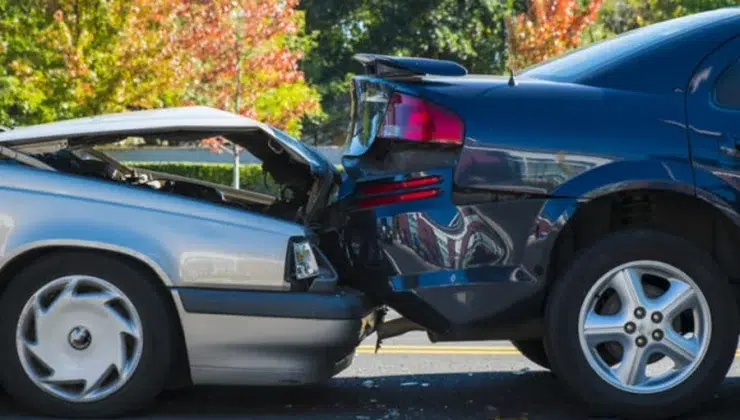
A new study from Vaziri Law Group has found that California recorded 3,493 fatal crashes resulting in 3,786 fatalities in 2024, capping a five-year period during which the state’s roads claimed tens of thousands of lives and exposed deep, persistent gaps in driver behavior, infrastructure, and enforcement.
The study, which draws on statewide crash data from 2020 through 2024, reveals that California’s fatal crash numbers surged dramatically in the years immediately following the COVID-19 pandemic before beginning a gradual decline. Fatal crashes climbed from 3,672 in 2020 to a five-year peak of 4,214 in 2022, a 14.8% increase over the baseline, before falling to 3,798 in 2023 and 3,493 in 2024. That final figure represents the lowest annual total in the dataset and the first time California fell below its 2020 baseline.
The decline offers a measure of progress. But nearly 3,500 people still died on California roads in a single year, an average of close to ten fatalities every day.
The Post-Pandemic Surge and What Drove It
The 2021 to 2022 surge in fatal crashes was not coincidental. As pandemic restrictions lifted and traffic volumes rebounded, the driving culture that had developed during months of empty roads and minimal enforcement followed those drivers back onto congested highways. Speeding was a factor in more than a quarter of all fatal crashes during the peak years. Alcohol-impaired driving accounted for nearly 30% of road fatalities. Distracted driving, fueled by smartphones and increasingly complex in-vehicle technology, added thousands more deaths to an already elevated toll.
The convergence of those three behavioral factors, on roads that had not changed but were now carrying more vehicles moving faster, produced the deadliest two-year stretch California had seen in years. The subsequent decline since 2022 reflects improvements in enforcement and public awareness, but the behaviors behind the surge have not disappeared. They remain present on California roads every day.
Los Angeles Leads the State by an Enormous Margin
At the county level, Los Angeles dominates California’s fatal crash data in a way no other county comes close to matching. The county recorded 769 fatalities in 2020, rising to a five-year peak of 868 in 2022 before declining to 744 in 2024. Its five-year average of 807 annual fatalities means Los Angeles alone accounts for nearly one in five of all motor vehicle deaths recorded statewide.
The county’s massive population, sprawling freeway network, and sheer volume of daily vehicle miles traveled all contribute to that figure. But so does driver behavior. Over the five-year study period, Los Angeles recorded 752 alcohol-involved fatalities, 1,382 speeding fatalities, and 603 unrestrained fatalities, a combined total of 2,737 behavior-attributed deaths that exceeded the combined totals of the next three highest-ranking counties.
San Bernardino recorded a five-year average of 396.6 annual fatalities, making it the second deadliest county in the state. Riverside averaged 313 per year, and San Diego maintained consistent figures averaging 296.2 annually. All three counties are defined by long commutes, high-speed arterial corridors, and limited public transit infrastructure that keeps more vehicles on the road for longer distances at higher speeds.
Kern and Fresno counties stand out for a different reason. Both are significantly less populous than Los Angeles or San Bernardino, yet both consistently ranked among California’s deadliest counties throughout the study period. Kern averaged 204.6 fatalities per year and Fresno averaged 179.6, figures that reflect the elevated danger of rural and semi-rural roadways where higher speeds, greater distances between emergency services, and elevated rates of impaired and drowsy driving make crashes far more likely to be fatal.
Orange County (217 average annual fatalities), Sacramento (193), Santa Clara (112.6), and Tulare (83) round out the top ten, each following a trajectory that mirrored the statewide pattern of a post-pandemic surge through 2021 and 2022 followed by a gradual decline.
Kern County and the Rural Safety Divide
Among the top ten counties, Kern deserves particular attention. Its 2024 fatality total of 190 tied with Orange County, despite Kern serving only a fraction of Orange County’s population. Over the five-year period, Kern recorded 253 unrestrained fatalities, nearly double Orange County’s 133, a disparity that reflects a persistent rural seatbelt compliance gap that safety advocates have identified as one of California’s most preventable ongoing road safety failures.
Across California’s agricultural counties, including Kern, Fresno, Tulare, and San Joaquin, the combination of impaired driving, high speeds on undivided rural highways, and low seatbelt use produces fatality rates that are disproportionate to their population size. These communities carry a road safety burden that is not reflected in statewide statistics dominated by Los Angeles and the major urban corridors.
A Preventable Crisis
The five-year data from this study tells a consistent story. The behaviors driving California’s fatal crash numbers, alcohol impairment, speeding, distracted driving, and failure to buckle a seatbelt, are choices. They are not unpredictable, and they are not inevitable.
Motor vehicle crashes cost California an estimated $19.5 billion annually in direct economic impact, a figure that does not capture the full financial reality. When serious injury costs, long-term rehabilitation, lost income, and the wider effects on families and communities are factored in, the true cost of California’s road fatalities exceeds $39 billion per year.