How do HVAC Contractors Balance Comfort and Energy Use?
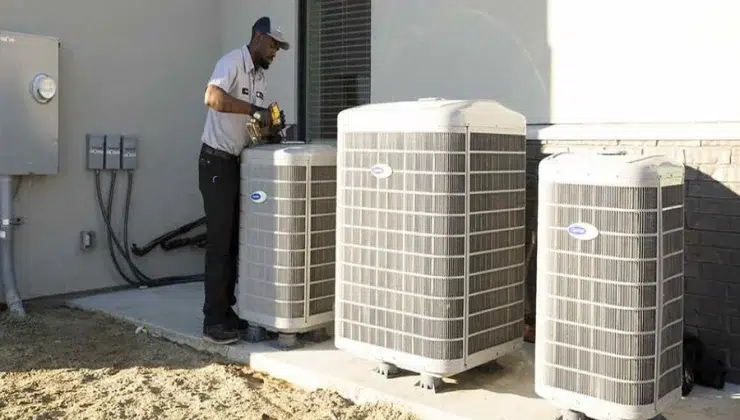
People want their homes and workplaces to feel steady, quiet, and comfortable in every season, yet they also want utility bills that make sense. That tension sits at the center of modern heating and cooling decisions. HVAC contractors are often called when a space feels uneven, runs too often, struggles in extreme weather, or costs more than expected to maintain. Balancing comfort and energy use is not a single adjustment; it is a set of decisions that connect equipment behavior, airflow, insulation, controls, and daily habits. When these factors align, indoor comfort becomes predictable without turning the system into a constant energy drain.
Comfort and efficiency working together
-
Starting with the Whole-Building Picture
HVAC performance is shaped by more than the equipment itself, so contractors often begin with a broad view of how the building behaves. They look at how quickly rooms heat up or cool down, which spaces run warmer or colder, and whether humidity feels high or air feels stagnant. These patterns can reveal hidden problems, such as poor insulation, leaky ductwork, undersized returns, or a thermostat location that does not accurately reflect the space’s true temperature. Contractors may also ask about occupancy schedules and how often doors are opened, because real-world use affects load and comfort. By understanding the building as a system, they can recommend changes that reduce wasted runtime while also improving how the space feels, rather than chasing symptoms room by room.
-
Airflow Balance: The Quiet Driver of Comfort
Airflow is one of the strongest influences on both comfort and energy use, yet it often goes unnoticed until a room feels wrong. If too little conditioned air reaches a bedroom, people tend to lower the thermostat and run the system longer, increasing energy use without solving the airflow problem. Contractors measure supply and return performance, check for restrictions, and evaluate duct sizing and sealing. They also inspect filters, blower settings, and coil cleanliness, because airflow losses at the equipment can mimic duct issues. Companies like Western Hills Heating and Air Conditioning, Inc. often emphasize airflow balancing because it can resolve hot-and-cold complaints while allowing the thermostat to remain at a more reasonable setting. When airflow is corrected, comfort improves faster, cycles become steadier, and the system can meet demand with less strain.
-
Smart Controls and Thermostat Strategy
Thermostats and control settings can either support comfort gently or create constant swings that waste energy. HVAC contractors help homeowners and facility managers set temperature targets that reduce frequent cycling while keeping spaces comfortable during occupied hours. This includes adjusting scheduling, fan settings, and temperature setbacks so the system does not fight against unrealistic goals. In some cases, the issue is not the setpoint itself but how the thermostat reads the environment; poor placement near drafts, sunlight, or kitchens can cause the system to react incorrectly. Contractors may recommend relocating sensors or using remote sensors for rooms that matter most. When controls are matched to how people use the building, comfort becomes more consistent, and the system runs in a smoother pattern that typically uses less power.
-
Equipment Sizing and Staging Decisions
Oversized equipment can cool or heat too quickly, shutting off before it dehumidifies properly and leaving the space clammy or uneven. Undersized equipment may run constantly, still struggling to maintain comfort during peak conditions. Contractors balance comfort and energy use by evaluating whether the existing system matches the building’s actual load, especially after renovations, window upgrades, or changes in occupancy. They also consider staged or variable-capacity systems that can run at lower output for longer periods, maintaining steady temperatures with less cycling. This steadier operation can reduce energy spikes and improve comfort by mixing the air more evenly throughout the space. Proper sizing and capacity control are not about chasing extreme numbers; they are about matching performance to reality so the system can operate efficiently while maintaining a stable indoor environment.
-
Humidity Management as a Comfort Multiplier
Temperature is only one part of comfort, and HVAC contractors often focus on humidity when people complain that a space feels sticky, stale, or hard to cool. High humidity can make warmer temperatures feel uncomfortable, leading occupants to lower setpoints and increase energy use. Contractors address humidity by checking airflow, runtime patterns, and drainage, and by ensuring coils are clean and functioning correctly. In humid climates or tightly sealed buildings, supplemental dehumidification may be considered, especially when comfort complaints persist even at normal temperatures. On the other hand, overly dry air during the heating season can also cause discomfort, prompting people to raise the temperature unnecessarily. By targeting humidity control, contractors can often keep temperature settings more moderate while still improving the space’s feel, supporting lower energy consumption without sacrificing comfort.
-
Maintenance That Protects Efficiency Over Time
Even a well-designed HVAC system can drift into wasteful behavior if maintenance is neglected. Dirty filters restrict airflow, forcing blowers to work harder and reducing the system’s ability to deliver conditioned air. Dusty coils reduce heat transfer, increasing runtime and often causing uneven temperatures. Contractors balance comfort and energy use by recommending maintenance routines that keep the system operating within normal ranges. They may also check refrigerant levels, burner operation, and electrical connections, since small faults can cause longer cycles or inconsistent performance. Maintenance is not only about preventing breakdowns; it is about keeping the system’s efficiency and comfort output close to what it was designed to deliver. Over time, consistent upkeep supports lower utility bills and reduces the likelihood of comfort issues returning season after season.
-
One Key Idea in Plain Terms
Comfort and energy savings are not rivals when the system is tuned for the building and the people inside it. When airflow is balanced, controls are sensible, humidity is managed, and equipment is properly matched, the HVAC system can run less aggressively while delivering steadier comfort. Small corrections often lead to large improvements by eliminating the need for thermostat overcorrection. That is how comfort and efficiency start to reinforce each other rather than compete.
A Practical Balance That Lasts
HVAC contractors balance comfort and energy use by treating the building as a connected system instead of a thermostat problem alone. Airflow adjustments, control strategy, proper sizing, humidity management, and maintenance all shape how often the system runs and how the space feels during that runtime. When these elements are aligned, comfort becomes more consistent, and energy use becomes more predictable rather than reactive. The goal is not to chase extreme settings or quick fixes; it is to create a steady indoor environment that meets real needs without constant overwork from the equipment. With the right approach, comfort improves while energy waste declines, and that balance holds through changing seasons.