Exploring Real Estate in Thailand: Love Affair Between Travel and Investment
Thailand. A land where golden temples kiss humid skies, where long-tail boats glide through emerald bays—and where, quietly but surely, bricks, plots, and rooftops have begun whispering to investors across the globe. In the wake of a surging travel wave that washed over its borders—35 million arrivals in 2024 alone—the country’s real estate market has been basking in renewed attention. Villas, condos, townhouses, beach bungalows. Not merely holiday homes anymore, but chess pieces in an increasingly global game of lifestyle arbitrage.
Even with a 5.6% cooling in visitor numbers through mid-2025, confidence in Thailand’s real estate hasn’t blinked. If anything, it’s shifted gears. Foreign ownership frameworks are surprisingly navigable. Mortgage rates remain temptingly low. The promise of both pleasure and payoff? Tangible. And perhaps now—right now—is the juncture for travelers to take their suitcases one step further and unpack into something permanent.
Why This Country, and Why Now?
There’s something seductive about Thailand’s rhythm. The chaotic harmony of tuk-tuks and temples. The juxtaposition of street food stalls and skyline penthouses. This isn’t just a vacation destination—it’s a dual-purpose playground for both dreamers and dealmakers.
The Tourist Engine: The tourism rebound wasn’t a whisper—it was a roar. Over 35 million foreign feet crossed Thai soil in 2024, and their presence echoed in real estate registers. Holiday rentals surged. Short-stay demand ballooned. ฿1.8 trillion in tourism revenue painted the backdrop.
Cash-anchored Market: Unlike credit-heavy economies, Thailand’s resort towns—think Phuket, Koh Samui—are largely cash ecosystems. The result? A cushion of stability. A property market less vulnerable to the tremors of interest rates and debt bubbles.
Foreign Ownership Without the Labyrinth: Want to own a condo? You can—outright. Prefer land? Lease it long-term, or take the corporate route with a Thai-majority setup. It’s not frictionless, but it’s far from the maze many imagine.
Cost vs. Yield Equation: Prices are compelling. Compared to neighboring giants, Thai property can be up to 60% cheaper. Meanwhile, gross rental returns play in the 5–10% sandbox. That’s not just decent—it’s globally competitive.
Numbers Don’t Lie: A Glimpse at the Market
Average Property Prices by Region
| Region | Property Type | Avg Price (Baht/m²) |
| Bangkok (CBD) | High-rise Apartments | ฿242,000 |
| Bangkok (Suburbs) | Detached Houses | ฿127,000 |
| Phuket | Beach Villas | ฿70,000 |
Rental Yield Ranges by City
- Bangkok: From Watthana’s steady 5.35% to Huai Khwang’s surprising 8.54%, condos in the capital deliver solid returns with urban convenience.
- Phuket: The sun, the sea, the ROI. During peak tourist flow, villa yields flirt with 10%. Off-season? Still a respectable 6–7%.
- Chiang Mai: A quieter city, a steady heartbeat. Condos offer 6%, townhouses hover around 7%. Ideal for those eyeing long-term stability over seasonal spikes.
Trends Reshaping the Terrain
Flexible is the New Fancy: No longer are buyers merely hunting for bricks. They want adaptability. Developers are listening, crafting hybrid homes—half rental, half retreat. Co-living spaces now sit beside traditional dwellings, attracting everyone from remote workers to startup nomads.
The Smartification of Property: From keyless entries to energy-tracking dashboards, smart homes are no longer the future—they’re the now. Bangkok penthouses and Phuket retreats alike are embracing automation, offering comfort that talks back.
Green is Gold: Eco-conscious buyers are speaking louder—and developers are responding. Solar rooftops shimmer across new builds. Passive design principles are shaping blueprints. Sustainability isn’t just a bonus anymore. It’s a demand.
Pattaya: Where Coastal Living Meets Smart Investment
There’s a magnetic pull to Pattaya that goes beyond its nightlife and sea breezes. Tourists come for the buzz—but more and more are staying for the lifestyle. Pattaya houses for sale in neighborhoods like Pratumnak, Jomtien, and East Pattaya are turning from holiday stays into permanent homes for savvy investors and second-home seekers.
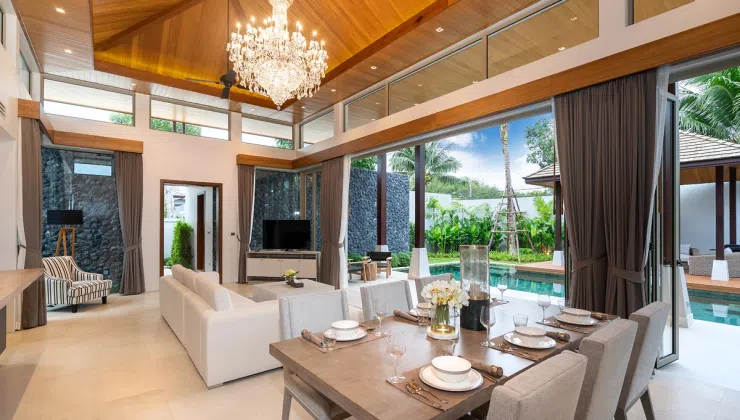
These properties span from modern pool villas to spacious family homes in gated communities. Think rooftop terraces, private gardens, outdoor kitchens, and smart-home features that blend comfort with convenience. Pattaya houses for sale typically range from ฿8 million to ฿40 million, offering more attainable entry points than Phuket while still delivering strong coastal appeal.
While tourism saw a modest dip of 5.6% through mid-2025, Pattaya remains a high-traffic destination. Visitor footfall is steady, and foreign buyers—particularly from Russia, South Korea, and China—account for a growing share of off-plan purchases. For many, these homes aren’t just escapes—they’re lifestyle upgrades and long-term investments in one.
Real People, Real Property: The Janssen Family’s Move
In early 2025, the Janssens, a family of five from Germany, closed on a ฿45 million villa in Rawai. Why? Three reasons:
- Proximity: Nai Harn Beach was a draw. So were the international schools—ideal for their two school-aged kids.
- Returns: With high-season bookings projected to net 8% in gross rental yield, the numbers made sense.
- Long-term Upside: Market trends suggest 4% annual appreciation. For the Janssens, it wasn’t just a dream home. It was a calculated move.
Their villa is more than shelter. It’s a hybrid—a sanctuary during family getaways, a money-maker when they’re away. It’s an example of what Thailand offers: places that blur the line between leisure and logic.
Thinking of Buying? Here’s How It Works
- Clarify your intent: Lifestyle hub? Income stream? Retirement plan?
- Form your team: A good agent and a sharper lawyer are non-negotiable.
- Hunt smartly: Browse listings through portals like Thailand-Real.Estate. Schedule in-person visits—photos lie.
- Verify everything: Land title? Clear. Zoning? Checked. No liens? Confirmed.
- Reserve it: Pay the 10% holding deposit to lock it down.
- Negotiate: Finalize the Sales and Purchase Agreement. Don’t skip on details or penalties.
- Seal the deal: Head to the Land Office, pay transfer taxes (usually 2% of appraised value), and sign the dotted line.
- Aftercare: Utilities, property tax, and maybe a management service if you’re away often.
In Closing: Thailand’s Real Estate Is More Than a Transaction
It’s a feeling. A mood. A possibility.
To buy in Thailand isn’t just to acquire square footage—it’s to stake a claim in a way of living. It’s where modern infrastructure meets old-world charm. Where ROI doesn’t come at the cost of soul. Where beaches, cities, mountains, and temples fold into one seamless landscape of opportunity.
So whether you’re drawn by yields, year-round sunshine, or the slow rhythm of an afternoon in Chiang Mai, the Thai property market is waiting. Not loudly. Not urgently. But with the quiet confidence of a country that knows it has something rare to offer.
Will you answer the call?