Know How Payment Tokenization Improves Checkout Speed Without Compromising Security
Online shopping is an easy process. You look through the items, decide on one, hit the “Buy” button, and that is it! Nonetheless, it is frequently at the checkout stage that the process gets jammed.
It is not uncommon for shoppers to encounter interruptions, such as lengthy forms, the need to re-enter card details, security verifications, and even brief moments of doubt. Such hurdles might be sufficient for many shoppers to decide against the purchase altogether.
With the constantly increasing digital commerce, the bar is being set higher not only for the speed of checkout but also for the safety aspect. Consumers demand that transactions be rapid, familiar, and secure – they do not want to feel like they are risking their money each time they put their card details. Here, payment tokenization, a concept that is quietly revolutionizing the back end of online payment processing, has become critically important.
If you are looking to understand the fundamentals of payment tokenization and how it functions in modern payment systems, this detailed explanation provides a clear breakdown of how the process works:
Why Online Checkout Needed a Better Approach
In physical stores, payments have become almost effortless. A simple tap or insert a card, a short beep, and the transaction is complete. Online payments, however, still require customers to manually type card numbers, expiry dates, CVV codes, and billing details. This repetitive process slows things down and increases the chances of errors. Payment tokenization addresses this gap by replacing sensitive card details with secure tokens, allowing customers to complete online transactions faster, more safely, and with minimal manual input—bringing the digital checkout experience closer to the ease of in-store payments.
More importantly, it introduces anxiety. Shoppers are increasingly aware of data breaches and card fraud, and every checkout form raises the same question: “Is my information really safe here?”
For merchants, the challenge is just as significant. Handling sensitive card data comes with strict compliance requirements, technical overhead, and financial risk. One security incident can damage customer trust for years. The industry needed a way to speed up checkout without compromising security. Payment tokenization was designed to solve exactly this problem..
What Payment Tokenization Actually Does
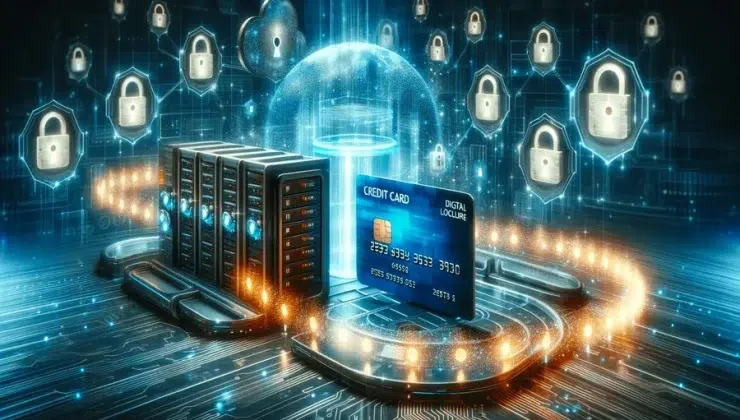
It replaces sensitive card information with a unique digital identifier known as a token. This token represents the card during a transaction, but it doesn’t expose the actual card number. The real data is securely stored in a protected environment, often managed by card networks or token service providers.
The key advantage here is simple: even if a token is intercepted, it’s useless on its own. It can’t be reverse-engineered or reused outside its intended context. This makes tokenization fundamentally safer than traditional methods that rely on storing or transmitting real card numbers.
At the same time, tokens are designed to work seamlessly within payment systems. They can be processed quickly, reused for future purchases, and linked to specific merchants or devices, making transactions both faster and more secure.
How Tokenization Makes Checkout Faster
Here are some key points that explain how tokenization makes checkout faster:
Less Typing, Fewer Interruptions
One of the biggest time sinks in online checkout is manual data entry. Payment tokenization eliminates much of this by allowing cards to be securely saved and reused through tokens. Returning customers don’t need to re-enter card details, which significantly shortens the checkout flow.
This is what enables familiar experiences like one-click checkout and saved payment methods. These are no longer seen as bonus features. Customers now expect them.
Faster Backend Processing
When merchants process tokenized payments, they aren’t handling sensitive card data directly. This reduces the number of validation and security steps required during a transaction and simplifies backend workflows. Fewer checks and handoffs mean payments move faster from authorization to completion.
Smarter Fraud Checks
Tokenized transactions often carry contextual information, such as device type or merchant association. This allows fraud detection systems to assess risk more efficiently. Legitimate users are less likely to face unnecessary challenges, while suspicious activity can be flagged without adding friction for genuine users.
Strengthening Security Without Adding Friction
Speed alone isn’t enough. Checkout only feels “easy” when users trust the process. This is where payment tokenization truly stands out.
Limiting Data Exposure
Since real card details are never shared during transactions, the risk of sensitive data being exposed is dramatically reduced. Even if a merchant’s system is compromised, attackers don’t gain access to usable payment information.
Simplifying Compliance for Merchants
Tokenization can significantly reduce a merchant’s exposure to strict data security regulations. With fewer systems handling raw card data, businesses can narrow their compliance scope and focus security efforts where they matter most.
Supporting Modern Authentication
Tokenized payments work well alongside modern authentication methods like biometrics and device-based verification. These layers add security without forcing customers through extra steps, keeping the checkout experience smooth.
Where Tokenization Is Already Improving Experiences
Payment tokenization is already shaping real-world payment experiences by making everyday transactions faster, safer, and more seamless across different use cases.
Subscriptions and Recurring Payments
By using payment tokenization, subscription services enable recurring charges to take place automatically without keeping the card details on file. Customers get the benefit of their subscription without interruption, and the merchants lower the risk and also simplify operations.
Mobile Wallets and Tap-to-Pay
Tokenization is what makes many mobile wallets capable of delivering fast and secure transactions. If a user decides to pay by tapping their phone, then a tokenized version of the card is used for the transaction, which occurs instantaneously without exposing the actual card details.
Cross-Device Shopping
Another benefit of tokenization is that it allows for omnichannel shopping experiences. For example, a customer can research a product on one device and then on another device, and finish the purchase without having to start from scratch. It is through tokens that one is able not only to securely recognize and authenticate the payment but also to do so across different platforms as well.
Why Faster Checkout Matters More Than Ever
Checkout speed isn’t just about convenience—it directly affects revenue. Every extra step or moment of hesitation increases the chance that a customer walks away. Payment tokenization reduces those moments by making payments feel familiar, quick, and safe.
For businesses, the benefits are tangible:
- higher conversion rates
- fewer abandoned carts
- improved customer trust
- lower exposure to fraud
When customers don’t have to think about security or struggle with forms, they’re more likely to complete their purchase and return in the future.
Conclusion
With the help of payment tokenization, the two elements of speed and security can be brought together rather than being at odds with each other. It replaces sensitive card data with secure tokens, which not only keeps the checkout procedure simple but also safeguards both consumers and merchants against unnecessary risk. Hence, it kind of takes online payments a step further into the world of real-life transactions, where shoppers have always had it easy.
At a time when people’s standards for online experiences are constantly being elevated, tokenization takes the credit for not only making payment procedures quicker but also for setting a whole new standard of a seamless and trustworthy payment experience that customers can feel.