Breakthroughs in Gene Editing: From CRISPR to Safer Laboratory Practices
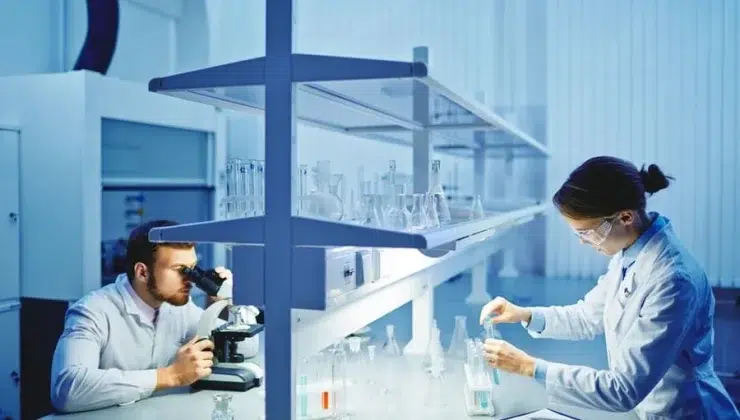
Gene editing used to sound like something out of a sci-fi movie. Today, it sits quietly behind some of the biggest medical discoveries you read about online. And while the science feels complex, the idea behind it is simple: you change a cell, and you learn something new about life itself. But here’s the part people forget—you can’t edit damaged or stressed cells. They don’t behave the way you expect.
That’s why researchers rely on careful handling and tools like NanoCellect cell sorting machines to keep cells healthy before anything else. Because if the cells aren’t in good shape, nothing that comes after will make sense.
Understanding the Basics of Gene Editing
Before you go deep into the technology, it helps to know what gene editing actually means. Think of DNA as a long instruction manual. Every page, every line, tells your cells what to do. When something goes wrong—like a mutation—some of those instructions get mixed up.
Gene editing lets scientists go inside that manual and make changes. CRISPR is the most famous tool. It’s basically a pair of molecular scissors guided by a tiny piece of RNA that knows exactly where to cut. Once the cut is made, the cell tries to repair itself. During that repair process, researchers can insert, delete, or change specific genes.
Why Cell Health Matters Much More Than You Think
Here’s something people outside the lab rarely hear: cells are fragile. Very fragile. If you move them too fast, expose them to the wrong temperature, or push them through high pressure, they get stressed. And stressed cells stop behaving normally.
In gene editing, that’s a real problem.
You want to know if a specific genetic change caused a new behavior. But if the cells were injured during preparation, your results might look different for the wrong reasons. You might think the edit worked—or failed—when really, the cells were simply reacting to stress.
So when researchers talk about “cell viability,” they’re talking about this exact thing. You want cells that are alive, calm, and behaving like themselves. That’s the only way the experiment means anything. Gentle handling, gentle sorting, and gentle environments are not luxuries—they’re essentials.
The Push Toward Safer and More Careful Lab Practices
If you walk into a modern research lab, you’ll notice something right away. Almost everything is designed to protect the scientist, the cells, or both. And honestly, it has to be that way.
Gene editing requires sterile conditions. So you wash your hands more times than you can count. You change gloves constantly. You keep your space organized even on days when you feel chaotic inside.
Temperature control is another big part of it. Cells respond quickly to shifts in heat. Some become sluggish. Others die. So labs use equipment that keeps samples stable, even when the room temperature changes.
Then there’s the issue of pressure and flow. Traditional sorting tools use high-pressure systems. They’re fast, but they can injure the cells. That’s why many labs are shifting toward more gentle, microfluidic approaches. You get healthier cells, less stress, and cleaner results.
How Modern Cell Sorting Supports Gene Editing Success
At some point in almost every gene editing project, you need to separate one group of cells from another. Maybe you’re trying to isolate the edited ones. Maybe you need single cells for clonal growth. Or maybe you’re sorting based on health, size, or fluorescent markers.
Whatever the reason, sorting is unavoidable.
In the past, sorting often meant using machines that pushed cells through at high speeds. It worked, but not always safely. Cells would break. Some would deform. Others would survive but become too stressed to use.
Today, microfluidic sorting is changing that. These systems move cells more gently, using lower pressure and controlled flow paths. They keep cells intact. They keep them calm. And when you’re working with fragile samples—stem cells, edited cells, or any sensitive line—you really feel the difference.
This is where tools like NanoCellect cell sorting machines fit naturally into the workflow. Their gentle approach helps researchers maintain high viability, which leads to better cloning, clearer data, and fewer failed experiments. It’s not about pushing a product. It’s about recognizing that safer sorting makes gene editing more reliable. And reliability is everything when the goal is accuracy.
Conclusion
As gene editing evolves, the need for safer practices only grows. New therapies, new research projects, new hopes—they all rely on the same basic foundation: healthy cells treated with respect. You don’t need to understand every molecule or every gene to appreciate that. You just need to see how much can go wrong when the basics are ignored.