
How Workplace Accidents Can Cause Serious Eye Injuries
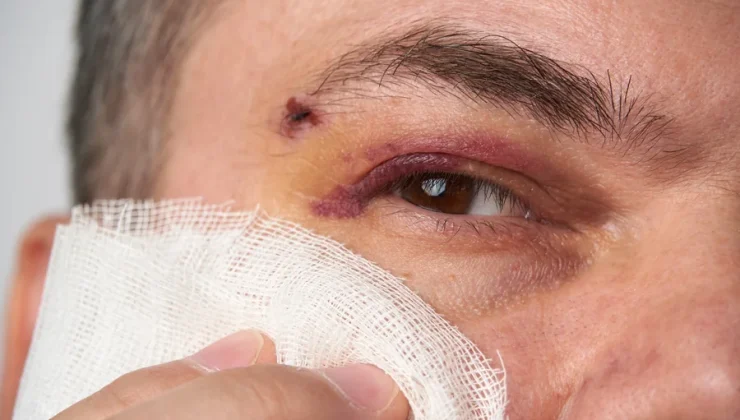
The U.S. Bureau of Labor Statistics reports that about 20,000 workplace eye injuries occur each year. Any eye injury is serious, costing about $300 million a year for medical expenses, workers’ compensation payouts and reduced or lost productivity. Some jobs are more dangerous than others, but every workplace carries risks. Injury causes vary and include flying debris, chemical splashes, equipment malfunctions, intense light and unsafe workplace practices. The employer and each worker have a responsibility to identify potential hazards, provide or use protective equipment and follow safety procedures.
Common Workplace Hazards Leading to Eye Injuries
A work injury lawyer helps clients exposed to common workplace hazards that cause serious eye injuries. One is flying material pieces. For example, metal shavings, dust, concrete chips, wood chips, crystalline silica and sparks generated during routine work cause eye injuries. The material can scratch the cornea, strike the eye or become embedded in eye tissue. In some cases, the particle’s speed is enough to penetrate the eyeball.
Chemical exposure hazards exist beyond laboratories. Chemicals are in cleaning products used indoors and outdoors. Other sources of chemical exposure include acids, industrial solvents and other corrosive substances. Alkanes and alkalis, such as ammonia, potassium hydroxide, lye and lime, cause the worst eye damage. These substances can penetrate deep into eye tissues because they destroy and digest cells. The same applies to hydrofluoric acid, which can penetrate the cornea.
In cases of blunt force trauma, eye injury is due to equipment or tools. For example, the employee collides with machinery, hitting the face and injuring the eye. Accidents can involve swinging tools, falling objects and pressurized hoses. There are also cases of penetration in which nails, wires or staples pierce the eyeball.
A welding arc contains ultraviolet radiation. This radiation is very damaging to the eyes and can burn tissue. It can impair vision or cause blindness. Intense light accidents are another common source of serious eye injuries. Some laser lights can pass through the cornea and lens and quickly destroy retinal tissue. Even scattered laser beams can lead to photochemical damage or thermal burns.
Sometimes, eye injuries result from not using the proper safety equipment. For example, machine guards may not be installed, or equipment may not be well maintained. Employees may not have access to safety glasses or face shields that the employer is required to supply. Worn-out machinery or safety guards can eject particles at high speeds. Some workplaces do not provide employees with adequate safety training. As a result, employees may not maintain equipment or take precautions to prevent injury.
Occupational Eye Injuries are a Significant Concern
The American Optometric Association says up to 90% of eye injuries are preventable or could be less severe if employees use the right eye protection. Yet, the National Institute for Occupational Safety and Health (NIOSH) says approximately 2,000 employees experience eye injuries in the workplace each day that require medical treatment. The injuries range from minor irritations treated with eyewash to severe trauma requiring emergency care or surgery.
OSHA, the Occupational Safety and Health Administration, requires employers to provide appropriate safety equipment to protect eyes and face when employees face workplace risks of eye injuries. An eye and face protection standard expressly states that employers must ensure each employee uses the required protection when exposed to hazards from molten metal, flying particles, acids or caustic liquids, liquid chemicals, chemical gases or vapors or light radiation that may cause injury.
The key message is that protective equipment must be right for the actual hazard the employee encounters in the workplace, and the equipment must be in good shape and fit correctly. Supervisors are also responsible for ensuring employees follow safety protocols.
Serious Eye Injuries are Life-Changing
A serious eye injury may or may not heal, but for many employees, it is life-changing. A corneal abrasion may be painful and can cause temporary light sensitivity and blurred vision. However, more serious damage can cause permanent scarring that impairs vision. Objects embedded in the eye may or may not lead to vision impairment, depending on the extent of the tissue damage and the success of treatment. Necrosis of eye tissue is likely to cause vision loss.
Severe eye injuries may require surgery and long-term rehabilitation. The employee’s life is interrupted with medical treatment, an inability to work for a period of time and the emotional strain of wondering whether their vision is permanently impaired. An injury in which something penetrated the eye and damaged the retina, lens or optic nerve will probably lead to partial or total vision loss. Employees who experience bleeding or retinal detachment require specialized treatment. Even if vision is restored, recovery can take weeks or months.
The life-changing aspect is that the employee may not be able to manage normal activities at work and home. For example, if depth perception, visual coordination or peripheral vision are impacted, the employee will not be allowed to drive and cannot return to work until a certain level of eye performance is achieved. Some employees must move into a different position, work fewer hours or take disability leave.
The financial consequences can be very stressful and challenging. These include medical bills, doctor appointments, prescription medications and lost wages.
Legal Options After a Workplace Eye Injury
Although workers’ compensation covers authorized medical treatment, it covers only a portion of lost wages. Some employees may qualify for disability benefits, but these are often inadequate in serious eye injuries. Employees may be denied benefits, or there may be disagreement about the extent of the disability or the necessary medical treatment. Another challenge is determining responsibility: an employer and employee may follow all safety guidelines, but a third party may be at fault. For example, a defective power tool or a contractor’s negligence can cause a serious eye injury.
Each situation is different. A work injury lawyer can review the circumstances and explain the best legal remedies under state and federal law. Employees should consult a lawyer as soon as possible after a serious eye injury to protect their rights and meet deadlines. Though workplace eye injuries are not always preventable, how they are handled afterward determines how well an employee recovers physically and financially.
For more information about workplace safety, Work Injury Advisor can be an excellent resource.