Pull On Safety Boots vs Lace-Up Work Boots: Which Is Better?
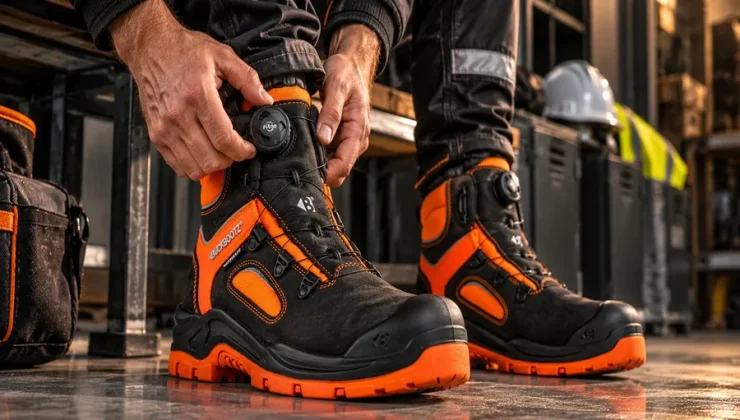
Walk onto almost any Australian worksite and you’ll see two camps: tradies in elastic-sided pull-on boots and those who swear by a good pair of lace-ups. Both can offer the same certified toe protection, so the choice usually comes down to how you work, where you work and what your feet need over a long shift.
Here’s how the two styles compare.
Safety First: Both Styles Can Offer the Same Protection
Before comparing comfort and convenience, it’s worth clearing up a common myth: pull-on boots are not automatically less safe than lace-ups. In Australia, certified safety footwear must meet AS/NZS 2210.3, which includes strict testing such as a toe cap that withstands a 200-joule impact. A pull-on boot and a lace-up boot can both meet these requirements.
What matters is the specification of the individual boot, not the closure style. When comparing options, check for:
- Toe cap type: steel caps are tough and slim, while composite caps are lighter, metal-free and don’t conduct heat or cold.
- Outsole rating: look for slip resistance, plus heat resistance if you work near hot surfaces. TPU soles typically handle around 130°C, while nitrile rubber soles can cope with up to 300°C.
- Penetration resistance: important if nails, screws or sharp debris are common on your site.
- Water resistance and anti-static properties: useful for outdoor work and electrical or fuel environments.
The Case for Pull On Safety Boots
Pull on safety boots, also called elastic-sided or Chelsea-style boots, are an Australian workwear classic for good reason.
Speed and convenience. There are no laces to tie, re-tie or tuck in. You can slip them on in seconds and kick them off just as quickly, which suits workers who regularly move between site, ute, office and home, or anyone who has to remove boots before entering a client’s house.
No snag hazard. Loose or broken laces can catch on machinery, rebar or ladder rungs and are a common trip hazard. Elastic sides remove that risk entirely.
Quick removal in an emergency. Welders, metalworkers and anyone working around molten material or hot liquids often prefer pull-ons because they can be removed fast if something spills into the boot.
Less maintenance. No laces means nothing to snap halfway through a shift and fewer places for mud, concrete or grain to get trapped.
The trade-off is fit. Because there’s no way to tighten a pull-on boot, getting the right size from the start is essential. Elastic sides can also stretch over time, especially with heavy daily wear, which can reduce how firmly the boot holds your foot.
The Case for Lace-Up Work Boots
Lace-up boots remain the go-to for many trades, particularly where terrain and movement are demanding.
Adjustable fit. Laces let you tighten or loosen the boot through the day as your feet swell, and accommodate wider or narrower feet more easily.
Better ankle support. Lace-ups often come in taller cuts and lock the heel and ankle in place, which helps on uneven ground, slopes, scaffolding and ladders.
Stability for heavy work. For jobs involving constant climbing, crouching or carrying loads over rough ground, a firmly laced boot reduces movement inside the boot and can help prevent rolled ankles and blisters.
The downside is convenience. Laces take time, can come undone, wear out and catch on things. Many workers solve this with zip-sided lace-ups, but these add another part that can fail.
Which Is Better for Your Job?
There’s no single winner. Use these general rules of thumb:
Choose pull on safety boots if you:
- Take your boots on and off several times a day
- Work in construction supervision, warehousing, transport, maintenance or farming
- Work around hot metal, welding or spill hazards
- Want a low-maintenance, all-rounder boot for flat or moderately uneven ground
Choose lace-up work boots if you:
- Work on steep, rocky or highly uneven terrain
- Spend a lot of time climbing ladders or scaffolding
- Need extra ankle support or have a history of ankle injuries
- Have feet that are hard to fit in a standard pull-on
Many tradies end up owning both: a pull-on pair for everyday site work and a lace-up pair for jobs that demand more support.
Getting the Fit Right
Whichever style you choose, fit is everything. Try boots on later in the day when your feet are at their largest, and wear the socks you’d normally work in. Your heel should lift only slightly as you walk, and your toes shouldn’t touch the toe cap. For pull-ons in particular, the boot should feel snug across the instep without pinching, as it won’t loosen the way laces can.
Where to Find Quality Pull-On Boots
If you’ve decided an elastic-sided boot suits your work, it pays to shop with a specialist workwear supplier. Industrial Workwear & Safety, based in Toongabbie, NSW, stocks a wide range of pull on safety boots from trusted work boot brands, including Steel Blue, Redback, Oliver and Puma. Their range includes steel cap and metal-free composite toe styles, heat-resistant outsoles and women’s fits, with delivery available Australia-wide.
The Bottom Line
Pull-on and lace-up boots can both keep you safe and compliant. Pull-ons win on convenience, quick removal and freedom from snag hazards, while lace-ups win on adjustable fit and ankle support. Match the boot to your terrain, tasks and feet, make sure it’s certified safety footwear, and you’ll be comfortable and protected whatever the job throws at you.