Festival Brand Activation: How to Build an Outdoor Space People Visit
Plenty of festival booths look great in the mockup and still get walked past. Visitors are hot, distracted and heading somewhere else, so a pretty setup is not enough. To build an activation people actually visit, design for each step of their journey: noticing the space, entering easily, interacting quickly, staying comfortably and remembering the brand afterward. The fixes are mostly practical, from clearer messaging to smarter, better-placed shade.
Give People One Clear Reason to Stop
Before choosing colors or furniture, decide what a visitor gets for stepping inside. The strongest activations offer one simple benefit that someone can understand in a few seconds. That might be a free tasting, a short product demo, a quick game, a photo moment worth sharing or a genuinely useful service such as phone charging or a water refill.
Resist the urge to promote everything at once. A festival crowd scans quickly, so your headline should be short, specific and readable from the walkway. “Try our cold brew free” works better than a paragraph about brand values.
Test the message on someone new to the campaign. If they cannot repeat the offer, simplify.
Make the Activation Easy to Spot and Enter
Next, people need to actually find it. Start with the frontage facing the busiest pedestrian flow, and place your headline and entry point there, not on a side nobody passes.
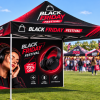
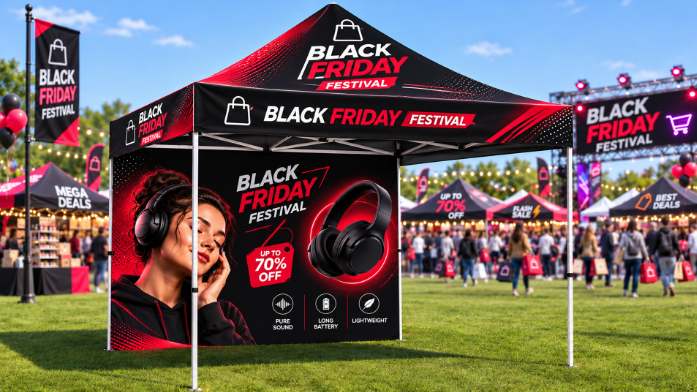
Consistent colors help the whole space read as one recognizable zone instead of a scattered collection of props. Many teams use branded tents to define the central activation area, so the roof, valances and walls carry the same visual identity visitors can spot from a distance. Flags, counters and signage can then repeat those colors at eye level.
Keep the entrance wide and visibly open. Tables pushed across the front, staff clustered at the opening or cables underfoot all signal “not for you.” Leave clear, level access for strollers, wheelchairs and groups, and follow the organizer’s rules on footprint and emergency lanes.
Make Participation Fast and Worthwhile
Festival visitors are juggling a schedule, so every interaction should feel quick and rewarding. Aim for experiences that need little explanation. A hands-on demo, a sampling station or a simple challenge usually beats a long presentation.
Queue design matters. A visible, orderly line with an estimated wait feels manageable, while a crowd with no clear entry point puts people off. Consider splitting the space so demos and sampling run side by side.
Give each staff member a defined role: greeter, demonstrator or sampler. Clear roles keep the line moving and stop visitors from wondering who to ask.
Finally, keep data collection honest. Make any sign-up optional, explain what people will receive and avoid making a sample conditional on handing over personal details. Transparent opt-ins tend to produce contacts who actually want to hear from you.
Give Visitors a Comfortable Place to Stay with Custom Event Tents
Comfort turns a quick stop into a longer visit. On a hot afternoon, shade can make a significant difference to the visitor experience, so plan your outdoor setup carefully rather than treating it as an afterthought.
Custom event tents provide practical shade and covered space for a sampling counter, a café-style seating area or a waiting zone beside the queue. Their branded canopy creates a professional appearance while helping protect visitors from direct sunlight and light rain. Choose a suitable tent size and position it to complement the surrounding space without blocking entrances or walkways.
Leave enough room around seating and standing areas so visitors can move comfortably. Adding a few tables or designated spots to place drinks and bags can also make the space more convenient.
Plan the layout around local weather conditions. Consider the sun’s direction during peak hours, proper rainwater drainage and how your team will secure or take down the tent when weather conditions become unsafe.
Track Quality of Interaction, Not Just Crowds
A busy booth is not automatically a successful one, and a crowd photo says little about what visitors took away. Instead of estimating headcount alone, track signals that show meaningful engagement:
- Demos or experiences completed
- Samples actually distributed
- Qualified, consent-based opt-ins
- Questions or conversations that point to purchase interest
After the festival, judge your follow-up by its relevance. A message tied to what someone tried at the booth will usually mean more to them than a generic newsletter.
From Foot Traffic to Lasting Recall
Strong festival activations are rarely accidental successes. They pair one clear offer with an inviting, accessible layout and a comfortable place where visitors can pause. Add a thoughtful follow-up plan, and the people who stopped by have a real reason to remember the brand.
Frequently Asked Questions
What is a brand activation event?
A brand activation event is a planned, hands-on experience that lets people interact with a brand directly, rather than just seeing an ad. At festivals, it might be a sampling station, a product demo, a game or a branded lounge. The goal is to give visitors a memorable experience that links the brand with something useful or fun.
How is brand activation different from experiential marketing?
The terms overlap a lot. Experiential marketing is the wider approach of building campaigns around real experiences people take part in. A brand activation is usually one specific event or setup within that approach, such as a festival booth or pop-up. In practice, many agencies use the two terms almost interchangeably.
How far ahead should you plan a festival brand activation?
Start as early as the festival’s application window allows, because good locations often go first. Allow time for organizer approval, any sampling or food permits, power requests, staffing and equipment production. Read the festival’s vendor and sponsor rules early, since they can limit the size of your structure, what you can sample and when you can load in.