Perfume Became a Content Genre. Here Is What It Got Right and What It Broke.
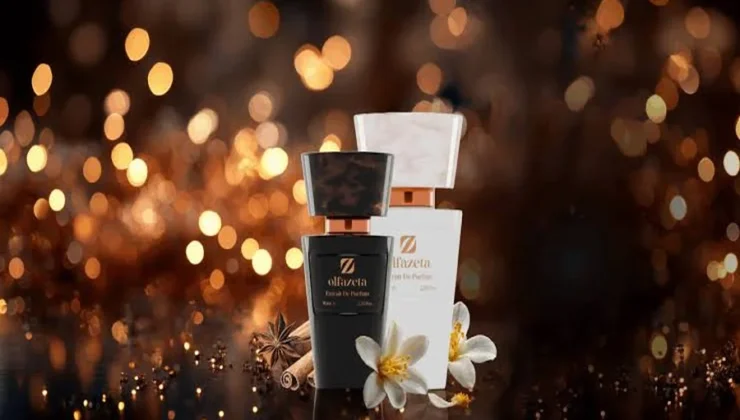
Fragrance should have been the one product category the internet could not sell. You cannot smell a video. Every other beauty vertical has an obvious visual payoff, and perfume has a person holding a bottle and telling you, with great conviction, that it smells expensive. And yet fragrance reviewing is now one of the largest recommendation economies online, capable of emptying a warehouse in a weekend. Something interesting happened on the way there, and it was not all good.
How a Silent Product Became Watchable
The format solved the sensory problem by not attempting it. Reviewers stopped trying to describe smell and started describing situations. Not a list of notes but a claim about what happens when you wear it: the compliment, the room, the reaction, the specific occasion. It is closer to sports commentary than criticism, and it works because it is talking about something the viewer can actually picture. So why did that particular framing win over the careful, note-by-note reviewing that came before it? Because the older style required the audience to already know what oakmoss smells like, and the newer style required nothing at all. It moved the conversation from expertise to consequence, which is a much larger room. The second thing the format solved was pacing. Fragrance is slow. A composition takes six hours to show you what it is, which is unwatchable, so reviewers compressed the whole arc into a verdict delivered at the top and defended for the next minute. That is a genuine loss in accuracy and an enormous gain in reach, and the trade has largely gone unexamined because everyone involved is enjoying themselves.
The Discovery Machine Genuinely Works
Whatever the format cost the category in nuance, it gave back in access. A small Paris house with no department store presence and no advertising budget could previously expect to stay small forever, because distribution was the whole game and distribution was locked. Now a few enthusiastic reviews can build an international audience in a season. bdk parfums is a reasonable example of the pattern: a contemporary Parisian house founded by David Benedek, built on wearable, well-constructed compositions rather than a marketing concept, and known internationally in a fraction of the time that path used to take. The same route has since carried dozens of small houses out of obscurity. Anyone who was buying niche fragrance fifteen years ago will tell you how much harder it was to find out that any of it existed. You relied on a handful of forums, a specialist shop if your city happened to have one, and a lot of guessing. The information asymmetry was enormous and it worked entirely in favor of whoever controlled the shelf. Whatever else the current arrangement has broken, it did not break that, and it is worth being clear-eyed about how much better the discovery problem is now than it was.
What the Format Flattens
The trouble is that a short review rewards a specific kind of fragrance: immediately likable, loud in the first ten minutes, and easy to summarize in one sentence. Difficult work does badly under those conditions. orto parisi perfume is the obvious casualty, because Alessandro Gualtieri’s compositions are deliberately uncomfortable, built around animalic and mineral materials that are closer to skin and soil than to anything conventionally pleasant, and they do not resolve into a tidy verdict inside thirty seconds. Is a fragrance that half the audience finds genuinely off-putting a failure? Not remotely, and the assumption that it is might be the single largest distortion the format has introduced. Perfumery has produced challenging work for a century; a recommendation engine tuned for instant agreement simply cannot see it. The same pressure operates on the houses themselves, which is the part that will matter in ten years. A brand that watches its difficult release get politely ignored and its crowd-pleaser sell out learns a lesson, and the lesson is not to make more difficult releases.
Blind Buying Is the Real Cost
The second distortion is financial and it lands on the viewer. The whole apparatus is optimized to convert a recommendation into a full bottle purchase, and full bottles at this end of the market are not small money. Skin chemistry, meanwhile, is genuinely variable, so a composition that performs beautifully on a reviewer can go flat or sour on someone else, and no amount of enthusiasm on camera predicts that. The people who buy well are almost always the ones who sample first and buy months later. That is a deeply unwatchable process, which is precisely why nobody makes videos about it. There is a compounding version of the problem too. Because the recommendation cycle moves in weeks, a bottle bought on enthusiasm in March is competing against a new consensus by June, and the collections that result look less like considered wardrobes than like archaeological layers of whatever was popular each quarter. The people who seem happiest with what they own are, almost without exception, the ones buying two or three bottles a year and ignoring the rest of the conversation entirely.
The Short Version
- Online fragrance culture solved a real distribution problem and gave small independent houses an audience they could not have reached through traditional retail.
- The format favors immediately likable compositions, which quietly pushes deliberately difficult perfumery out of the conversation rather than arguing with it.
- Sample before committing to a full bottle. Skin chemistry varies enough that no recommendation, however credible, transfers reliably from one person to another.