The Evolution of the Digital Office: Why All-in-One Platforms are Winning
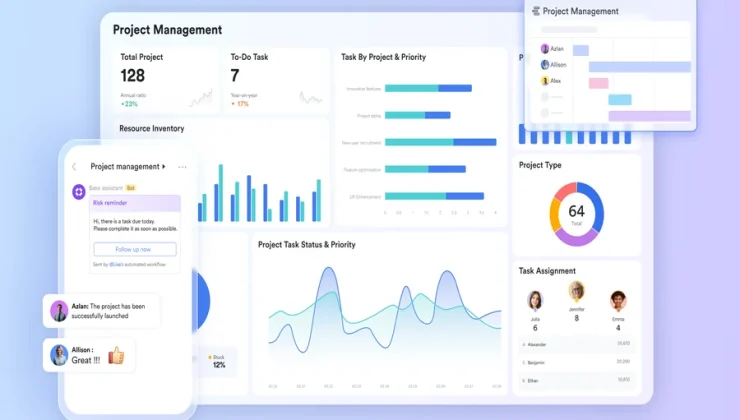
The way most of us work today is a mess of open tabs. You have your chat in one window, a spreadsheet in another, and about six different documents buried somewhere in between. This isn’t just a minor annoyance; it’s a massive drain on focus. We’ve spent years trying to find the “perfect” app for every little task, but in doing so, we’ve created a digital environment that is constantly fighting for our attention. Every time you switch from a chat to a doc, your brain takes a hit.
The shift we are seeing is a move toward simplicity. Smart teams are realizing that they don’t need more tools; they need their tools to stop acting like strangers. A unified hub isn’t just about putting everything in one box; it’s about making sure the information you need is exactly where you’re already looking. When your communication and your actual work live in the same space, that “tab fatigue” disappears, and you actually get to finish your day without feeling like your brain has been through a blender.
Transforming communication with Lark Messenger
Standard office chat often feels like a never-ending stream of noise. You miss things, threads get buried, and you spend half your time scrolling up to find a link someone sent three hours ago. Lark Messenger takes a different approach by focusing on context. Using topic-based threads, it keeps specific project discussions separated from the general office banter. It sounds like a small change, but it’s the difference between a productive meeting and a crowded room where everyone is shouting at once.
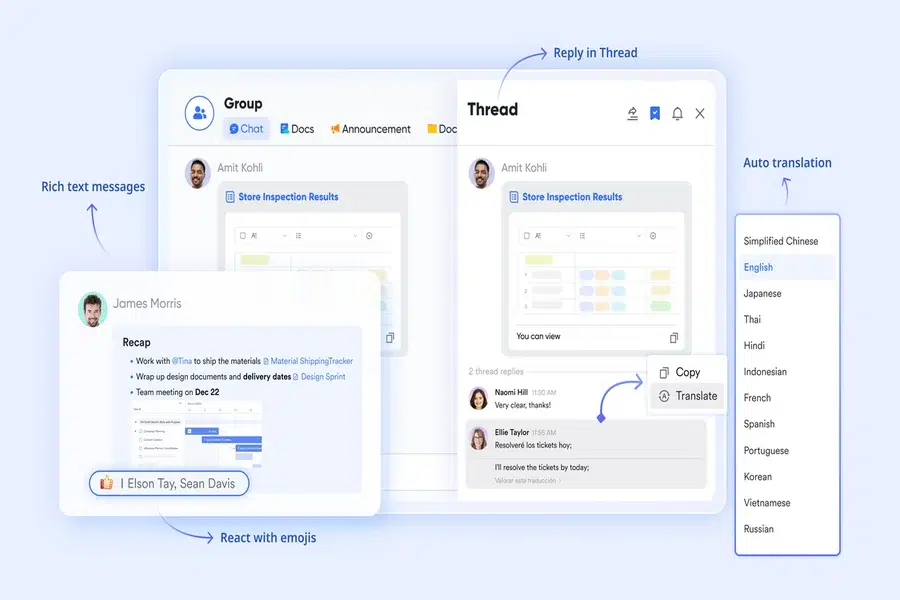
Lark Messenger
Because this messenger is built into the workspace’s core, it acts as the glue for everything else. You aren’t just sending text; you’re initiating workflows. If a team is discussing a timeline, they can pin their project boards or relevant Base tables directly to the top of the chat group. This ensures that live data is always one click away, keeping the conversation focused on the work rather than the logistics of finding it.
Data management reimagined with Lark Base
Spreadsheets have a way of becoming “data graveyards” where information goes to die. They’re hard to read on mobile, they don’t alert you when things change, and they’re usually disconnected from the team’s actual daily tasks. Lark Base changes that by turning a traditional database into a living, breathing tool. It offers multi-dimensional views—including Kanban, Gantt, and Gallery—allowing teams to visualize projects from every angle.
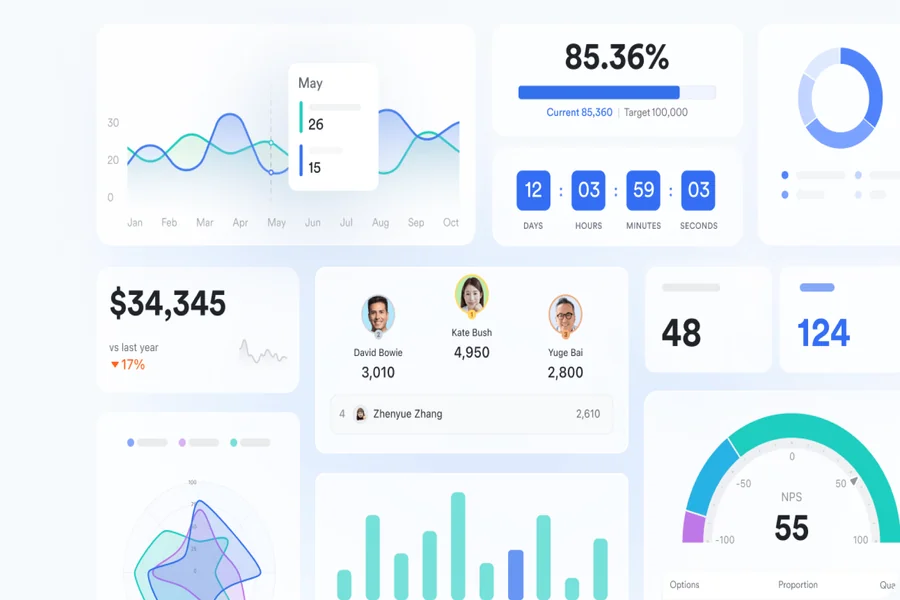
Lark Base
By treating your data as a dynamic asset rather than a static list, you achieve a level of workflow integrity that modern project management tools demand. Instead of hunting through fragmented apps to verify which version of a task is current, the information resides in a self-updating ecosystem. This allows you to set up automated alerts so that when a status changes from “In Progress” to “Done,” the right person gets a ping in the messenger immediately. This kind of “if-this-then-that” logic happens naturally because the database and the chat are part of the same system, turning raw data into an active driver of team momentum.
Collaborative knowledge with Lark Docs
The way we create and share information has also evolved. Static files and PDFs are increasingly seen as relics of a slower era. Lark Docs represents the next generation of documentation, where files are live, interactive, and inherently collaborative. These are not just word processors; they are interactive canvases where text, images, and even live data from other modules coexist seamlessly.
In these docs, you can embed video recordings, live polls, and even interactive tables from Lark Base directly into the page. This turns a simple project brief into a dynamic command center. Team members can comment in real-time, tag colleagues for immediate feedback, and ensure that the most recent version of a strategy is always the one being viewed. By centralizing knowledge in this way, companies build a robust internal library that serves as a permanent asset. This reduction in “file hunting” is a hallmark of the best productivity tools, as it empowers employees to find what they need independently, thereby increasing the overall velocity of the team.
Strategic goal alignment with Lark OKR
One of the greatest challenges in the modern workplace is maintaining a line of sight between daily tasks and long-term company goals. In a fragmented setup, goals are often buried in a slide deck or a separate tracking app that is only checked once a quarter. Lark OKR brings these objectives into the heart of the daily workflow. It allows every team member to see exactly how their current projects contribute to the company’s broader mission.
The native nature of this tool means that progress on key results can be updated automatically as work is completed in other parts of the suite. For instance, if a target is tied to a specific metric tracked in a database, the Lark OKR reflects that progress without manual entry. This visibility ensures that the team remains aligned and motivated. When goals are part of the same interface where people communicate and collaborate, they stay top-of-mind. This creates a culture of accountability and purpose, where every individual understands the value of their contribution to the company’s success.
Precision task execution with Lark Tasks
The transition from a high-level discussion to a concrete action item is often where projects lose momentum. Lark Tasks ensures that no responsibility is left unassigned or forgotten. Within the Lark environment, a task is more than just a line on a to-do list; it is a collaborative object that can have its own sub-tasks, attachments, and dedicated discussion threads. You can turn any chat message into a task with just a few clicks, capturing ideas the moment they are generated.
Because these tasks are built natively into the platform, they are visible owners and followers, ensuring privacy while maintaining clear accountability. A manager can see a unified view of all deliverables across various departments without having to send “follow-up” pings or schedule status meetings. This transparency reduces the administrative burden on leadership and provides employees with a clear roadmap of their daily priorities. By offloading the “mental notepad” into a reliable, centralized system, teams can clear their cognitive decks for deep work, ensuring that the most important tasks receive the focus they deserve.
Bonus: The economics of a unified stack
When auditing the true cost of a digital office, many organizations realize they are suffering from “subscription bloat.” Financing a fragmented toolkit—paying separately for a messenger, a video conferencing tool, and a project manager—often results in a significantly higher total cost of ownership.
Even when evaluating the total cost of ownership like Google Workspace pricing or Zoho pricing, the financial advantage of an unified platform becomes apparent. While traditional suites provide essential communication and document tools, they often require paid third-party add-ons for advanced project databases, OKR tracking, and automated workflows. Lark provides a more economical pricing structure by bundling these high-tier operational features into a single cohesive plan. This allows teams to stop managing multiple vendors and start reinvesting their budget into the work that actually drives growth.
Conclusion
The transition away from “tab fatigue” isn’t just a tech trend; it’s a necessity for anyone who wants to stay sane in a digital world. When we stop fighting our tools and start using a system that actually understands how we work, everything gets easier. We get our time back, we get our focus back, and most importantly, we get to do the work we were actually hired to do.
By choosing a unified workspace, you’re not just consolidating your apps—you’re consolidating your attention. Selecting the right productivity tools is no longer just a technical preference; it is a strategic decision to reclaim your team’s collective focus and ensure your business remains as lean as it was when you first started.