
CAPTCHA Overhead: The Silent Bottleneck in High-Volume Web Scraping
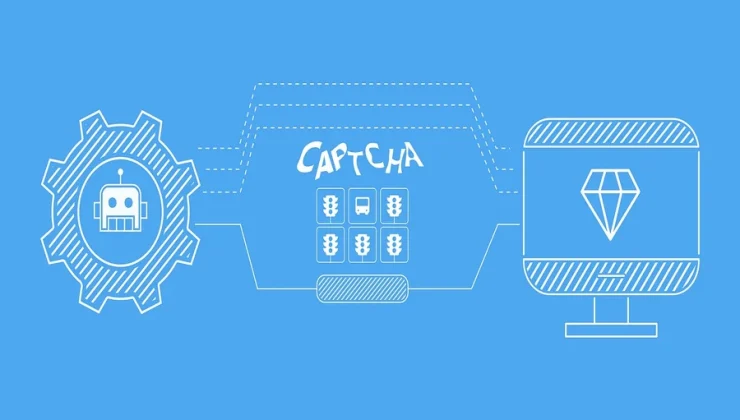
Data-hungry teams already optimise parsers, queues, and storage layers yet many overlook the slow leak of time and money caused by CAPTCHA challenges. These puzzles may feel trivial in isolation, but at scale they can erode margins faster than bandwidth bills.
1. The Hidden Mechanics of a “Quick” Puzzle
A 2023 multi-site benchmark clocked the median human solve time for common image-selection and behavioural CAPTCHAs at 3.53 seconds per challenge. Multiply that by thousands of requests an hour and latency balloons:
| Trigger Rate | Requests | Aggregate CAPTCHA Time |
| Every Page | 1 M | ≈ 981 hours (40.9 days) |
| 1 in 20 | 1 M | ≈ 49 hours |
Even sporadic challenges add an extra work-week per million pages. Worse, solve services rarely guarantee sub-second completion, so real-world delays skew higher.
2. When Error Rates Become Abandonment Rates
CAPTCHAs are designed to frustrate bots, but they frustrate humans too. Usability research shows 8 % of users mistype on the first try, soaring to 29 % when case sensitivity is enforced. Repeated failure drives churn: after two misses, 1.47 % of visitors abandon the task altogether. In a scraping context, that means:
- Extra solver retries (each retry restarts the latency clock).
- Higher proxy rotation events, inflating session counts.
- Data gaps where critical pages are skipped after hard blocks.
3. Counting the Direct Costs
Solver APIs aren’t free coffee. Popular market-rate pricing sits around US $1–$2.99 per 1 000 solves. At a modest 10 000 CAPTCHAs a day, budget spend hovers near US $600 a month often eclipsing the price of residential proxy bandwidth.
4. Why CAPTCHA Hardness Keeps Ramping
Publishers tighten the screws because machine vision keeps improving. Security columnists note that modern bots can sometimes outscore people on image-grid tests, forcing providers to escalate puzzle complexity. The escalation loop means tomorrow’s scrape run will likely face tougher, slower challenges unless counter-measures adapt in lockstep.
5. Mitigation Playbook: Smarter Proxies + Browser Isolation
CAPTCHA friction isn’t inevitable. Seasoned engineers combine four tactics:
- Session-sticky residential pools – Avoids the tell-tale IP churn that provokes suspicion.
- TLS fingerprint rotation – Maps browser fingerprints to IP pools so header quirks don’t betray automation.
- Headless-with-human-style delays – Sub-second, randomised mouse movements trim failure odds without torpedoing throughput.
- Isolated browser profiles via antidetect tools pairing each profile with its own proxy route severs cross-request linkage.
A complete walkthrough lives in Ping Proxies’ guide on how to use proxies with GoLogin, covering header spoofing, cookie jar hygiene, and fail-over logic.
6. Measuring Success
Track three KPIs post-implementation:
- CAPTCHA trigger ratio (challenges ÷ total requests).
- Average scrape cycle time (request → data stored).
- Cost per 10 000 rows (proxy + solver + labour).
Teams that fold in the tactics above often cut trigger ratios by 60-70 % within a fortnight, slashing both direct solver spend and compute dead-time.
Wrap-up
CAPTCHAs may seem like background noise, yet in aggregate they siphon days of crawler runtime and hundreds of dollars a month. A proxy-centric approach that respects fingerprint hygiene turns those hidden taxes into manageable rounding errors freeing you to focus on parsing the data, not clicking blurry traffic lights.
Wagering requirements decide whether bonus credit ever becomes withdrawable money. The multiplier printed on the banner is only the start, because what it applies to and which games count toward it matter just as much. Reading all three together gives an honest picture of an offer.
Playthrough, Weighting and Sticky Bonuses
Sticky bonuses stay locked in the balance permanently and can never be withdrawn, while non sticky credit is released once conditions are met. Anyone wanting those distinctions set out plainly can Slotlair and read the terms side by side. Maximum bet limits during wagering are the other common trap, as a single oversized stake can void the entire balance.
| Term | What to Check |
|---|---|
| Weighting | How much each game type contributes |
| Max bet | The stake ceiling while wagering |
| Sticky | Whether the credit is ever withdrawable |
- Ask whether the bonus is sticky or released as cash
- Track the expiry window on unmet requirements
The clearest test of any bonus is converting its multiplier into a cash turnover figure and asking whether you would voluntarily stake that much. If the answer is no, the offer is not suited to you regardless of its size. Set a deposit limit first and let the terms decide the rest.