
Kubota U17-5 vs U27-4 vs U35: Which Mini Excavator Costs Less to Maintain Long-Term
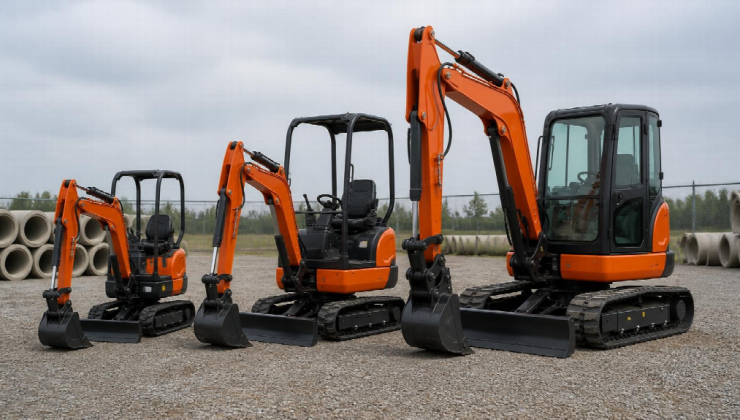
The Kubota U17-5, U27-4, and U35 cover the most common weight classes for landscaping, utility work, and small construction. They share a family resemblance in design and parts, but the maintenance budget looks different across the three. The costs stack up around tracks, hydraulic components, filters, and what changes when the machine crosses weight thresholds.
What Makes These Three Machines Different
The U17-5 weighs about 1.7 tons and rides on rubber tracks. It fits through a standard gate and tows behind a half-ton truck. The U27-4 pushes close to 2.7 tons with a wider track frame and more digging power. The U35 tips the scales near 3.5 tons and crosses into a weight class where steel tracks, heavier hydraulics, and different trailer requirements enter the conversation.
Each step up brings more capability. It also brings different wear rates and part costs. The owner who plans to put 400 hours a year on the machine needs to look past the sticker price and into the service schedule.
Track and Undercarriage Costs
The U17-5 runs narrow rubber tracks that stay affordable to replace. Tensioning is simple. Side loads during turning are moderate because the machine is light. A careful operator on soil and turf can push a set of tracks past 1,000 hours.
The U27-4 uses wider rubber tracks. The extra width and weight increase scrub during turns. Tracks wear faster when the machine spends hours pivoting on abrasive surfaces. Replacement cost is higher than the U17-5, and the wider track frame puts more load on the idlers and rollers.
The U35 is where the undercarriage gets more expensive regardless of track type. If the machine runs rubber tracks, replacement cost is the highest of the three. If it runs steel tracks, the pins, bushings, sprockets, and rollers add line items that do not exist on the smaller two machines. Steel undercarriage components wear with every rotation, and the parts bill at replacement time makes the smaller machines look cheap.
Hydraulic System Differences
The U17-5 and U27-4 share a similar hydraulic architecture. Pump, control valve, and cylinder sizes are modest. Oil capacity is manageable. Standard filter changes and clean oil keep the system healthy without unusually high fluid costs.
The U35 steps into a different hydraulic league. Higher flow rates, larger cylinders, and a bigger reservoir mean more oil during a full service. Hoses are larger and their replacement cost is proportionally higher. The pump and main control valve carry a larger parts bill if they ever need work, though Kubota hydraulics rarely fail without contamination or neglect.
Closely related models also use the same filters, belts, and engine components across the U series. An aftermarket Kubota parts supplier can cover the common consumables without the dealership markup. That matters when you are replacing hydraulic filters, fuel filters, oil filters, air filters, and a set of rubber tracks in the same season. Matching the part number, machine serial range, and engine model keeps things simple.
Engine and Cooling Maintenance
All three machines use Kubota diesel engines. The basic service steps are the same. Oil changes, fuel filters, air filters, and coolant checks follow a similar pattern. Engine parts are widely available.
The U35’s engine works harder under load. On a hot summer afternoon at 2:30, digging a trench in compacted clay, the cooling system carries a heavier thermal load than the smaller machines. The radiator, fan belt, and coolant condition deserve closer attention. A restricted radiator on a U35 will raise temperatures faster than the same restriction on a U17-5 because there is less thermal headroom.
What Breaks on a Worksite
The U17-5 is light enough to avoid many self-inflicted damages. It does not generate enough breakout force to twist itself. Common consumables stay in the predictable category. Bucket pins, bushings, rubber tracks, hydraulic hoses when snagged, and the occasional auxiliary coupler when dirt gets in.
The U27-4 is heavier and stronger. The extra digging force means bucket teeth wear faster. The wider stance exposes hoses and belly panels to more rocks and stumps when operating in brush. The machine can hurt itself if the operator pushes a corner of the bucket into something immovable and keeps pulling.
The U35 crosses into a territory where the machine’s own weight and power become a factor. Bucket linkage, boom pins, swing components, and the blade mechanism take more stress. Repairs on a 3.5-ton excavator cost more than on a 1.7-ton machine, even for the same type of failure. The wear is proportional to the capability.
Daily Operating Costs Compared
The U17-5 is the cheapest to feed and maintain. Fuel consumption is low. Fluid volumes are small. Parts are light and often less expensive. The tradeoff is slower cycle times and lower bucket capacity.
The U27-4 balances capability with operating cost. It digs faster than the U17-5 and burns more fuel doing it. Filters are similarly priced. Tracks and hydraulic components are the items that push the U27-4 slightly ahead of the U17-5 on the long-term maintenance ledger.
The U35 costs more to run every day. More fuel. More fluids. More expensive wear parts. More trailer and tow vehicle requirements. The question is whether the extra reach, depth, and bucket capacity earn that premium back in productivity. For a contractor digging footers and utility trenches, the answer is usually yes. For a landowner maintaining trails and clearing small stumps, the U17-5 often makes more financial sense.
Final Thoughts
- The U17-5 wins on long-term operating cost. It is the lightest, simplest, and least expensive machine to feed, maintain, and repair. If your work stays within its reach and bucket capacity, the savings add up over years of ownership.
- The U27-4 splits the difference. It does more work and costs more to keep running. The extra capability is real, but so is the bump in track and hydraulic wear.
- The U35 is the productivity leader and the most expensive to maintain. It earns that cost back when the work demands its size. If the jobs stay small, the premium hardware becomes an expensive luxury rather than an asset.
Track your hours, log your filter changes, and budget for wear parts before the season starts. A machine that runs on schedule costs less than one that waits for parts.