Best Montessori Floor Beds: Why BusyWood Is Worth Considering
Japanese families have slept close to the floor for centuries. Today, floor beds are popular in homes around the world, from small city flats to spacious kids’ rooms. Their simple design makes them easy to fit into different interiors. The reason is practical. The frame sits low enough for a child to get in and out without help, and a teenager ends up with a bedroom that doesn’t feel crowded with furniture. Air reaches the sleeping surface through the slats. There is no tall headboard to dust around, and moving the whole thing to another wall takes one person. Wooden models are replacing standard beds because they give you all that and still look warm. This guide covers what makes them popular and what a good frame needs, from wood and construction to size and placement, before you buy one.
Why Are Floor Beds Becoming Popular?
Kids sometimes roll out of bed; that is just a fact. On a normal bed, the fall can be quite high. On a floor bed, the mattress sits much closer to the ground. Getting back in is easy too, so a sleepy kid can sort it out alone. Kids also see it as their own little spot. That’s why parents of small kids pick these frames so often. The minimalist look is a bonus. A simple wooden base takes up less visual room than a bulky bed with posts, and a compact bedroom looks calmer with it. Older kids care about this more than you’d think. Teenage rooms are usually small anyway. A teenager wants space for a desk and a guitar, and a low bed leaves the walls open for both. Wood keeps the setup friendly. Even a plain frame feels cozy once you throw a blanket over it.
What Makes the Best Floor Bed Frame?
Wood decides most of it. Alder and beech are popular choices for wooden beds, while the quality of the wood and construction both affect how long a frame lasts. Finish matters just as much, because kids touch every inch of a bed. Smooth edges are a must, and so is a coating that doesn’t smell sharp after unpacking. Then check how it’s built. Slats should be spaced appropriately to support the mattress and provide ventilation underneath, while the corners need secure joints rather than just a pair of screws. Shake the frame by hand. A good one doesn’t creak or slide across the floor. Looks are the easy part. A plain wood tone fits almost any room, so the bed survives a redecorating spree. Size comes last, yet it’s where buyers slip up most often. The frame has to match the sleeping part exactly, and the room needs space to walk around it freely.
Why Pay Attention to Floor Beds by BusyWood?
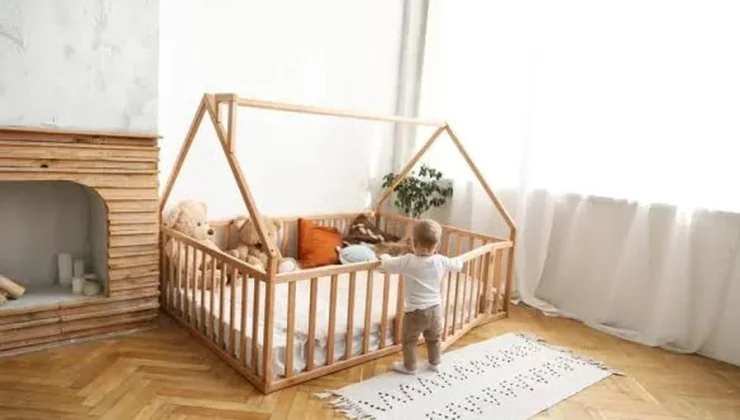
BusyWood makes its floor bed frame from alder, a warm-toned wood with a calm, even grain. Under the sleeping area, you get wooden slats, which keep the base firm and let air through. The sides are high enough that a small child feels tucked in. The entrance is your call. Pick the side while putting the bed together, and it fits your room layout, whether the wall is on the left or the right. Daytime is a different story, since the same frame becomes a play corner and toys stay put inside the sides. Sizes vary, so check which one matches what you sleep on before ordering, and measure the wall space too. The look stays simple. Natural wood color and straight lines mean the bed won’t clash with the room when a child outgrows cartoons. It suits a nursery as well as a bigger kid’s room.
How to Fit a Floor Bed into Your Interior Properly
Pick the spot before you order the bed. Photos make floor beds look small, yet the frame and a rug take up more floor than you expect. Keep it away from the door swing. Under a window works well, as long as the curtains aren’t heavy enough to brush the bedding. Firmness matters for the sleeping layer. Go medium for kids and a bit firmer for teens who sprawl. Keep the sleeping layer lower than the frame’s side; otherwise, the child just rolls over the edge. Cotton and linen sheets handle frequent washing and stay smooth. Put down one large rug. Small ones wander across a wooden floor all night. Leave books in a basket within arm’s reach, because they end up on the bed anyway. Add a lamp with a soft shade on the wall side, and bedtime reading gets easier.
Rugs and lamps are easy to change, so don’t lose sleep over them. The frame is the part you live with. Real wood and tight joints, plus a size that fits the room, keep a floor bed useful long after the novelty wears off. A wobbly frame can’t be saved by pretty bedding. Pick the base well once, then play with the decor as often as you like. Families who like natural wood and a calm, functional shape will find BusyWood a fitting option, since its frames are built around exactly these points.