7 Reasons to Replace Your Whiteboard with a Digital Production Board
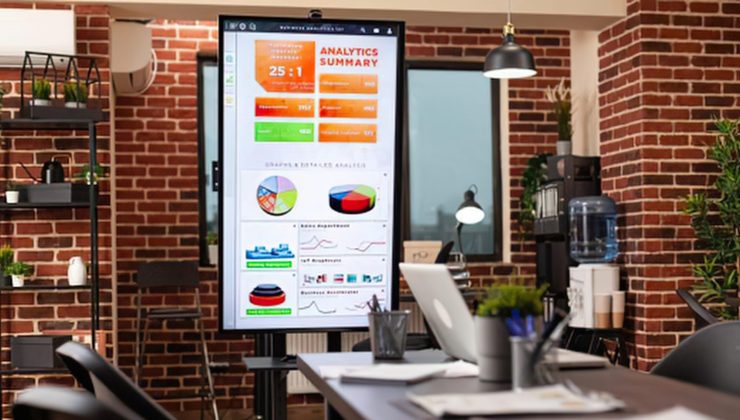
Most factory floors already generate the data teams need to hit their targets. The problem is where that data lives. Output figures sit in a BI tool, downtime logs sit in production software, and the whiteboard by the line gets updated once a shift, if someone remembers. A digital production board closes that gap by putting live performance data on screens where operators actually work.
Here’s what a digital production board is, and seven practical reasons to make the switch.
What is a digital production board?
A digital production board is a screen on the factory floor that displays live production data, such as output against target, downtime, quality issues and safety KPIs, pulled automatically from the systems a plant already uses.
It replaces manual tools like whiteboards, printed reports and spreadsheets taped to a wall. Because the data refreshes on its own, everyone on the floor sees the same numbers at the same time, without waiting for a supervisor to rewrite them. You may also see it called a digital production display board or a production dashboard.
7 benefits of a digital production board
1. Teams see what’s happening now, not what happened last shift
A manual board shows a snapshot, and by the time a figure is written up, the line has moved on. A live board shows current performance, so operators and supervisors can react during the shift instead of reviewing problems after it ends. That shortens the time between something going wrong and someone fixing it.
2. It uses the data tools you already have
A digital production board shouldn’t need a new data source or manual re-entry. The better setups pull directly from existing business intelligence dashboards, such as Power BI, and from production software. A report an analyst has already built can appear on the floor without being rebuilt. The result is one version of the truth: the plant manager’s report and the operator’s screen show identical numbers.
3. Output is visible by shift and by line
Breaking performance down by shift or production line makes patterns obvious. If Line 2 consistently falls behind target on the night shift, that shows up on the board rather than in a monthly review. Common metrics include units produced against plan, cycle time and OEE (overall equipment effectiveness, which combines availability, performance and quality into one score).
4. Quality and downtime issues surface before they escalate
When scrap rates climb, or a machine stops, a live board makes the problem visible to everyone nearby, not just the person logging it. Spotting these issues early gives maintenance and quality teams time to respond before a short stoppage becomes a missed order.
5. Safety alerts reach the whole floor automatically
Safety information can’t wait for the next team briefing. Floor screens can broadcast real-time incident alerts, air quality readings, compliance reminders and safety KPIs without anyone pressing send. For EHS managers, that means critical messages reach people across the floor, including those who never check email.
6. Shift schedules and updates stay current
Production boards aren’t limited to metrics. The same screens can show shift schedules, changeover plans and operational updates alongside performance data. Many manufacturing employees work without a company email address or regular intranet access, so a screen on the floor is often the most reliable way to reach them.
7. One team controls every screen, at one site or many
Paper notices and USB sticks don’t scale across a multi-site operation. With centrally managed screens, content can be pushed to a single display or a global network instantly. Remote device management also lets IT monitor every screen from one dashboard, rather than walking the floor to check whether a display is still working.
How to roll out a digital production board
The most effective rollouts start small. Pick one line, choose three to five metrics operators can act on, and connect them to the data source you trust most. Once the screen proves its value, extend it to other lines and sites.
ScreenCloud is a workplace communication platform that turns factory screens into live digital production boards, connected to the BI tools and production software manufacturers already use. Book a demo to see it in action.