Understanding STAP Vouchers and Assistive Communication Technology in Texas
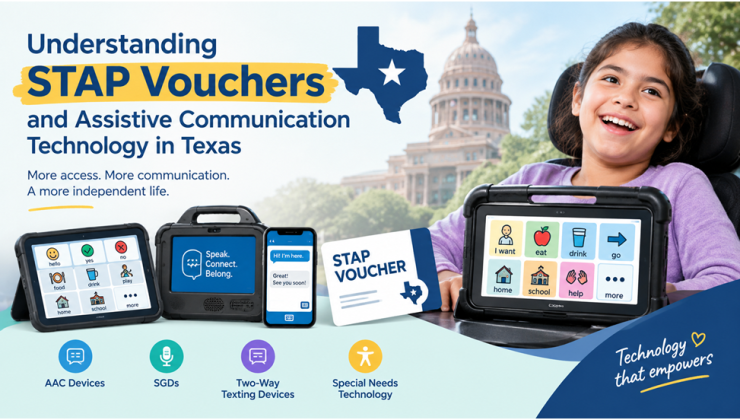
How STAP Vouchers Help Texans Access Assistive Communication Devices
Communication plays an important role in education, employment, relationships, healthcare, and everyday independence. For people with disabilities that make conventional telephone communication difficult, specialized technology can provide an important way to stay connected.
In Texas, the Specialized Telecommunications Assistance Program (STAP) provides vouchers that can help eligible residents obtain specialized telecommunications equipment or services. The program is administered through the Texas Health and Human Services system and is designed for individuals whose disabilities interfere with their ability to effectively access the telephone network.
For individuals and families exploring assistive technology, understanding how STAP works and what types of communication solutions may be relevant is an important first step.
What Is a STAP Voucher?
A STAP Voucher is a financial assistance document issued to an eligible applicant for an approved type of specialized telecommunications equipment or service. The voucher specifies the equipment or service category, value, and expiration date.
Eligibility isn't based simply on having a disability. The applicant must meet the program's requirements, including Texas residency and certification that the disability affects access to the telephone network.
Because equipment eligibility can change, consumers should always check current program requirements and approved equipment before making a purchase.
Communication Technology for Special Needs
The term special needs covers a wide range of communication requirements. Some people may need an alternative way to produce speech, while others may need text-based communication or accessibility features that make telephone use easier.
Assistive technology can include different types of communication solutions depending on the user's needs.
For example, AAC devices—or Augmentative and Alternative Communication devices—can help individuals communicate through symbols, text, synthesized speech, or other methods. Some AAC solutions are designed specifically around speech generation, while others provide broader communication functions.
A professional evaluation can help determine which technology is appropriate for an individual's communication requirements.
Speech-Generating Devices and AAC
A Speech-Generating Device (SGD) is an electronic device that produces spoken output based on information selected or entered by the user.
For someone who has difficulty producing understandable speech, an SGD can provide an alternative communication method. Depending on the device, users may communicate through touchscreens, symbols, text, switches, or other access methods.
Texas HHS specifically provides an application process for STAP Speech Generating Devices, with requirements related to the applicant's disability and access to telephone networks.
This makes it important for applicants to understand the distinction between general consumer electronics and specialized equipment approved under STAP.
What About Two-Way Texting Devices?
Two-Way Texting Devices can provide another communication option for people who cannot effectively use a traditional telephone.
Instead of relying primarily on voice communication, text-based technology allows users to exchange written messages. Depending on the user's needs and the specific device, this can make communication with family members, caregivers, service providers, and others more accessible.
The important consideration is choosing equipment that matches the individual's disability-related communication requirements and the specifications of their STAP voucher.
The Role of HHSC and DHHS
The Texas Health and Human Services Commission (HHSC) oversees the broader state health and human services system, while the Office for Deaf and Hard of Hearing Services (DHHS) is involved in STAP administration.
HHSC/DHHS determines which makes and models of specialized telecommunications equipment and services are approved for reimbursement under the program and reviews approved equipment periodically.
Therefore, consumers should not assume that every AAC device, SGD, smartphone, tablet, or communication product automatically qualifies for STAP assistance.
Choosing the Right Communication Solution
When exploring assistive technology, consider:
● The person's primary communication needs
● Whether speech, text, symbols, or a combination is most appropriate
● Ease of operation
● Portability
● Accessibility features
● Durability
● Compatibility with the user's communication method
● Whether the specific equipment is approved under STAP
Working with an authorized professional or appropriate certifier can also help ensure that the selected technology is suitable for the user's needs.
Explore STAP-Approved Communication Technology
Wireless Gadgetz provides access to communication technology for eligible Texas customers and supports the STAP voucher purchasing process.
If you are researching STAP-approved devices, explore the available options and verify eligibility before ordering.
Conclusion
Assistive communication technology can give individuals more options for connecting with the people and services around them. For eligible Texans, STAP can help reduce the financial barrier associated with obtaining certain specialized telecommunications equipment.
Whether someone is exploring an SGD, AAC devices, or Two-Way Texting Devices, the first step is understanding their communication needs and checking the current STAP requirements and approved equipment.