The Long-Term Longevity Approach to Facial Volume Loss: What to Know About PCL Fillers
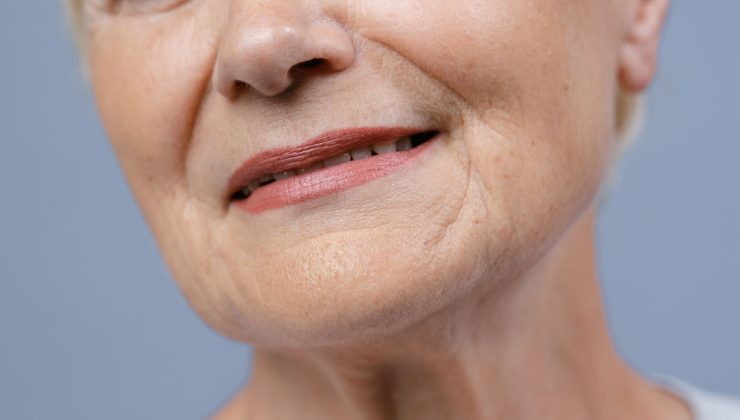
Age alters the architecture of the face in ways that go far beyond surface wrinkles. Bone resorption, fat pad descent, and shifting ligament support combine to create a distinct deflation over time, shifting the entire facial framework downward. Most people look at a mirror and notice a fold or a shadow, missing the structural collapse happening underneath. Addressing this requires looking past temporary plumping agents and moving toward options capable of sustained structural integrity.
Polycaprolactone filler represents a departure from standard hyaluronic acid gels that simply absorb water and degrade within months. Medical researchers first used polycaprolactone microspheres decades ago in absorbable sutures and surgical meshes, establishing a long safety record in human tissue before practitioners adapted the material for aesthetics. A 2021 clinical review examining long-lasting aesthetic materials noted that polycaprolactone microspheres maintain predictable degradation kinetics while providing a stable scaffold for host tissue integration. Instead of remaining inert or relying solely on external volume, this biodegradable filler relies on a specific biochemical mechanism to achieve its longevity.
The actual formulation consists of total spherical particles suspended in a carrier gel of carboxymethyl cellulose. Practitioners apply this compound deep into specific tissue planes where volume support is most needed. The carrier gel provides immediate aesthetic correction, but that initial visual change serves only as a temporary placeholder. As the body gradually metabolizes the carrier gel over the subsequent weeks, fibroblasts migrate into the space left behind by the microspheres. These cells initiate a controlled foreign body reaction that deposits new type one collagen around each individual sphere. This gradual collagen production filler process ensures that as the synthetic material slowly breaks down via hydrolysis into carbon dioxide and water, endogenous tissue replaces it.
Sourcing and Practical Application in Modern Clinics
Clinics often evaluate how medical devices move through specialized distribution channels to secure reliable inventory. Practitioners frequently choose to buy professional supplies like Ellanse to maintain consistent access to advanced stimulatory agents. Procurement managers who need bulk inventory frequently look for reliable platforms that feature options such as Ellanse wholesale for practitioners to support clinic schedules. Ellanse itself operates as a unique dermal option within this category, relying on its tunable longevity profile to address progressive aging. The material comes in different versions corresponding to different chain lengths, dictating how long the microspheres persist before complete resorption. This predictability makes it a valuable asset for facial volume restoration without requiring frequent touch-up sessions.
Injectable longevity approach discussions often center on patient satisfaction versus procedural burden. Traditional materials demand repeated interventions every six to twelve months, which can lead to cumulative product buildup or tissue fatigue in some individuals. PCL fillers bypass this frequency by stimulating the body's own structural proteins to do the heavy lifting over several years. A filler duration comparison between standard hyaluronic acid and polycaprolactone demonstrates clear divergences in degradation timelines. The latter can persist for two to four years depending on the specific variant chosen.
Tissue Dynamics and Structural Considerations
Managing expectations regarding facial volume loss requires an understanding of tissue dynamics. When practitioners evaluate a patient, they must account for future bone remodeling and ongoing fat atrophy. Injecting a heavy volume all at once often yields unnatural contours, whereas a layered, stimulatory strategy respects the natural contours of the anatomy. The goal is restoration rather than alteration, bringing back the structural scaffolding that youthful tissue once maintained on its own.
Clinical studies tracking the safety profile of polycaprolactone have consistently highlighted a low incidence of delayed nodules when practitioners utilize proper injection techniques and correct anatomical placement. Because the microspheres are totally smooth and uniform in size, they prevent the chronic inflammatory responses sometimes seen with irregularly shaped particulate implants. Histological evaluations years after injection typically show complete replacement of the original microspheres with organized, healthy collagen bundles.
Evaluating long-lasting facial fillers also involves analyzing economic and lifestyle factors for patients who prefer fewer clinical visits. While the initial investment for a longer-acting agent can be higher, the reduced frequency of maintenance appointments changes the overall calculus of facial rejuvenation. Patients value predictability, and a material that fades away at the exact rate new collagen replaces it offers a high degree of control.
Scientific inquiry into biodegradable filler technology continues to evolve as manufacturers refine particle size distribution and carrier gel properties. Future developments will focus on even more precise control over fibroblast stimulation rates and tissue integration speeds. For now, the combination of immediate structural support and long-term neocollagenesis provides a robust toolkit for modern aesthetics. Understanding these mechanisms allows practitioners and researchers alike to approach structural aging with a clearer view of biological reality rather than relying on temporary fixes.
The Biological Cascade of Neocollagenesis
Cellular responses govern the entire lifecycle of these treatments. Once the carrier gel dissipates, the body registers the microscopic spheres not as foreign invaders to be aggressively attacked, but as a temporary lattice. Macrophages and fibroblasts populate the area, enveloping each sphere in a delicate network of newly synthesized protein fibers. This biological cascade forms the backbone of collagen-stimulating filler technology.
Microscopic examination of treated tissue reveals several distinct phases during the degradation cycle:
- Initial phase: Carrier gel absorption accompanied by immediate mechanical support from the suspended microspheres.
- Intermediate phase: Fibroblast infiltration and active deposition of type one and type three collagen around the spherical cores.
- Late phase: Gradual hydrolysis of the polycaprolactone core accompanied by continuous remodeling of the surrounding extracellular matrix.
These sequential phases ensure that the initial volume correction transitions smoothly into permanent autologous tissue support. As the foreign material vanishes entirely, what remains is simply the patient's own biological structure reinforced by months of steady cellular activity.
Evaluating Clinical Outcomes Over Time
Long-term observation of patients treated with Ellanse reveals consistent volume retention profiles that contrast sharply with traditional hyaluronic acid treatments. Where conventional gels tend to migrate or absorb water unevenly under muscular load, spherical polycaprolactone formulations anchor securely within the subdermal or supraperiosteal planes. This stability prevents the pillowing effect that often plagues patients who undergo repeated high-volume HA injections over many years.
Practitioners must nevertheless exercise rigorous anatomical knowledge. The depth of placement dictates the success of the procedure, as superficial placement can result in visible irregularities or persistent firmness. Deep injection beneath the muscular layer allows the neocollagenesis process to support the entire facial envelope without interfering with superficial expression lines.
The longevity of these treatments changes the conversation around maintenance schedules. Instead of annual or biannual corrections, patients experience a multi-year window of stable structural support. This reduction in procedural frequency minimizes cumulative tissue trauma, offering a compelling alternative for those who wish to maintain a natural appearance while reducing overall clinical exposure.