Why Hong Kong Is Still One of Asia’s Most Thrilling Destinations for Yacht Life
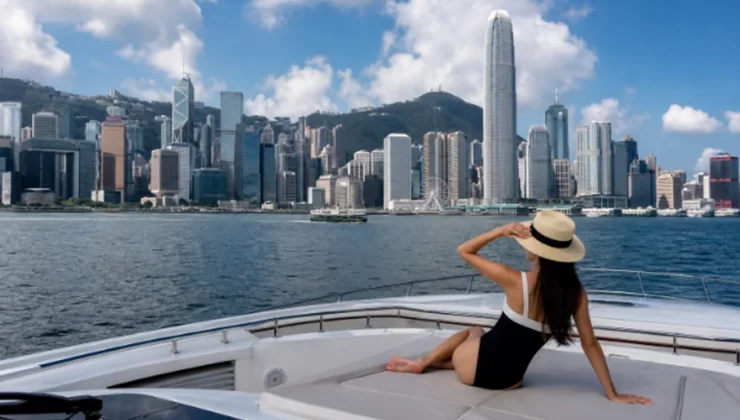
Most people picture Hong Kong as a vertical city of glass and neon, perpetually in motion and permanently gridlocked. That picture is accurate enough on land. But step twenty minutes in any direction from the Central waterfront, onto a teak deck with the skyline retreating behind you and jungle-clad islands filling the horizon ahead, and a completely different city reveals itself. This is yacht life Hong Kong style: a place where the same evening can begin with laser-show reflections dancing across Victoria Harbour and end with your boat lying at anchor in a silent cove, the only sounds cicadas and wavelets against the hull.
What follows is a clear-eyed portrait of what makes Hong Kong’s on-water scene uniquely thrilling in Asia right now. We look at what sets it apart from regional rivals, the signature experiences you can plan a trip around, how non-owners can access the water without complication, and the practical details that determine when and how to go.
From neon harbour drama to barefoot island days: a distinct sense of place
Victoria Harbour is the beating heart of the scene, and it earns that description honestly. Skyscrapers rise sheer from the waterline, Star Ferries slide through the chop on ancient routines, and traditional red-sailed junks thread between superyachts and container vessels with the unhurried confidence of boats that have always belonged here. On weekend evenings, pleasure craft idle between Kowloon and Hong Kong Island to catch the Symphony of Lights, a nightly laser and light show that bounces off the towers. Few working harbours on earth generate this kind of theatrical energy.
The contrast a short cruise brings is the real hook. Round the eastern tip of Hong Kong Island towards Deep Water Bay or Repulse Bay and the city noise simply falls away. Villas tuck into steep green hillsides, swimmers come off the yacht’s stern, and the pace drops from frenetic to Mediterranean. The shift takes perhaps forty minutes.
The social rhythm on the water is as layered as the city itself. Weekday evenings bring finance workers and expats out on sundowner cruises, while families use modest cabin cruisers as floating beach cottages at the weekend. On public holidays, flotillas of chartered junks pack sheltered bays, loaded with coolers, inflatable platforms and music that echoes between the hills. The junks themselves are a distinctly Hong Kong proposition, ranging from old wooden boats with simple canvas canopies to air-conditioned party barges fitted with karaoke, barbecues and waterslides, and they are as much a part of the harbour’s visual identity as the skyline.
Beyond the main island, Hong Kong’s territory includes 263 islands and 637 square miles of sea, with three quarters of the land dominated by beaches, hiking trails and abandoned farming villages. The water is ringed by steep, jungle-covered hills and secluded white-sand coves where you can drop anchor and feel a world away, yet often remain within mobile range of Central. That compression of experience, wild nature and world-class city within the same afternoon, is the thing visitors consistently fail to anticipate.
What sets Hong Kong’s yacht scene apart in Asia
Geography is the first advantage, and it is a significant one. Hong Kong wraps around one of the world’s great deep-water natural harbours, with immediate access to over 260 islands and extensive marine parks, which means big-city harbour drama and genuinely empty anchorages sit within a few miles of each other. No long coastal slog is required to find wilderness; it is simply around the next headland.
Compare this with other Asian yachting hubs. Singapore has excellent infrastructure but relatively few wild islands, and its cruising options are limited by geography. Phuket and the Indonesian archipelagos offer natural beauty in abundance, but they lack Hong Kong’s sharp juxtaposition of gleaming financial district and secret cove, and their service ecosystems are thinner. Hong Kong’s infrastructure edge is concrete: nine established private marinas and yacht clubs, together with typhoon shelters and mooring fields, support a pleasure fleet of more than 12,300 boats. New government-backed projects are adding hundreds of berths at locations including the former Lamma Quarry, the Aberdeen Typhoon Shelter and a waterfront development near Hung Hom station, signalling long-term institutional commitment to leisure boating rather than reluctant tolerance of it.
A Business and Professionals Alliance for Hong Kong report estimated that a successful yacht industry could contribute HKD 4.5 billion annually to the city’s economy, a figure that has sharpened government attention considerably. The service culture that has grown up around the existing fleet is mature and responsive: skippers, deckhands, caterers and concierge-style charter brokers can arrange almost anything at short notice, from a low-key family junk trip to a white-glove superyacht charter with fine dining on deck.
Looking further ahead, Hong Kong’s chief executive announced in a September 2025 policy address plans to ease visiting-yacht requirements and open the possibility of cross-border itineraries connecting the city with the Wanshan and Chuanshan archipelagos on the Chinese coast. That would position Hong Kong not merely as a standalone port but as the natural gateway to a wider Greater Bay cruising region.
Signature yacht life Hong Kong experiences to plan around
Victoria Harbour evenings are the obvious starting point, and they justify the cliché. Locals and visitors alike charter boats to idle between Kowloon and Hong Kong Island as dusk falls and the towers begin to glow. Cocktails on deck, the light show overhead, a slow glide past the Central waterfront before returning to a club marina or tucking into a sheltered typhoon shelter for the night: it is cinematic in a way that feels earned rather than staged.
Island-hopping day routes from Aberdeen or Causeway Bay open up a different register entirely. The standard circuits run out to Lamma, Cheung Chau or Lantau, dropping anchor off palm-fringed beaches, taking a tender ashore for seafood at stilted fishing villages like Tai O on Lantau’s western tip, or simply swimming and paddleboarding off the stern in clear, protected water. Seafood is treated as seriously as the sailing itself in Hong Kong; debates at yacht club bars about which village serves the best deep-fried squid are conducted with genuine conviction.
For those who want to push further, Sai Kung and the North-East New Territories function as Hong Kong’s back garden for serious sailors. The water is noticeably cleaner here, distant from the Pearl River Delta. Dramatic basalt cliffs, hexagonal rock columns that form part of a UNESCO Global Geopark, and coves such as Bluff Island and Double Haven reward anyone willing to make the passage. Double Haven sits in water so glassy it mirrors the surrounding haze-blue mountains in perfect silhouette, and you may share the anchorage only with a few fishing skiffs.
Junk-party culture deserves its own entry because it is genuinely unique to Hong Kong rather than generic to Asia. Groups of friends or company teams hire large dayboats with crew for all-inclusive parties: dim sum or barbecues laid out on deck, inflatable platforms, wakeboards and stand-up paddleboards off the stern, and music bouncing between the hills. The format has been refined over decades and works as well for a birthday of twenty as for a corporate outing of fifty.
Weekend and longer cruising escapes let owners and charterers push further still: down to the uninhabited Soko Islands, around Lantau’s exposed south coast, or north towards the border near Double Haven. These trips mix passages under sail with onshore hikes through overgrown villages, never more than a day’s sail from a marina. As visiting-yacht rules continue to ease, the possibility of crossing to nearby Chinese archipelagos adds another layer of adventure for repeat visitors.
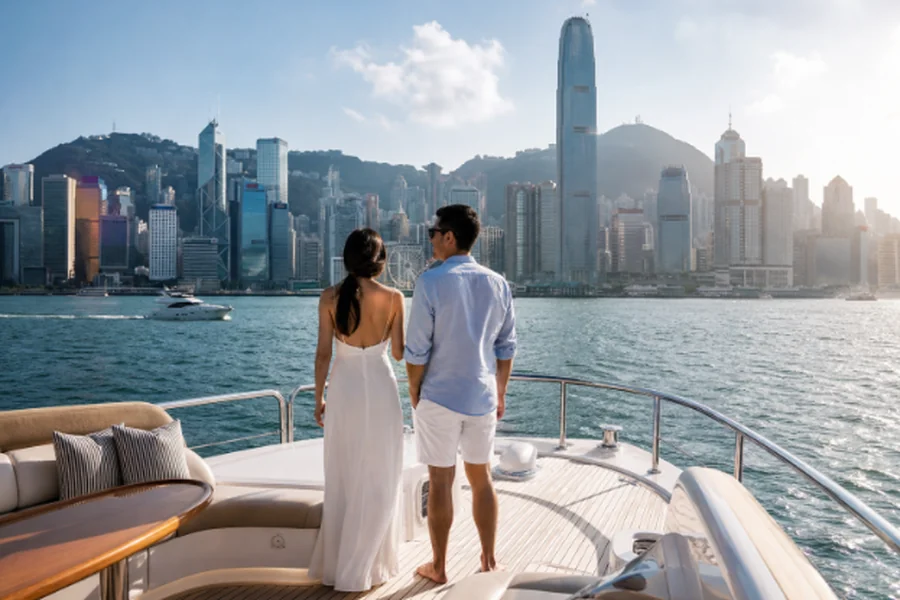
How to tap into yacht life Hong Kong without owning a boat
Owning a vessel is neither necessary nor, for most visitors, sensible. The access options are well-developed and varied.
Crewed private charter is the most comfortable entry point for those seeking privacy and flexibility. Brokers and operators can arrange fully crewed sailing or motor yachts in the 40 to 80-foot range for anything from a half-day harbour cruise to a multi-day island itinerary. The crew handles all navigation, catering and logistics, so no sailing experience is required.
Junk rentals are the most approachable and socially natural option. Groups book simple or luxury junks for day trips that typically include a captain, crew and basic food and drink. They can be surprisingly affordable when the cost is split across fifteen to thirty people. A no-frills weekday junk outing can start in the low hundreds of US dollars per person; a privately crewed yacht with gourmet catering for a smaller group rises into the high hundreds or low thousands per day, depending on size and season. These are rough orientations rather than fixed prices, but they give a realistic sense of range.
For expats or frequent visitors who want more regular access, some yacht clubs offer social memberships or introductory schemes, and boat-share and fractional-ownership models allow you to book regular days on the water without full ownership costs. These typically require local connections or some waiting-list patience, but they are well established.
Practically speaking, booking is straightforward. English-speaking crews are the norm, most operators have well-rehearsed itineraries covering harbour evenings, Lamma seafood runs and Sai Kung bays, and transfers from hotel to pier are simple to arrange. For first-timers, it is an easy addition to a Hong Kong stay rather than a logistical project.
Timing your trip and understanding local conditions
Hong Kong’s weather divides into two distinct seasons, each with its own character on the water. The south-west monsoon, running roughly from May to September, is hot, humid and prone to squalls and typhoons, with unpredictable winds and a real threat of serious weather. The north-east monsoon, from October to January, brings cooler and drier air, steadier winds, and the conditions most sailors and charterers prefer.
For the best combination of reliable weather, clear visibility and comfortable days on deck, October through December is the window to aim for. Late spring, from March into early May, offers warming temperatures good for swimming before the peak typhoon risk builds and is a reasonable second choice. Summer works well for junk parties and warm-water swimming, but requires more flexibility around weather and a willingness to stick to sheltered bays when conditions deteriorate.
Season also shapes itineraries in practical ways. During the benign north-east monsoon, skippers are more likely to venture offshore, round exposed headlands and push towards the eastern wilds of Sai Kung. In summer heat and potential storms, sensible crews hug the sheltered south side of Hong Kong Island or keep to inner bays and typhoon shelters where the holding is good.
A few practical quirks are worth knowing without obsessing over. Anchoring is restricted inside certain marine park zones, popular bays fill quickly on sunny weekends and public holidays, and Marine Police patrols are visible but unobtrusive for legitimate leisure craft. Reputable charter operators and skippers will brief you on current conditions and regulations in plain language and have contingency plans ready if a typhoon signal changes the picture. Visitors do not need to become amateur meteorologists; they need a good skipper, and Hong Kong has plenty.
Why Hong Kong’s yachting scene is still worth making room for on your Asia list
It is worth being honest: Hong Kong has faced political tensions, Covid-era travel restrictions and rising competition from Phuket, Hainan and Bali, and some travellers have quietly shifted their attention. The question of whether the city’s glamour has dimmed is fair.
The answer, at least on the water, is that it largely has not. Throughout recent upheavals the marinas and cruising grounds stayed open, and local demand actually surged as residents rediscovered their own territory. Investment in new berths, the government’s stated ambition to develop a luxury maritime economy worth HKD 4.5 billion annually, and the easing of visiting-yacht rules all point to a city doubling down on its maritime identity rather than retreating from it. These are not the signals of a scene in decline.
What remains irreplaceable is the combination itself. Nowhere else in Asia lets you finish a business meeting in Central, board a charter within minutes, thread through one of the world’s most cinematic working harbours at dusk, and wake the next morning in a green, silent anchorage watched only by fishing skiffs and egrets. Singapore cannot offer the wild islands; Phuket cannot offer the harbour drama; neither offers the density of clubs, services and accumulated local knowledge that Hong Kong has built over decades.
The practical decision is simpler than it might appear. Choose the one experience that excites you most: a neon-lit Victoria Harbour evening, a full day island-hopping in Sai Kung, or a junk-party weekend with friends. Build your stay around that anchor experience, use the seasonal guidance above to pick your window, and let a local skipper handle the rest. Hong Kong rewards the traveller who treats it not as a city with boats attached, but as a genuine sailing destination that happens to have one of the world’s great skylines as its backdrop.