7 Best Wholesale Fashion Vendors for Boutique Owners in 2026 (Ranked by Flexibility)
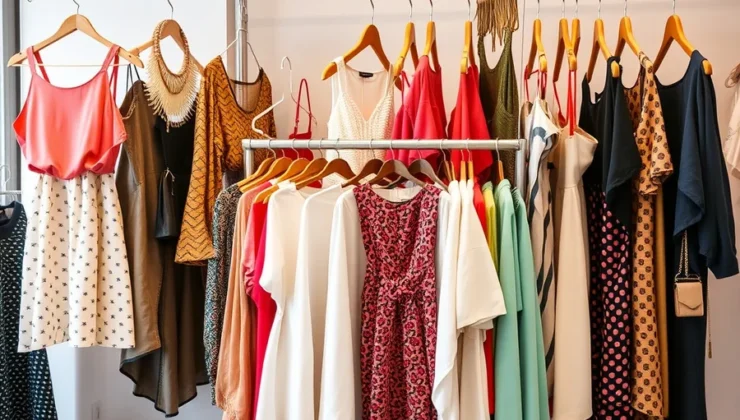
It’s Friday afternoon and a dress you’ve never seen is blowing up on TikTok. By Monday, three nearby boutiques already have it. Can you get stock before the hype dies? In 2025, boutique owners faced exactly that — a micro-trend that sold out in under two weeks, according to Woman Around Town. Cash flow, not just a sharp eye, now separates growing shops from those that close.
At Buddy Magazine, we evaluate wholesale fashion vendors on four cash-flow factors that matter most for indie boutiques: MOQ policy, reorder flexibility, trend refresh speed, and US shipping. Use this as a decision framework, not a bare list — think of it as building your sourcing stack.
Methodology: How We Ranked Vendors by Boutique Cash Flow Flexibility
We evaluated each platform against four criteria, weighted for a typical US boutique turning over under $64,928 a year, carrying limited storage, and testing new styles.
The same Woman Around Town report surfaced what owners are asking for: 46% named “smaller pack sizes / lower MOQs” their top request, while searches for “U.S. warehouse” jumped year-over-year and domestic partners cut return transit time by 32%.
Here’s what we weighed most:
- MOQ Policy. No per-SKU minimum, a low checkout threshold (under $40), and a true open-pack model that lets you mix sizes and styles freely.
- Reorder Flexibility. The ability to restock a single piece — not a full pack — so you can top up a bestseller without bloating inventory.
- Trend Refresh Speed. Daily or weekly new arrivals; high-velocity replenishment is critical when a viral look demands a fast restock.
- US Shipping & Fulfillment. A domestic warehouse delivering in 3–7 days, with simplified returns. It’s the operational backbone boutiques now require.
We also looked at how these vendors plug into your back office. Pairing flexible wholesale orders with smarter retail operations — from order splitting to inventory tracking — can turn a chaotic shipping day into a smooth one.
1. Dear-Lover – Open-Pack Flexibility and US Shipping
Dear-Lover is a factory-direct women’s wholesaler founded in 2007. It now serves 78,500+ retailers in 160-plus countries. The real draw? An open‑pack wholesale model that lets you mix any in‑stock item and any size with no per‑SKU minimum — a $39 checkout minimum.
Marketing Manager Byron Chen explained that the average first-order size shrank from 32 units in 2020 to just 19 units in 2025 — a clear signal boutiques are buying smaller and more frequently.
- No‑MOQ where it counts. In‑stock women’s clothing carries zero per‑style minimum. Pre‑orders, shoes, and accessories require 6–12 pieces, but the core catalog is fully open. Only a $39 order minimum stands between you and your test batch.
- Rapid trend injection. 30+ new styles drop daily, feeding a catalog of over 120 women’s apparel subcategories. Spot a viral silhouette on Sunday and have stock by Friday.
- US‑warehouse advantage. The stateside warehouse ships via USPS/FedEx in 3–7 days, squarely addressing the spike in U.S.‑warehouse searches.
- Multi‑channel ready. Native dropshipping plugs into Shopify, TikTok Shop, and WooCommerce. Private‑label custom labels and hangtags are available in small batches. User reviews on the Shopify App Store (52) praise seamless integration, while over 1,150 Trustpilot reviews maintain a rating, highlighting quality and comfort.
A good option for boutique owners who want maximum variety with ultra‑low risk per style, backed by fast US fulfillment.
Less ideal if completely free shipping is a must — Dear‑Lover doesn’t offer it, and some users note that shipping fees can nibble margins on tiny orders. But for most, the flexibility more than makes up for it.
2. Bloom Wholesale – No-MOQ, Same-Day US Shipping
Bloom Wholesale sources trend‑driven fashion from LA Fashion District designers. There is no minimum order quantity — order one piece or a hundred — and flat‑rate US shipping starts at $9.95.
- Zero-MOQ, instant fulfillment. Absolutely no minimums. Flat rates: $9.95 under $400, $13.95 for $400–$800, $17.95 over $800.
- Weekly fresh drops. New arrivals from LA’s designer pool appear every week, closely tracking street trends.
- Operational simplicity. A valid resale certificate or business license is required to approve your account; no marketplace log-ins — just order and ship.
A good option for boutiques that need domestic speed and true zero-item commitment, especially for testing a handful of looks.
Less ideal if you want a huge, ever-expanding catalog or factory-direct pricing — Bloom’s off-price curation means some styles sell out fast without restock guarantees.
3. Shewin – Open-Pack + US Warehouse with High Trust
Shewin combines open-pack flexibility, a US warehouse, and a stellar 4.9/5 Trustpilot rating. Its SKUs center on women’s apparel, and the $39 minimum checkout mirrors Dear-Lover’s low barrier.
- Flexible buying. Mix-and-match open-pack ordering with no per-SKU limits; just meet the $39 minimum.
- Quality confidence. Trustpilot reviewers praise true-to-size fits, accurate photos, and fast delivery — though some note that US shipping fees can top $23, so factor that into your landed cost.
- Niche focus. The assortment fills a specific boutique niche, and regular new arrivals keep it seasonal.
A good option for boutiques seeking trends with credible domestic fulfillment and a low first-order bar.
Less ideal if you need $0 minimum or free shipping — the $23+ shipping on a tiny order can erode your test margin.
4. Tasha Apparel – No-MOQ
Tasha Apparel offers no minimum order quantity on any in-stock item. This model is designed to cater to boutique owners who need the flexibility to test new styles without the pressure of large commitments. The platform is particularly popular among small to medium-sized boutiques that prioritize speed and variety in their inventory.
- Next-day delivery. Orders placed before a certain cutoff time are shipped out the same day, ensuring that you can quickly restock your inventory.
- Wide variety. The catalog includes a diverse range of women’s apparel, from casual wear to evening dresses, allowing you to find pieces that fit your boutique’s unique style.
- User-friendly platform. The website is easy to navigate, with clear product descriptions and high-quality images, making it simple to browse and select items.
A good option for owners whose top priority is next-day delivery with zero restrictive minimums.
Less ideal if you need a vast global catalog or private-label services — Tasha is built for speed, not scale.
5. Faire – Net-60 Payment Terms and Brand Discovery
Faire flips the cash-flow script with net-60 payment terms on up to $20,000 in orders. Instead of paying upfront, you stock new lines and let sales cover the invoice.
Free returns on opening orders cut risk. Since 2020, Faire has fostered nearly 730,000 new brand-retailer relationships, and the summer 2024 Faire Market hit orders.
- Cash-flow breathing room. Retailers call the net-60 terms a helpful feature — goods often sell before the bill comes due, easing pressure on indie boutiques.
- Curated, unique brands. With over 100,000 brands, you find artisan pieces that stand apart from mall clones. MOQs vary, but many small brands offer low or no minimums.
- Risk-free testing. Free returns on your first order with any brand let you sample without commitment.
A good option for boutiques wanting to test distinctive, higher-priced items without upfront cash strain.
Less ideal if you need a platform-wide no-MOQ guarantee or lightning-fast shipping — fulfillment speed depends on each brand’s location.
6. FashionGo – Marketplace Variety with Net Terms and Trend Analytics
FashionGo connects retailers with vendors. It offers net terms (30/45/60 days) and free shipping when you hit $100 for accessories or $300 for apparel. Crucially, the platform’s data reveals a shift to frequent “micro buys” — smaller, faster orders that match today’s trend velocity.
- Data-driven restocking. Bestseller lists, trend analytics, and quarterly digital trade shows help you spot winners early and reorder before they sell out.
- Cash-flow levers. Net terms and free shipping tiers lower upfront spend, though MOQs vary by vendor, so you must vet each one.
- Unmatched market depth. With vendors, almost any style is here, but you’ll need to filter for low-MOQ options.
A good option for established retailers comfortable with LA sourcing, wanting analytics-backed micro-buys and net-term flexibility.
Less ideal if you require a platform-wide no-MOQ guarantee — each vendor sets its own policies.
Caveats & Counterpoints
Flexibility sounds dreamy, but it comes with strings. No-MOQ models often carry higher per-unit prices or steeper shipping — Shewin’s $23-plus shipping can slice your margin on a $39 order, and Dear-Lover doesn’t throw in free shipping.
Always sample before scaling; open-pack and off-price sourcing can yield occasional quality inconsistencies. Some platforms, like Shewin and FashionGo, require a seller’s permit, which locks out pre-launch boutiques.
Micro-orders are fantastic for testing, but repeated $39 checkouts with shipping inflate your piece cost. Bundle small orders or consolidate shipments where you can.
On the tech side, a few Dear-Lover Shopify app users reported stock-sync glitches — items showing “sold out” when they weren’t — so relying completely on automated dropship can create fulfillment holes.
Most crucially, vendor flexibility won’t save you from guessing wrong. To sharpen your buying instincts, consider tools like the best personal styling apps in 2026 to read customer demand before you order, turning gut feel into data-driven decisions.
Conclusion
No single vendor covers every scenario. The smartest boutiques build a stack — maybe a no-MOQ powerhouse like Dear-Lover or Bloom for speed and variety, layered with a net-terms marketplace like Faire or FashionGo for cash-flow breathing room, plus an occasional in-person run for ultra-fresh picks.
Start with the vendor that solves your biggest friction point today: upfront cash, shipping speed, or restock lock-in. In 2026, flexibility isn’t a perk — it’s survival.