What the Modern Approach to Dandruff Actually Looks Like in 2026
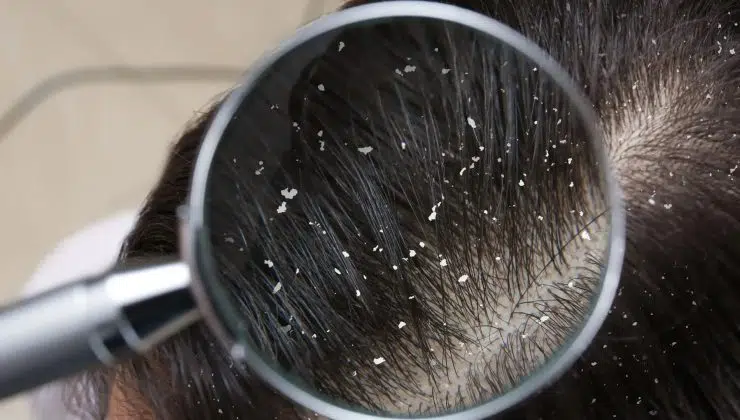
Dandruff is one of the most common scalp conditions in adult populations and the way it has been treated has barely changed in forty years. The mainstream pharmacy aisle is still dominated by the same active ingredients in roughly the same formulations that defined the category in the 1980s. The clinical understanding underneath the condition has moved on substantially. The product category until recently has not.
Biological Causes of Dandruff
Role of Malassezia and Scalp Imbalance
The biology is well characterised. The dominant clinical view, supported by literature catalogued through the U.S. National Library of Medicine, associates most cases of seborrheic dermatitis and dandruff with overgrowth of Malassezia yeast on the scalp combined with disrupted lipid composition and a genetically variable inflammatory response. The flaking, the itch and the redness are downstream of that combination. Treatment that addresses only one of the three variables tends to produce partial control rather than durable improvement.
Modern Treatment Approaches
Evolved Formulations and Dual Action Products
The current generation of well formulated products has caught up with that picture. The best anti dandruff shampoo and conditioner options on the market now combine clinically validated antifungal actives at appropriate concentrations with formulation that addresses scalp lipid balance and inflammation rather than just suppressing Malassezia counts. The result is a product category that produces meaningfully better symptom control than legacy formulations.
Key Active Ingredients in Anti Dandruff Care
Clinically Proven Compounds
The ingredient story is worth understanding briefly. Zinc pyrithione, ketoconazole, selenium sulphide, salicylic acid and coal tar all have established antifungal or keratolytic profiles. Modern formulations frequently combine them rather than relying on one alone. The combination approach is what produces the symptom control that previous generations of products struggled to deliver.
Importance of Supportive Formulation
Conditioners that do not strip the scalp lipid layer, surfactants that clean without overdrying and humectants that maintain barrier function all contribute to the overall outcome. These elements are increasingly important in modern product design.
Treatment Consistency and User Behaviour
Importance of Sustained Use
Dandruff control is a sustained protocol rather than a one week intervention. Most well formulated products produce visible improvement inside two to three weeks of consistent use, with stable control achieved over four to eight weeks.
Common Mistakes in Usage
Patients who use products intermittently or switch frequently tend to experience cycling symptoms. Those who maintain a consistent regimen generally achieve more stable outcomes.
Hair Health and Modern Formulations
Balancing Scalp Treatment and Hair Quality
Older anti dandruff shampoos were often harsh on the hair shaft itself, causing dryness, brittleness and colour fade. The modern category has moved toward dual purpose formulation that addresses scalp conditions without sacrificing hair quality. This reduces the traditional trade off between scalp control and hair appearance.
Lifestyle and External Triggers
Influence of Stress and Environment
Stress, sleep deprivation, dietary imbalance and seasonal variation can influence severity. The underlying protocol remains consistent but intensity and frequency of use may need adjustment depending on triggers.
Final Thought
For adults managing dandruff, modern formulation science has meaningfully improved outcomes compared to older treatments. The biology remains unchanged but product chemistry has advanced, making consistency and correct product selection the key factors in long term control.
FAQ
How long does it take to see results?
Most well formulated products produce visible improvement inside two to three weeks and stable control inside four to eight weeks.
Is dandruff related to hygiene?
No. It is linked to Malassezia yeast overgrowth, scalp lipid composition and immune response rather than hygiene.
Can dandruff be cured?
Most cases are managed rather than permanently cured and tend to return if treatment is stopped.
Are natural alternatives effective?
Some have limited supportive evidence but clinically validated antifungal actives generally provide more reliable results.